

People love getting together, and events are a great environment to showcase your brand. But do you need a massive budget? And how can you show up to the party?
“Events are trending,” says Ella Stansfield of event tech company Entegy. As a business engagement specialist, her job is to connect event organisers to Entegy’s unified event tech tool – everything from registration to app – which is designed to make events easier to run.
She believes the best event tech is almost invisible, it creates space to connect.
“People talk constantly about how it’s a beautiful opportunity to come together, build communities and have that person to person interaction.”

From South by Southwest to Cannes and the Effies, marketers gather to network, learn and grow. But seats at the sponsors’ table can come with a hefty price tag.
While small businesses might struggle to keep up, Stansfield’s advice is simple: “Start your own, and start small.”
When she’s not out and about, she stays active on LinkedIn. Stansfield says its an “incredible resource” for promoting events. And for brands with fewer resources, it could be the best place to start.
“Communities have to start small – they don’t start large. What’s really great about LinkedIn now
is that you can host a small, intimate gathering and create a FOMO effect, achieving almost the same reach as larger events,” she adds.
What events are for
Big events are useful for relationship building, but Stansfield says smaller occasions allow more personal, meaningful interactions.
“A lot of people would say that in a smaller setting, you’re more relaxed, which makes it easier to form stronger connections. People seem to have more time, they’re less rushed and it’s less hectic.”
Marketers Day, hosted by The Marketing Club in October, was a case in point. The grassroots festival was all about conversations and connections – the word “connect” was even projected on the walls in multiple languages.
“That kind of environment allows brands to be more vulnerable with attendees or consumers,” says Stansfield.
Running smaller events is also less risky for organisers. “They can test concepts, see what works, prove it, double down and then take it from there.”
She stresses: “If you host an event for the sake of hosting an event, you’re wasting your time. It needs to be done with intention.”
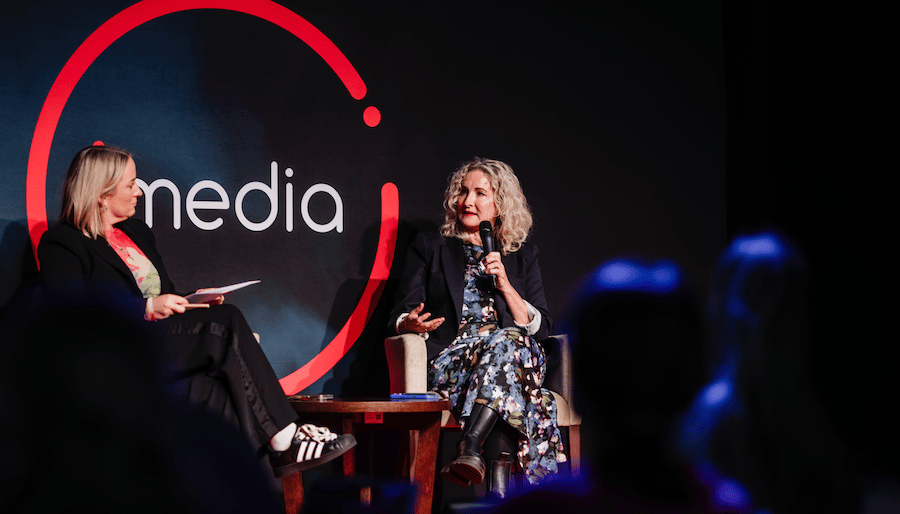
Mira Cossar, head of brand and marketing ANZ, iMedia, also aims to build a sense of community – on a larger scale.
“Marketing leaders face constant pressure in an industry that never slows down. iMedia connects them in a setting designed for collaboration and honest conversation. This year, some even joked our summit felt like group therapy after a tough year.”
Why sponsorship matters
But taking part goes beyond community involvement or a sense of belonging.
“It’s about brand awareness and building relationships with potential clients,” says Cossar.
That’s where sponsorship really works, she adds. Sponsorship is no longer just about slapping a logo on a banner and paying a fee. At large events, like iMedia’s three-day Future of Marketing Summit, sponsors focus on creating memorable moments that amplify their brand rather than simply seeking visibility.
“For this year’s Future of Marketing Summit, we collaborated closely with Sky to bring their ‘Unrivalled’ brand positioning to life. Together, we transformed the Summit’s Ultimate Networker competition into ‘Unrivalled’ Networker.

Beyond that Sky hosted the Go-Karting experience where they were empowered to shape the atmosphere, storytelling and engagement. The result was a fully immersive activation that felt authentically Sky,” says Cossar.
Stansfield agrees that the attendee experience is key – and says events that run seamlessly are great for brands.
“I think if you focus on building your brand authentically in a real environment, where your priority is giving people a great experience rather than just selling, you’ll be surprised at what can happen.”
What sponsors say
Q: How does sponsoring events, like iMedia, benefit your brand?

Reuben Wiremu, Sky Business’ head of marketing and creative, says: “I really value the opportunities that trade events like iMedia provide for us to connect directly with our highly valued clients.
“Sponsorship offers valuable brand visibility in a competitive landscape, while also allowing us to take part in meaningful conversations and build genuine relationships.
“In-person events give us the chance to listen, share insights and understand what matters most to our partners in an engaging environment. There’s real energy and value in bringing people together for a shared purpose,” Wiremu adds.
Q: Do you view event sponsorship more as a brand-building exercise or a sales opportunity?

Alex Lawson, Market Media’s head of strategy and marketing, says: “It’s a little bit of both, but not in a traditional manner. We view it as a relationship starter or strengthening opportunity.
“Sales may come from the event, but these are usually a long-term result, not immediate payback. For us, it’s a combination of getting our brand in front of marketers and agency groups in an engaging and interesting manner, hopefully without any hard sell.
“The relationships that we build at iMedia are designed to last for many years rather than fleeting encounters, and that’s what iMedia enables,” Lawson adds.
This story comes from NZ Marketing magazine issue 85, Dec 2025-Feb 2026. Why not subscribe? Get four issues a year for just $50 (including delivery) if you autorenew.
Essential marketing intelligence. Don’t miss it.