


Constant activity has become the norm for marketers in Aotearoa, leaving little time for asking the hard questions – like, what is all this meant to achieve? Think Folk’s Courtney Henderson issues a challenge to the industry: slow down, think and stop mistaking momentum for progress.
Being busy has become a marker of success in marketing. Activity is easy to see, easy to celebrate and easy to mistake for progress. But when everything is moving at speed, it’s worth asking what that activity is actually achieving.
If you work in marketing in New Zealand, you’ll know that work rarely slows down. There’s always something urgent, something to launch or say. Channels are always on. Content is planned, published and optimised in a neverending loop. Being busy has become part of marketing culture, with the expectation that good marketers are always producing, always responding, always delivering.
It’s the kind of busyness that looks impressive from the outside, but feels relentless from the inside. Despite that, the pace is rarely questioned – it’s just how marketing is, right? But when we stop long enough to ask what all this activity is meant to change – behaviour, perception, demand – the answers often become vague.

Is it working?
That’s not surprising. Deep thinking and good decision-making take time, alignment and clarity – things a constant churn of activity leaves very little room for.
When output becomes the priority, strategic thought is pushed to the backburner and momentum starts to stand in for progress, even when we’re not entirely sure what we’re moving towards. In that context, chasing numbers or a viral post can feel like success, especially when visibility brings recognition and celebration (regardless of whether it’s tied to a clear business outcome).
When impact is slow to show or difficult to attribute, speed and visibility become a comforting proxy for progress. Add the pressure of watching competitors and peers constantly show up across platforms, and producing ‘more’ starts to feel not just expected, but necessary.
The risk though, is that content starts to feel like an echo chamber, responding as much to the activity of other marketers as it does to the needs and behaviours of customers. In New Zealand, this culture is amplified by proximity. We see each other’s work constantly, across relatively small markets and overlapping industries.
Visibility becomes not just a measure of success, but a reassurance that we’re keeping up. It might be fun to ask ChatGPT to generate an action figure image of your boss, but is the engagement that post attracts serving, or even reaching, your customer? Maybe. Maybe not.
Does marketing need a rebrand? Read more from the colouring-in issue here





Activity avoids the hard decisions
This could be a hot take, but marketing has defaulted to activity because it’s easier than making strategic decisions.
In practice, ‘busyness’ does three things. It softens accountability, because it’s tricky to analyse impact when everything is in motion. It fills the space where strategy should sit. And it delays the harder conversation about what this work is meant to achieve, and who it’s actually for.
For many teams in Aotearoa, this culture is reinforced by structure. Marketing teams are lean, often made up of one or two people expected to plan campaigns, create content, manage channels, respond quickly and report on performance, all while being “strategic”.
When success is implicitly measured by responsiveness and output, there is little space left for the kind of thinking that shapes direction. Strategy doesn’t disappear through lack of skill or intent, but because the conditions required for it are no longer protected.
As this culture takes hold, marketing also becomes narrower. Promotion starts doing most of the heavy lifting, simply because it’s the most visible and easiest lever to pull at speed. Product, pricing and placement – the decisions that shape demand and behaviour – are deprioritised or treated as someone else’s responsibility. When promotion is left to compensate for decisions that haven’t been made elsewhere, no amount of content can deliver meaningful impact.
Think deeply, decide deliberately
Strategic thinking can’t be squeezed into the gaps between posting to Instagram and sending an eDM. And it shouldn’t be expected to happen in the shower before work, simply because that’s the only uninterrupted space left in the day.
Just as this pressure has become the norm, it’s now being accelerated through AI tools. However, while automation tools are amazingly good at producing activity at speed, they’re far less helpful when it comes to deciding what actually matters. Output increases, but clarity about what is actually going to be impactful becomes harder to hold onto.
Right here, right now, marketers and business leaders need to pause and take stock of how their marketing is running. Resetting expectations doesn’t mean rejecting new tools or slowing down for the sake of it. It means recognising that meaningful marketing outcomes require space to think, decide and connect activity back to intent. Leaders who want marketing to move the needle need to value judgement as much as execution, and protect time for thinking, not just production. That means being clearer about what marketing is meant to achieve, and resisting the urge to equate momentum with progress.
Without that space, marketing becomes surface-level by default, no matter how talented the people behind it are. And in a time when teams are stretched and technology makes ‘doing’ easier than ever, it’s the ability to think deeply and decide deliberately that separates being busy from making an impact.
Read more
This article was part of our colouring-in cover story in the March-May 2026 issue. You can read the rest of the series here:
- Marketing: What’s compelling and what’s colouring-in?
- Why marketing needs a wider lens
- Are we teaching marketers the wrong things?
- Why the best marketers invest in relationships, not just skills
- Structure meets innovation: how to be strategic
- Future Demand: exclusive extract from James Hurman’s new book
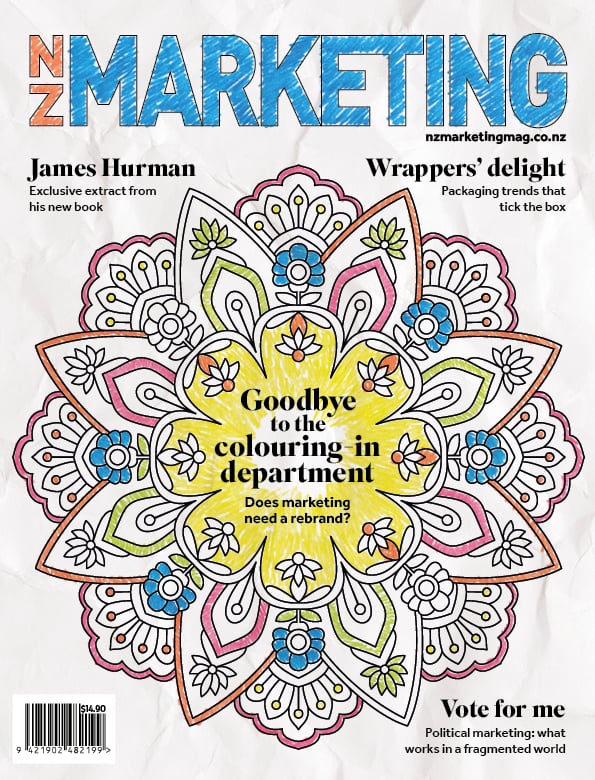
This story comes from NZ Marketing magazine issue 86, March-May 2026. Why not subscribe? Get four issues a year for just $50 (including delivery) if you autorenew.
Essential marketing intelligence. Don’t miss it.