Creativity and commercial return should be inseparable, say top New Zealand independent creative agency Federation. CCO Brad Collett and managing director Olly Walker-Boden on why the brands that win in 2026 will use ROI² as their multiplier.
What is ROI², and why is Federation putting so much weight behind it in 2026?
Olly Walker-Boden: We’re calling ROI² ‘creativity that delivers compound impact’. It’s the idea that creativity has two roles: to multiply long-term demand while converting short-term behaviour. When you do both consistently, the returns add up to maximum impact.
After an economy like 2025’s, it’s too easy to see marketing as a sales dashboard. Instead marketing needs to be the driver of an exponential growth curve. A long game that’s building memory, meaning and emotional weight, while using the short game to optimise impact. When they work together, the growth effect multiplies for exponential ‘return on ideas and investment’. That’s what Federation is calling ROI².
What happens to creativity in a year of reduced budgets and ad spending?
Brad Collett: The challenge for clients trying to keep their brand and bottom line intact through a recession is very real. But no way should smaller budgets become an excuse for justifying smaller ideas. That’s why I’m relentless about getting clients to a place of genuinely big ideas that earn ‘interest upon interest’, irrespective of the budget. Launching the ‘Dash’ creative platform for DoorDash – complete with Queen’s Flash Gordon soundtrack – was an act of marketing bravery in a year like 2025, but it’s already a huge example of ROI².
OWB: Seriously, if you pause the brand, you pause demand. 2025 understandably forced a lot of brands into “right now” thinking. The risk is the damage that might not have even been felt yet – but it’s real when you see it. The marketing reality is that consumers lose memory, and over time when the buying moment arrives, brands find themselves back at zero.
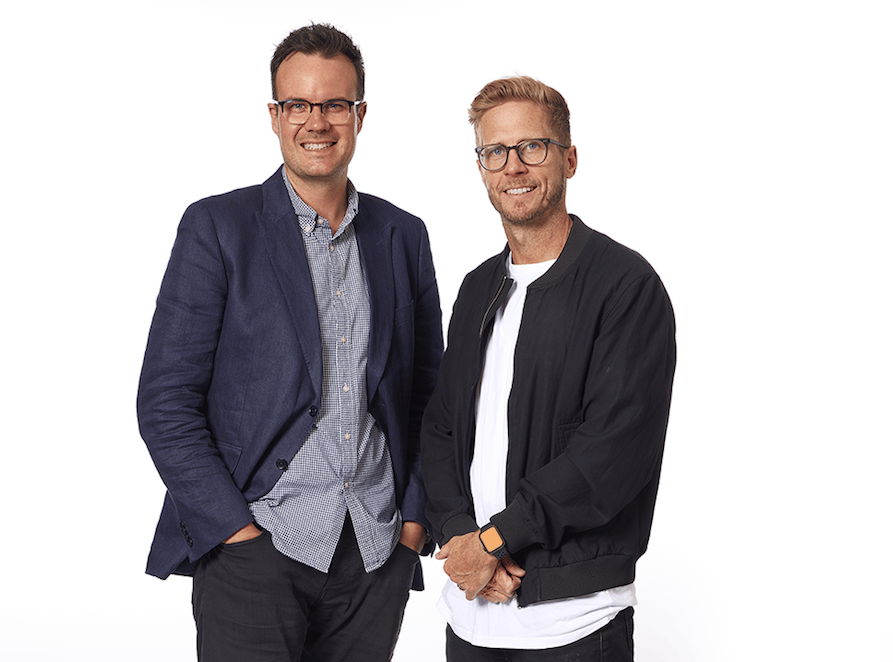
chief creative officer Brad Collett.
So what should marketers be ambitious for in 2026?
BC: Short-term isn’t the enemy, it’s just incomplete on its own. The long game sets the stage, the short game performs on it. ROI² is creativity that compounds interest over time. (I’m no mathematician, but this makes
a whole lot of sense.)
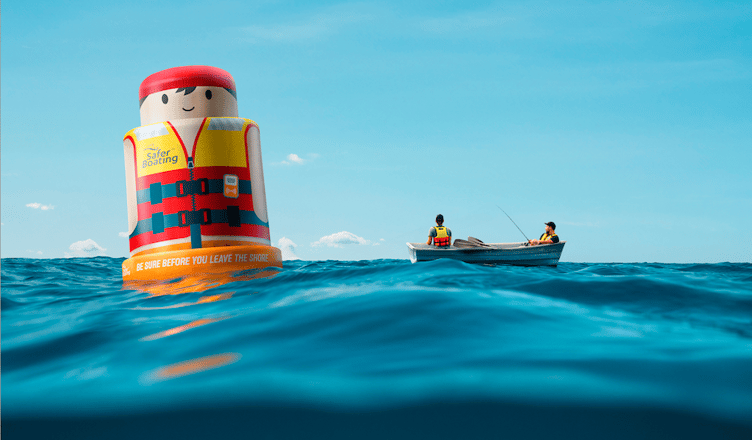
Our long-term behaviour-change work for Maritime New Zealand (shown in the main image) has done the most important job you can ever do as an agency: save lives. Meanwhile Auckland Transport’s award-winning ‘Mix your go’ idea has changed how Aucklanders get around their city over time. And Massey University’s ‘Here for what’s next’ has created a chain reaction of growth from a new generation of students.
OWB: Yeah, it’s not a battle between short and long, it’s a partnership. The brands committing to multi-year emotional platforms in New Zealand are quietly outpacing the ones still chasing the next quarter’s spike.
Our latest evolution of The Co-operative Bank’s ‘Bank better NZ’ is another great example of this in action.
When a brand invests in a bigger emotional idea, creative lands harder on the audience, your media spend works faster and conversion rates climb quicker. You’re teaching the market to know you before they even need you.
BC: Love that. “Teach the market to know you before they need you” is going in the agency creds deck. And when you get that mix right, it’s beautiful to watch. You see brands move from being a choice to being a default. That’s when compounding really kicks in.
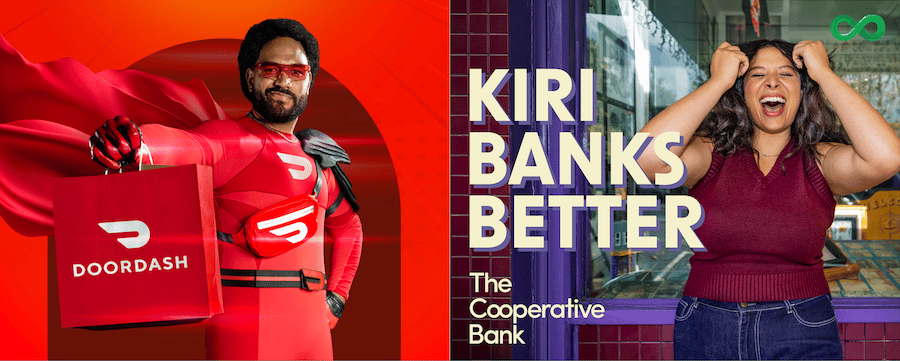
Right: Multi-year emotional platforms – like Co-op Bank’s ‘Bank better NZ’ – outpace quick hits.
Which NZ sectors do you see having a creative bounceback in 2026?
OWB: Automotive feels like a sector that’s ready to go off. And needs to after a quiet few years. In 2026, automotive brands need to make bold, category-defining moves that put them out in front. They need to combine long-term brand ideas with launches and experiences that get people talking and taking action.
Retail and ecommerce is another bounceback sector after being under siege for most of 2025. Competition is fierce and attention spans are short – creativity is the absolute multiplier. As Brad said, it’s not the size of the budget, it’s about the scale of the idea. Big, smart creative ideas for retailers have the power to turn everyday transactions into memorable, emotional moments.
BC: I’d add tourism and government into the mix too. Travel is a category that’s sustained interest even through the downturn but still has headroom to grow. People are curious, and New Zealand has stories, experiences and a culture the world craves for. The brands that tell those stories authentically and creatively – destinations, airlines, hotels and retail travel brands – will smash it.
2026 is a year for government brands to inspire and tell their promise better too. New Zealanders want to do more with their future. ROI² is exactly what government marketers should be aiming for from campaigns for health and whānau, workplaces, business and education.
OWB: Exactly. 2026 feels like a fresh start for brands ready to think bigger and if you get ROI² right, the payoff isn’t just going to be local – it could be global too.
Define “creative compounding” in practice?
BC: It’s knowing you shouldn’t start again every time. Stick to the big, original strategic thought everyone fell in love with at the start – the “it’s the one” moment. You might have lived it 24/7, but the public haven’t yet had the chance to let it sink in.
OWB: That’s spot on. Big ideas and the right ideas build compounding interest. There are times we need to trust the brand platform we already have by evolving it, not starting over. The best global brands do this relentlessly. Think about how Coke, Nike or Apple can say the same thing a hundred ways and it still feels new. That’s not luck, that’s discipline.
BC: And courage. It’s also about knowing when to change gears. A strong brand platform should be elastic enough to move with culture, but solid enough not to get lost in it.
ROI² doesn’t just sell now, it makes the brand more valuable every single time you use it.
OWB: Nice. We should put that on a T-shirt.
This story comes from NZ Marketing magazine issue 85, Dec 2025-Feb 2026. Why not subscribe? Get four issues a year for just $50 (including delivery) if you autorenew.
Essential marketing intelligence. Don’t miss it.