


For decades, marketers have learned how to interrupt, persuade, target, optimise and convert attention. But AI is causing a seismic shift, says Together’s Matt Bale.
AI is not just changing advertising, content production or search – it is changing the structure of market access itself.
Increasingly, markets are being filtered not just by people, but by systems. Discovery, recommendation and even commerce itself are all becoming AI-mediated, and that shift matters more than many marketers realise.
For the last 15 to 20 years, digital marketing largely operated inside an auction economy, with machines optimising ranking, impressions and efficiency.
However, AI-mediated systems have gone beyond ranking options. Now they’re selecting them.
Traditional search created many opportunities to compete. A consumer could compare 10 blue links, open multiple tabs, read reviews and bounce between brands.
AI collapses much of that behaviour, attempting to produce a single, trusted answer. The model is shifting from ranking to inclusion. From many chances to compete, towards very few.
AI learns from persistent signals
Historically, the system asked who bid the most, who generated the highest click-through rate or who produced the strongest conversion signal.
AI systems ask a fundamentally different question: Can I trust this enough to include it in an answer? That changes what matters.
Performance marketing, great creativity and storytelling are still vital, but brands now have a second audience to communicate with, alongside humans: machines, who require clarity, consistency, structure and verifiability.
They need to confidently interpret what a business is, what it does, if it’s credible and whether its claims can be trusted over time.
Great marketing is no longer just about what people feel. It is also about what systems can verify. Many businesses might soon discover they don’t simply have a creative problem or a media problem. They have an infrastructure problem.
If AI systems cannot clearly understand your brand, products, expertise or credibility, they cannot confidently recommend you.
Unlike campaigns, AI systems learn from persistent signals. Humans may remember your loudest campaign. Machines trust what stays consistently true.
Inclusion is becoming the new battleground, and what makes this even harder is that AI visibility is not static. Different models interpret, weight and retrieve information differently.
Ask the same question across multiple AI platforms, and you will often get different answers, different recommendations and different brands surfaced. Even more importantly, those answers change as the consistency of brand signals change.
Snapshots aren’t enough
Marketers can no longer rely on occasional snapshots of visibility. They need an ongoing understanding of how their business is appearing across AI answer environments across time periods.
And many businesses may already be losing visibility inside AI-mediated discovery systems without yet recognising this signal inside the noise.
Businesses are particularly vulnerable in categories that are highly comparable and have lower emotion – like energy retailing, insurance, travel, finance and ecommerce.
When AI systems begin filtering options on behalf of consumers, fewer brands may ever reach the consideration set in the first place.
The real risk is not simply losing traffic, but losing access to human demand before the click even exists.
Marketing increasingly resembles a decathlon rather than a sprint. Winning now requires a co-ordinated performance across creativity, media, trust, structure, discoverability and systems.
Traditional marketing hasn’t suddenly stopped working. Brands still need creativity, emotional resonance, fame and distinctive assets. Search remains commercially critical.
Human psychology does not disappear because AI enters the system. But another layer has now emerged over the top of the market. One that filters, interprets and increasingly decides what gets surfaced, trusted and selected.
Marketers now need to think beyond campaigns and channels alone. We need to think about persistent presence, computable trust and how our brands exist inside machine-mediated environments over time.
Together understands this new era, in which brands are no longer just competing to be seen. They are competing to be included.
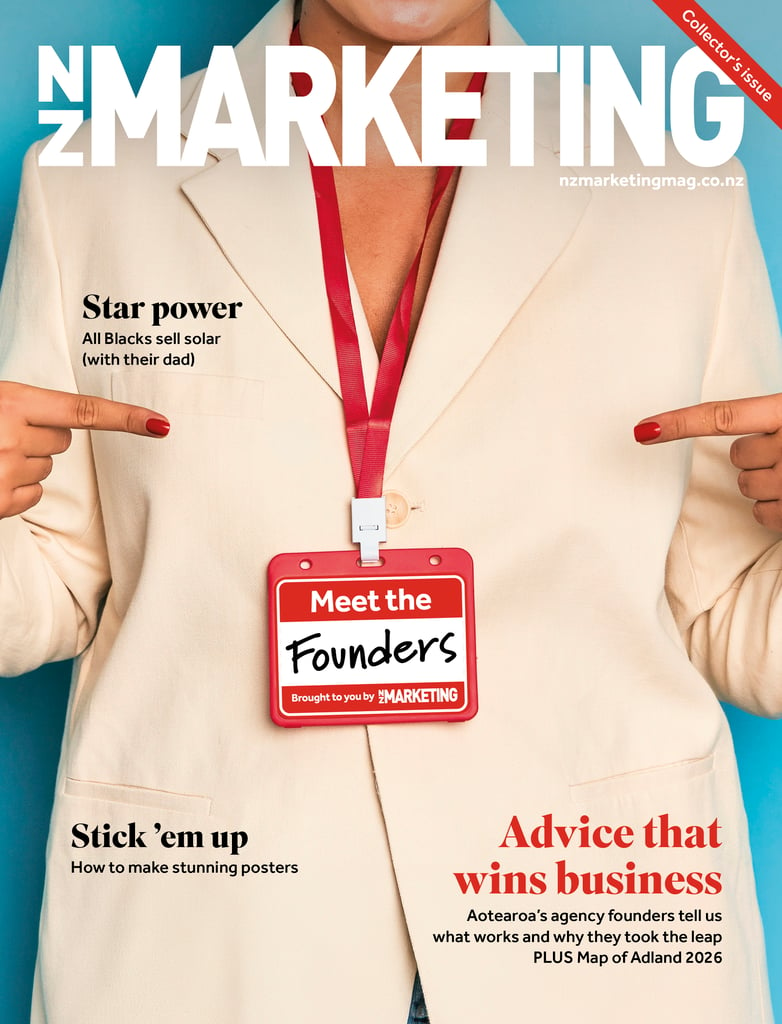
This story comes from NZ Marketing magazine issue 87, June-August 2026. Why not subscribe? Get four issues a year for just $50 (including delivery) if you autorenew.
Essential marketing intelligence. Don’t miss it.