

As media outlets hide articles behind paywalls or introduce subscriber models, industry figures join the debate about whether it’s right to charge readers for the news.

Penelope Brown, Managing Director, Media at Together
Paying for content is a perceived bitter pill to swallow. However, we all pay for things we value each day: our coffee, our gym memberships. We rationalise cost when things are of value. If content is valuable, meaningful, fit for purpose and of interest, then absolutely – just like any magazine sub of old or streaming subscription now, paying for content can be justified.
Cost models will always bring up an interesting debate though, especially as we recover economically this year. It would be nice to see some innovation in this space – low-cost and flexible models will remain key.
In the era of misinformation, I would pay for trusted, quality, in-depth journalism and content beyond the headline news that is and should remain, freely available.

Leni Ma’iai’i, Owner at DIG PR
I’m a big believer in paying for media content and believe all people who read news should find a way to chip in. I’m not huge on the donation model, though. I like it in theory but whenever I see a local musician put ‘koha’ on the door, you watch half the people walk right past it pretending to look in the other direction.
With some exceptions – like business journalism, where readers will pay a premium
to get an edge on the market – it seems unsustainable for publishers to dine exclusively on reader subscriptions. Advertising and subscriptions should be make up a balanced diet, but there’s also a big opportunity for more innovative models like micropayments per article, or even a ClassPass-like service across various publishers.

Got insight? Let’s talk about it on LinkedIn.

Simon Lendrum, CEO at Comms Council
It comes down to simple economics, but is at the heart of the news content challenge globally. Different models exist – from the NYTimes and Washington Post paywall, through to hybrid free/paywall models like The NZ Herald, and ‘supporter’ contributions with access limits, like The Guardian.
It loops back to the ongoing reliance on advertising to help content owners meet the gap between those willing to pay for content and those seeking content. New media is no less dependent on this model – hence, ad-supported Netflix options. YouTube – the biggest ‘free’ channel – is an ad-funded model, with subscriber/purchase options on top.
The question is not so much: ‘Should people pay for content?’ Rather: ‘Is the content sufficiently engaging and relevant to a sufficient number of people to encourage subscription, or does it generate sufficient engagement to attract advertisers?’
Consumers can’t be blamed for seeking free options wherever they can, so the onus is on content generators to deliver subscription-worthy or advertising-worthy content. In a sea of infinite content, that’s the challenge everyone is wrestling with.

Lewis Hampton, Co-founder at Payper
I’m a strong supporter of paying for content and expect we’ll continue to see more and more New Zealand outlets introducing subscription models.
It’s the reality of a tough media environment in New Zealand and if subscription models can help media outlets survive, then in my view they’re a good thing!
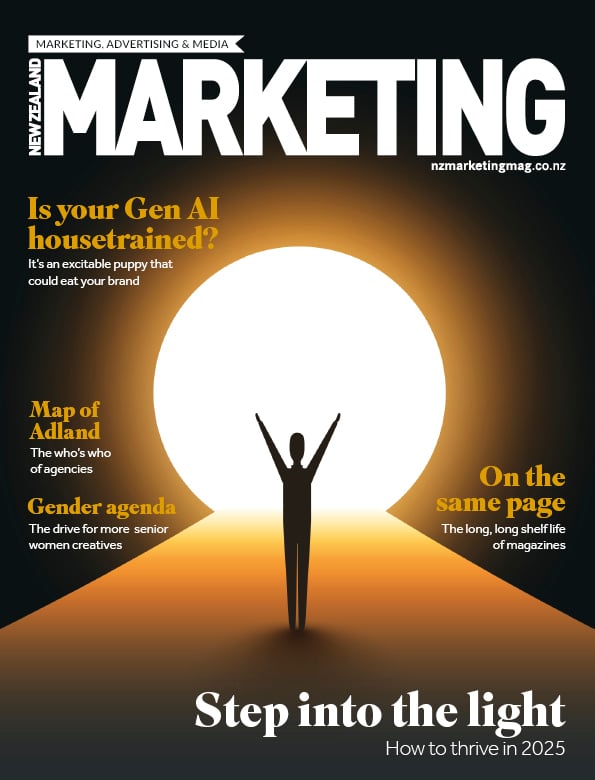
This story comes from NZ Marketing magazine issue 82, March-April 2025. Why not subscribe? Get four issues a year for just $50 (including delivery) if you autorenew.
Essential marketing intelligence. Don’t miss it.