

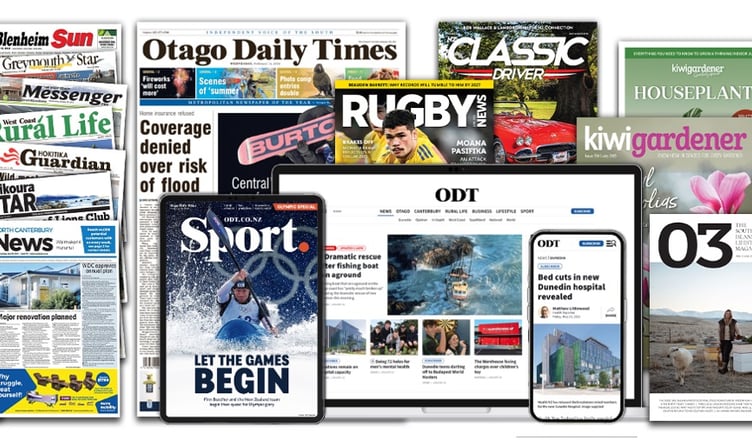
Allied Media titles are trusted by South Island readers with time and money to spend, says national sales manager Nic Dahl.
Back in 1984, Ghostbuster Dr Egon Spengler (played by the brilliant Harold Ramis) famously declared that “print is dead” – a phrase repeated countless times since. But more than four decades later, our South Island printing press still pops out hundreds of thousands of newspapers every week.
Sure, the industry has seen dramatic changes, yet the humble paper endures. If anything, we’d say newspapers have found their place again. Here’s why print remains relevant today.

Quality through constraint
Nobody scrolls to the bottom of their Instagram feed – there is no bottom. Digital content is infinite, and when everything can be published or posted, nothing feels particularly important.
Print is the opposite: pages are finite, space is limited. This forces editorial discipline and creates value. Being included means something, for both stories and advertisers.
Trust and credibility
Trust matters now more than ever and this is where newspapers have a clear edge over social media.
Social feeds are chaotic. Anyone can say anything, so it’s no surprise that trust in social platforms is low, especially when it comes to advertising.
Newspapers are different. The Otago Daily Times is consistently ranked as New Zealand’s most trusted newspaper. That trust flows through to the ads that sit alongside the journalism.
And print costs money. You don’t take out a print ad on a whim, so brands that do are seen as serious and credible.
An attractive audience
Print reaches a cashed-up audience with time and money. Homeowners. Business owners. Professionals. People buying cars, insurance, travel, appliances and services.
Print works
Print advertising works because it’s trusted, noticed and remembered. Reading a newspaper is a choice and reader engagement is deeper. Ad recall is higher in newspapers and magazines than on social media. Readers are more likely to remember brands they see in print and more likely to act.
We know print
New Zealand’s first daily newspaper, the Otago Daily Times, was founded in Dunedin in 1861 and remains a staple of southern life. Eight years after that, George Bell bought the Evening Star (now Dunedin Star). Six generations on, the family still owns Allied Media, running more than 20 newspapers across the South Island – plus five magazines including Classic Driver, Rugby News, 03 and Kiwi Gardener. It’s in our blood.
The recipe for a good newspaper
We believe the recipe for an enduring newspaper is simple. First, employ enough journalists to actually write news. A good paper should pass the pinch test.
Second, keep it local. People in Queenstown want to know what’s happening in Queenstown. Our 90-plus journalists across the South Island focus on the places they live in, not syndicated filler.
Do that, and you get a paper people want to read. And if there’s an audience, clever advertisers follow.
The print paradox
But in 2025, newspaper advertising revenue in NZ fell by 3.6%, even though readership grew slightly across daily metro papers. Each edition of the ODT reaches 4,000 more readers than it did a year ago.
Every ad dollar spent with NZ media helps fund news and entertainment here. If you care about holding power to account and celebrating communities, it’s worth backing the outlets that do the work.
We have the readers, day after day, week after week. Do we have your next booking?
Contact Nic Dahl on 0275548512 or email [email protected]
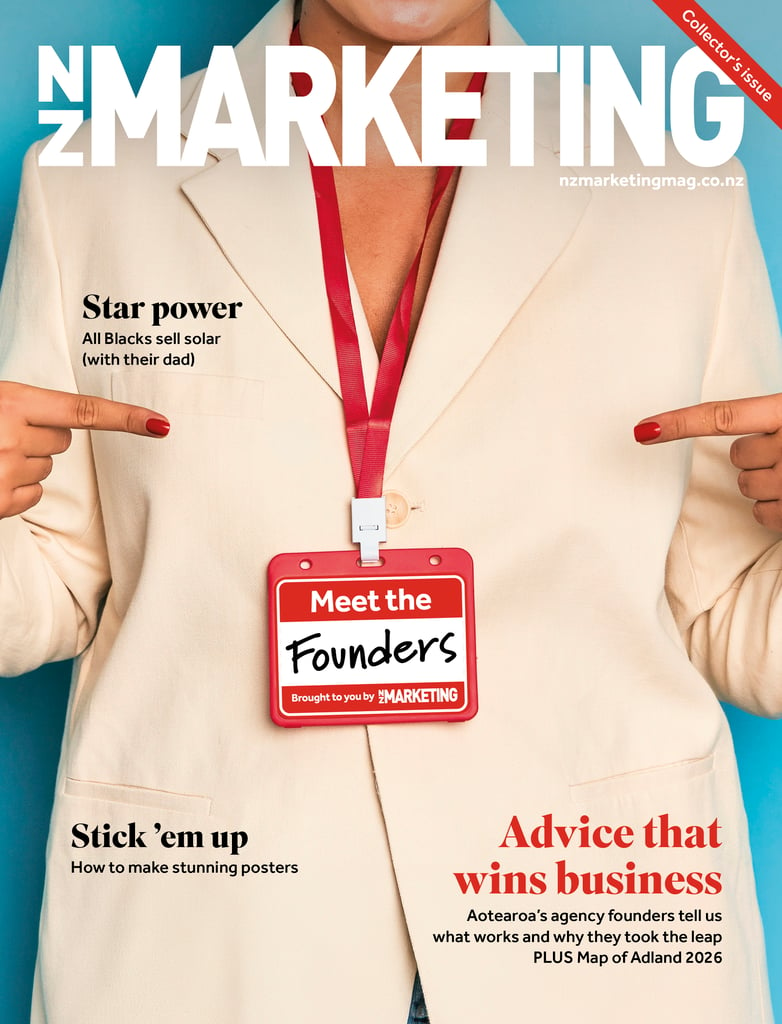
This story comes from NZ Marketing magazine issue 87, June-August 2026. Why not subscribe? Get four issues a year for just $50 (including delivery) if you autorenew.
Essential marketing intelligence. Don’t miss it.