

Marketing has gone from a dark art to a hugely measurable enterprise. So why does it still seem so hit and miss? Advertising effectiveness expert James Hurman says we’ve been targeting the wrong customers with the wrong creative – and proposes a more reliable way.
NZ Marketing ran an exclusive extract from Future Demand in the March 2026 issue, ahead of publication as an ebook in June and physical book in August. Editor Penny Murray sets the scene.
A century ago, marketers didn’t know why some campaigns worked and others didn’t. Sales conversion rates from advertising languished at about 1% – a wildly successful campaign might achieve 5 or 10%. Those figures remain stubbornly constant, even now.
That’s despite all the measurement available. In the 2010s, the internet made it easy to track metrics like reach and click-through rates. We could see that little brands grew swiftly using performance marketing techniques and marketers became mesmerised by it. Big brands started marketing themselves like little brands, neglecting brand building and spending most of their budget on performance marketing… and became smaller. Brands pour billions into digital every year, yet in the US they now lose $29 on average for every customer they acquire this way.

What’s going wrong?
In his forthcoming book, Future Demand, advertising effectiveness guru James Hurman pinpoints that problem and delivers a new playbook for marketers and the advertising industry. Rather than concentrating on those in-market right now, he says brands must also speak to the customers of the future – because they will generate the most sales.
The second part of the formula is to speak to these two markets in different ways: in market customers need facts and information (performance marketing), while future customers respond to emotional, creative messaging that builds brand. This way, customers are already predisposed to choose your brand when they shopp the category.
Hurman lays out solid behavioural and neuroscientific evidence for the above in the opening pages of Future Demand. We join the story as he proposes a new mental model.
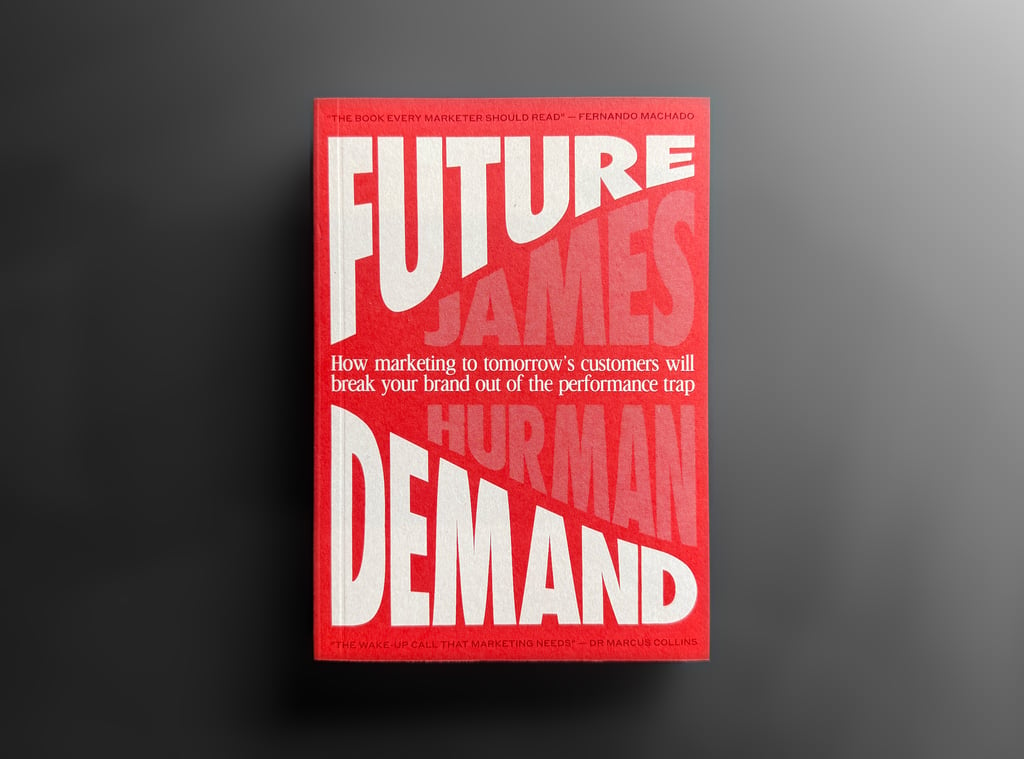
Future Demand by James Hurman
In this exclusive extract from James Hurman’s new book, Future Demand, he examines how markets really work, how people really make purchase decisions and what it means for advertising.
We now know how markets work – people spend a lot of time out of the market, with very little interest in it, then spend a short amount of time in the market, with a high level of interest in it, then exit it and spend another long period out of it.
All markets have a small amount of category buyers in them at any given time, and a large amount of category buyers out of them, dormant, but sure to enter them at some point in future.
When we try to work against that nature of the market, our success is limited. We’re trying to swim against a tide flowing constantly in the opposite direction. We may well get a few feet along, but with an awful lot of effort for not a lot of return.
It makes more sense for marketing to flow with the tide of how markets naturally work.
Primed for purchase
In October 2025, WPP Media and Oxford University’s Saïd Business School released a white paper called How Humans Decide.* They’d studied the purchase journeys of 1.2 million people, across a multitude of categories.
And they found something remarkable and important: 84% of those purchases came from people choosing brands they were already biased towards before they entered the buying process. That vast majority of sales did not go to brands that did a great job of advertising to those people when they came into the market in current demand mode.
Those sales went to brands that had done a great job of priming people back when they were in future demand mode. “The result of this priming bias,” they concluded, “is that much of people’s purchase-journey behavior is predetermined: in every category they buy from, most shoppers will already know which brands they’re going to consider; will typically consider fewer than three brands; and will end up choosing the brand they’re most biased towards.”
Predictably irrational
So here’s the second thing we know about how markets work: when people come into a market, they don’t arrive with an open mind. They don’t show up equipped to make a purely rational decision informed by the marketing that’s put in front of them as they’re considering a purchase. They arrive with a bias toward one or two brands. And the clear majority of the time, they choose one of those brands.
This behavior is clearly irrational in a classic economic sense – a good amount of the time, the brand they choose won’t actually have the objectively best product.
But our brains do indeed work in irrational ways. The field of behavioural science became famous because it revealed just how ‘predictably irrational’ we humans are when we make decisions.
Our brains are heavily influenced by subconscious biases toward things that we feel emotionally positive about – things that we like, make us feel safe or are easy.
If we’re asked to explain a choice we’ve made, we post-rationalise that choice in a way that makes it seem like a rational choice to others. Sometimes we even post-rationalise our choices to ourselves.
Contrary to popular assumption, we don’t have rational brains, we have rationalising brains.
What WPP and Oxford’s work confirmed is that, when it comes to buying things, these subconscious biases account for most of what gets bought in the everyday consumer economy.
Does marketing need a rebrand? Read more from the colouring-in issue here






Shape the future, convert the current
So now we have a very clear, general view of how markets work, and how humans make decisions:
- At any given point in time, a market is made up of a small group of people who are actively looking to buy from that market, and a much larger group of people who will come into the market at some point in future.
- As people come into a market, they come with a powerful bias toward a small number of brands that usually results in them choosing one of those brands.
- This often happens regardless of whether there is an objectively better product available from a brand they’re not biased toward.
And this has a huge implication for advertising.
It means that advertising is really about two things:
- Shaping the biases of people while they’re not in the market.
- Confirming their bias when they come into the market.
Create demand
Confirming an existing bias is relatively easy. Advertising that touts product features and benefits does a great job of making it easier for a buyer to post-rationalise their choice in a way that makes it seem like a rational choice to themselves and others.
Shaping biases is harder – and it’s nothing to do with features and benefits.
But the wonderful thing about the biases that unconsciously control people’s choices is that we can shape them.
Advertising is an incredible tool to use to do so – and the rest of my book is about how to plan and execute advertising that creates future demand by shaping those biases and influencing future purchases.
The new model
It takes a different kind of creative and media approach, and produces results that build over time. When we do it, our business growth in terms of sales, market share and profitability compounds as we move forward. When we don’t do it, we tend to stagnate or experience poorer ongoing growth than our competitors, even when our performance marketing efforts seem to be working very well in the short term.
This is why advertising produces a high return on investment in total, while only some of that return shows up in the immediate sales data. Advertising produces some immediate sales, and it also creates longer-lasting effects which mean our future sales will be greater, more efficient and more profitable.
So here’s the crux of advertising’s new mental model: Advertising has two, equally important, jobs:
- Create future demand: Shape the biases of people who will come into our market sometime in the future – make sure our brand is the one they feel most familiar with and good about.
- Convert current demand: Confirm the bias we’ve shaped to get as many of the small group of ‘in-market’ people as possible to choose us.
It’s not one versus the other. It takes both. Working together.
Order the book at futuredemand.com
Source: How Humans Decide; wppmedia.com/news/how-humans-decide
Note: The above excerpt might differ slightly from the final version.
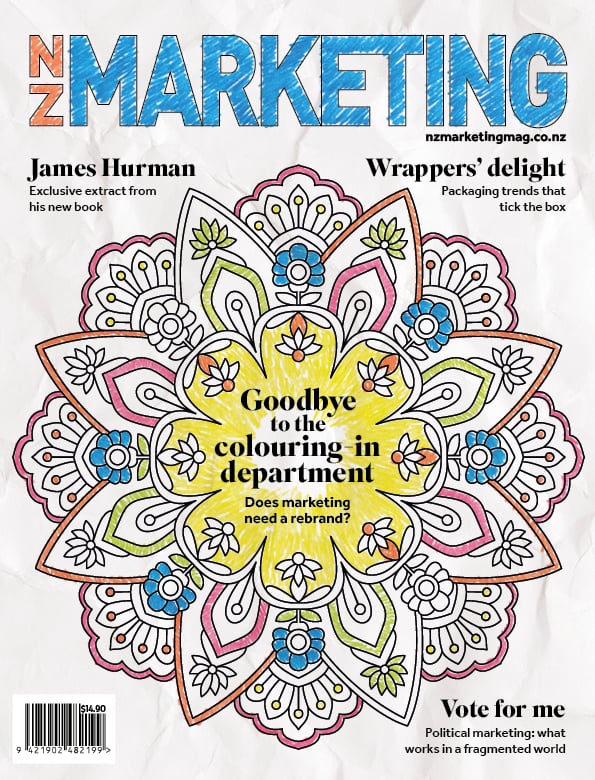
This story comes from NZ Marketing magazine issue 86, March-May 2026. Why not subscribe? Get four issues a year for just $50 (including delivery) if you autorenew.
Essential marketing intelligence. Don’t miss it.