


Marketing missing the mark? You might need a broader range of people in the room, says YouTube NZ Marketing Future Marketer of the Year 2025 Simran Wadhawan.
Does marketing need a rebrand? Maybe. But it definitely needs a wider lens.
Marketing gets called the ‘colouring-in department’ when it feels like it’s adding a pretty layer, not driving the business. And honestly, part of that is on us. Sometimes marketing doesn’t market marketing. The commercial thinking, the customer understanding, our enterprise lens. If people only see the ads, they assume the job is just ads.
But there’s a deeper reason marketing sometimes misses the mark. We are often trying to speak to a market that doesn’t look like the room making the decisions.
When marketing teams aren’t diverse in age, ethnicity, lived experience or even worldview, it impacts the work before we’ve written a single headline. It shapes what we notice, what we assume, what we think is “normal”, and what we call insight.
That’s where confirmation bias quietly creeps in.
Does marketing need a rebrand? Read more from the colouring-in issue here






We love saying: “We’ll research it.” But research is only as good as the questions we ask. If we’re not careful, we go hunting for evidence that supports what we already believe – or what we want to be true – and we stop when we find it. We can end up confusing “data backed” with “data selected”.
That’s not because marketers are lazy or malicious. It’s human. But it becomes a problem when the same type of person keeps being the one asking the questions.
Let’s talk age for a second. We can’t expect older marketers to naturally know Gen Z language, internet humour or what feels authentic today. And I’m not saying they should retire (please don’t). Experience matters. Pattern recognition matters. Calm judgement and guidance matters.
We can’t expect a middle-aged white man to understand why New Zealand went crazy over Rhode launching (best lip balms eva).
But there is no harm, and a lot of upside, in putting fresh eyes in the room early.

Diversity improves decision making
In my role, my CMO did something I’ll never forget. When we were reviewing agency recommendations and creative platform options, he asked the youngest person in the room, me, to comment first. Before anyone else. That moment wasn’t just empowering. It changed the lens. It forced the room to consider how the work might land with the next generation before the “grown-up logic” took over.
That’s the power of diversity in real time. It doesn’t just add representation. It improves decision making.
The same applies to ethnicity and culture. Lack of diversity often shows up as cultural almosts. Work that tries, but talks past people. A classic example I’ve seen is running chicken in a Diwali ad. It might seem like a small detail, but it signals a bigger issue. The team didn’t go deep enough to understand the context, the nuance, the lived reality of that audience (no meats on auspicious days).
And that’s what cultural relevance actually is. Not adding a festival greeting to a banner, but understanding the layers underneath. Not the presented ‘why’ but the underlying ‘why’.
So yes, marketing might need a rebrand. But not in the logo sense. In the how we operate sense.
If we want marketing to be taken seriously, we need to build teams with more lenses in the room, earlier in the process. More young voices. More ethnic diversity. More lived experience. Not as a tick box for HR. As a competitive advantage.
Because when the room gets broader, the work gets sharper. And suddenly marketing doesn’t look like colouring in.
It looks like growth.
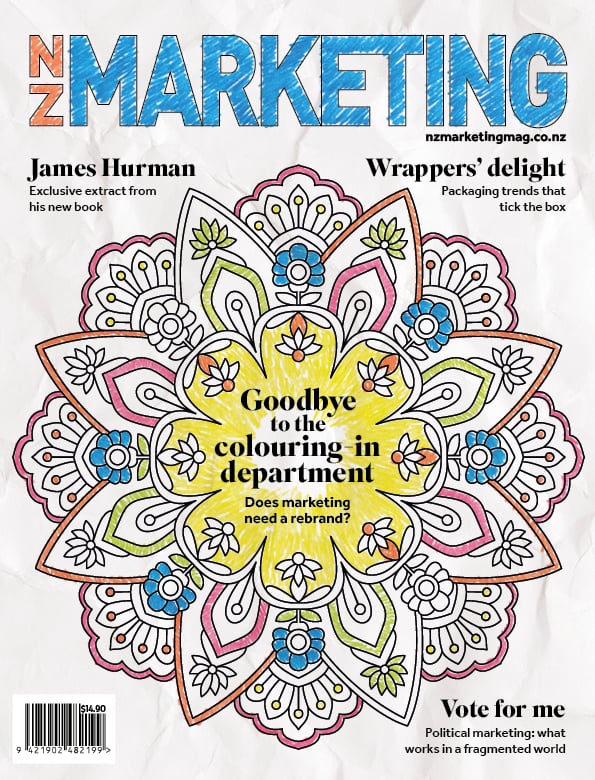
This story comes from NZ Marketing magazine issue 86, March-May 2026. Why not subscribe? Get four issues a year for just $50 (including delivery) if you autorenew.
Essential marketing intelligence. Don’t miss it.