

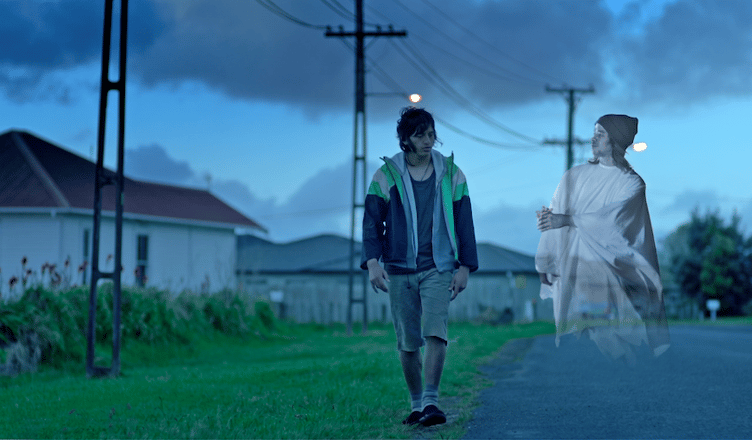
Above: ‘Ghost chips’ was awarded the Grand Effie in 2015 for its sustained success in changing the drink-driving conversation.
What makes a Grand Effie winner? Convenor of judges Murray Streets looks back at top picks from previous years as the Effie Awards celebrate 25 years in Aotearoa.
In a world of constant and rapid change, one question remains as simple and as vital as it was 25 years ago: did the work work?
The Effie Awards in Aotearoa New Zealand exist to provide the definitive answer. They are the gold standard, not for the campaigns we liked the most or that we thought were the most original, but for the campaigns that achieved the most.
At the 25th anniversary of Effie Awards Aotearoa, we’ve reviewed the best in show winners from the past 25 years. We looked for commonalities that might offer clues to entrants in 2026 and direction for our judges to ensure the spirit of Effie is upheld in this milestone year.
Define the marketing challenge or problem
The most effective marketing does not start with a solution, it starts with a deep and insightful understanding of the problem.
Winning entries show that a breakthrough strategy is often born from a diagnosis that goes beyond the surface-level business challenge to uncover a real, human problem that shows up in behaviour, in attitudes, in the frictions and anxieties that shape decisions.
Consider the challenge faced by NZTA in the 2015 Grand Effie winner ‘Legend’. The behavioural problem was persistence of youth drink-driving, but the real challenge was social: the crippling awkwardness of telling a mate not to drive. The campaign reframed the interventionist from a buzzkill to a hero.
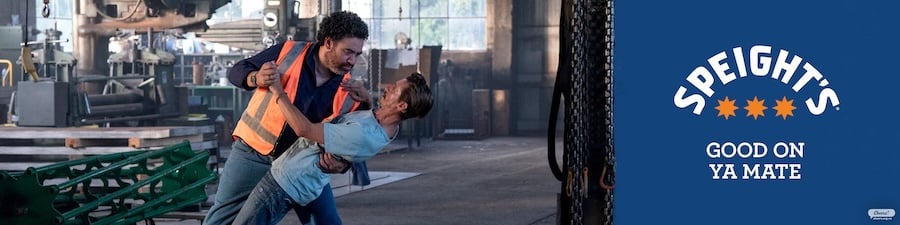
Similarly, Speight’s ‘The dance’ in 2020 started with a category issue – the decline of mainstream beer sales – but uncovered a very real brand problem: the Southern Man identity had become a cultural relic. The diagnosis was that the brand itself was the barrier.
The resulting strategy redefined the brand’s identity to reflect a more modern, emotionally connected view of mateship. Again, what elevates the winner here is not only the creativity of the idea, but the discipline in showing what changed, for whom and how that change translated into long-term commercial performance.
Strategic solutions as bridges
A sharp diagnosis allows for the setting of relevant, commercially meaningful objectives. But the magic – the bridge between the problem and the outcome – is the creative strategy. The winning entries show that the most powerful ideas are not just ads or content, they are deep strategic solutions.
In 2007, ‘Billion dollar affair’ from RaboPlus described a new online savings proposition entering a category that was extremely low in churn, with multiple perceived barriers to changing provider. The strategic solution, to position RaboPlus as ‘the bank on the side’, removed these perceived barriers and established RaboPlus as the rewarding flirtation that informed everything the brand did.
Causation makes the winning case
One defining characteristic stands out above all others: the winners proved how their strategic and creative thinking caused commercial results.
This is what separates an Effie from a creative award: the commitment to proving, with rigour and evidence, the causal link between the marketing activity and the commercial outcome.
Toyota’s 2021 entry, ‘The unbreakable bond’, shows precisely how their brand platform measurably increased trust, how that trust directly correlated with brand preference and how that preference translated into regaining their number one market share.
Similarly, Skinny’s Sustained Success entry ‘Get the Skinny’ in 2022 provided several years of data to prove how consistent investment in a simple brand idea created a cumulative commercial advantage. It isolates the long-term ROI of their marketing from other factors and uses multiple data points – a combination of hard and soft measures – to remove any doubt as to the causality at play.
Rewarding commercial impact, not activity
As convenor of judges this year, I want to be very clear about what will distinguish the strongest entries from the rest.
There must be commercial results that matter to the business: revenue, profit, market share, penetration, margin, retention or other meaningful measures of value creation.
The judges will look for a line of argument that shows how the work delivered those outcomes, not just that they happened at roughly the same time. That requires a demonstration of causality. The best entries acknowledge other factors at play – pricing, distribution, seasonality, competitor activity – and still manage to isolate the contribution of marketing and demonstrate the causality beyond doubt.
Duration of impact will be rewarded
I am also looking for proof of sustained, not just short‑term, effectiveness. Many of the past best in show winners demonstrate impact across multiple quarters or years, showing how consistent investment in a platform or idea created compounding advantage.
Shorter‑term response metrics are valuable, but they become powerful when they are connected to longer‑term brand and commercial outcomes.
Fundamentals matter more than ever
The world has changed in the 25 years since Pam’s Jamie Oliver campaign won the first ever best in show.
Yet the fundamental principles of effectiveness are timeless. They remain a guide for anyone who believes that the greatest marketing creativity must be a powerful engine for growth.

The strongest cases contribute to best practice for our entire industry. By entering in 2026, you are helping others understand how advertising creativity can be applied to solve business problems and deliver remarkable results.
This story comes from NZ Marketing magazine issue 87, June-August 2026. Why not subscribe? Get four issues a year for just $50 (including delivery) if you autorenew.
Essential marketing intelligence. Don’t miss it.