

Above: EECA modelled that customers would save $4.60 for every dollar invested in the Winter 2025 Energy Savings programme.
When it comes to determining ROI on behaviour change campaigns, pitch the finance not the philosophy, says EECA’s Russ Duncan.
New Zealand is well known for producing blue chip (or should that be ghost chips?) social marketing. Creative, bold and globally recognised. But this reputation doesn’t make us immune from constantly defending its purpose.
Social marketing empowers people to gain better outcomes. Warmer homes. Better health. Safer roads. Stronger communities. It’s long-term, often messy and famously difficult to confirm return on investment. And maybe, no doubt unconsciously, this has been used as a shield against hard questions about value.
It’s not the same day, David
There’s also the context we’re operating in. Publicly funded marketing is facing shrinking budgets, media fragmentation, scrutiny and an increase in institutional distrust. If social marketing wants to survive, let alone scale, it has to get much better at answering one blunt question: why is this a smart investment of public money?
Social marketing was never meant to sit outside commercial marketing logic. Professor Ann‑Marie Kennedy from the University of Canterbury has noted: “Social marketing emerged by deliberately adapting and combining the tools of commercial marketing, segmentation, audience research, value exchange, promotion – with behaviour change theory, and applying them for social outcomes. The discipline’s roots are pragmatic, not philosophical.”
If that’s true, then applying financial discipline to social marketing isn’t a departure from its origins. It’s a return to them.
The sneaky fifth “P”
Marketing 101 gave us the four Ps. But social marketing has a fifth: politics. Does it align to the current priorities, how will it land in the court of public opinion?
When public service agencies are being asked to cut spend, justify headcount and defend every line item, marketing programmes can be seen as low-hanging fruit. Campaigns framed around a moral argument – “it’s the right thing to do” – struggle, no matter how worthy the cause or clever the idea. Campaigns funded by taxpayer money amplify the challenge.
ROI can change the conversation
ROI doesn’t replace social outcomes. It reframes them. It takes behaviour change out of the philosophical space and into economic decision-making. Instead of asking funders to believe in impact, it shows them what that impact is worth.
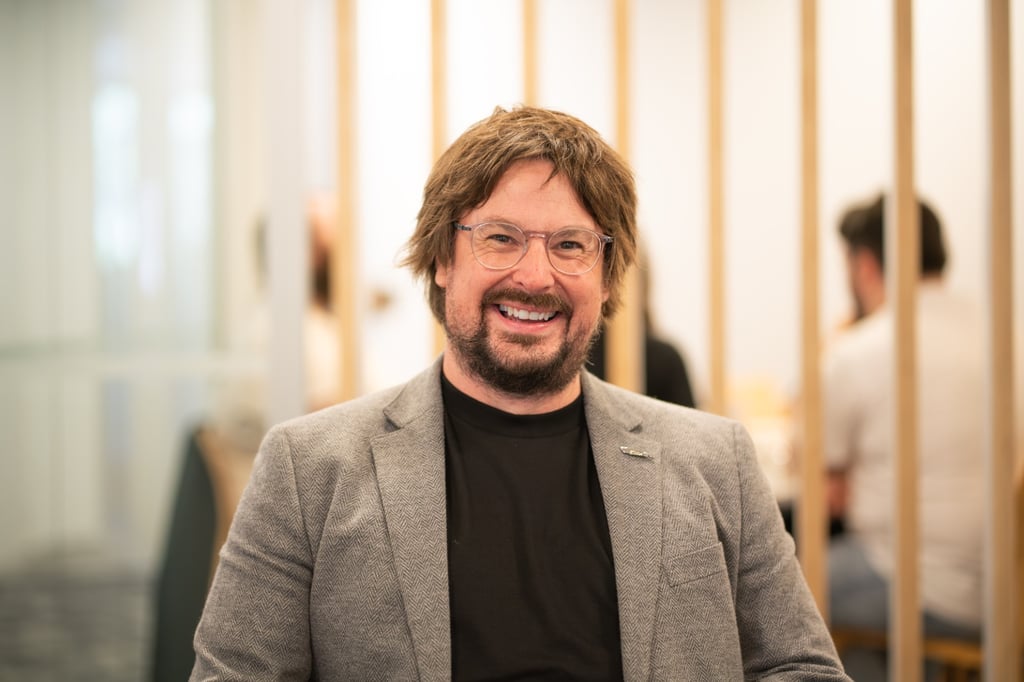
Russ Duncan is senior marketing lead, EECA
From outcomes to investment logic
At EECA, the shift has been deliberate.
Our remit includes supporting New Zealanders to be more energy efficient. It keeps costs down for households and business as well as supporting a more resilient electricity grid. Public engagement is central to that mission.
Campaign reporting has always been thorough. But we didn’t have a consistent answer to the question: what financial value does this behaviour change create relative to the money invested to drive it?
Today, ROI modelling is embedded across EECA’s major public engagement campaigns, from programme design through to evaluation. We model the downstream benefits of behaviour change.
Our Winter 2025 Energy Savings programme modelling showed that for every dollar invested, consumers saved around $4.60 on their power bills. That adds a material layer to a conversation that has previously focused exclusively on awareness or engagement. It positions social marketing not as a cost to manage, but as capital deployed to reduce future pressure elsewhere in the system.
Now, these ROI results are publicly published as organisational performance indicators. That transparency forces rigor and accountability.
If it’s so cool, why isn’t everyone doing it?
The reasons are familiar. Modelling feels intimidating. Attribution feels impossible. Money is treated as funding to spend, not capital to invest.
Over recent years, social marketers have increased community involvement, which has improved our work dramatically – it’s more real, connected and grounded. We’ve been less good at bringing economists or analysts into the village.
There’s also a more philosophical resistance: the belief that social outcomes shouldn’t be reduced to dollar figures. And that’s fair – to a point. Not everything that matters can be monetised perfectly.
But struggling to engage with value doesn’t protect programmes. It leaves them vulnerable.
Pragmatism over perfection
EECA didn’t invent ROI modelling and evaluation. We adapted existing cost-benefit frameworks into something practical that could be applied as new initiatives are scoped. In fact, working with existing models has helped enhance credibility.
We also leant heavily on our agency partners over the past few years: Special Wellington, TRA, Verian and some epic work by media agency MBM allowed us to bake in cost-benefit analysis from the outset.
The approach is deliberately conservative. Assumptions are explicit. Sensitivity analysis is built in. It’s not about claiming perfection, it’s about taking a step in the right direction and being transparent about uncertainty.
We found a key shift is leading with the ROI, not the intervention. The campaign is the tool. The value created is the argument.
Where this leaves the sector
This shift doesn’t strip social marketing of its purpose or its magic. It protects it. It gives decision-makers a reason to keep backing work that delivers long-term benefits even when short-term pressures dominate.
In the current reality, real, measurable, reported ROI isn’t a nice-to-have. It’s the price of staying in the game. And we might find this new lens brings new opportunities, too.