

With Costco open and Ikea on its way, Kiwi shoppers’ prayers are being answered. But what does their arrival mean for local retailers, and will it open the floodgates for more global brands to enter our market?
When it comes to global brands, living in New Zealand can often feel like being the poor cousin, watching as the likes of Aldi set up shop in Australia but fail to offer a branch across the Tasman.
For years, Kiwi consumers have been crying out for more choice and competition in the retail sector. But a one-two punch of international arrivals has raised hope Aotearoa might finally be on the global retail radar.
Members-only wholesaler Costco attracted huge crowds when it opened in the Auckland suburb of Westgate in 2022.
Meanwhile, Ikea is busy building its own first New Zealand store at Kiwi Property’s Sylvia Park mall in Aucklnd’s Mt Wellington. It’s due to open in late 2025, but Ikea has been looking to come here for a while.
“Ikea has long been interested in entering the New Zealand market and New Zealanders have been telling us for some time that they would love to see Ikea open here,” says Fabian Winterbine, market expansion manager at Ikea Australia and New Zealand.
“Finding the ideal location finally made this possible. Additionally, our shift to an omnichannel business model, which will allow us to reach all New Zealanders through both the physical Ikea Sylvia Park store in Auckland and online, has played a significant role in our decision to bring Ikea to New Zealand now.”
A vibrant and growing community
Winterbine says Sylvia Park is an exceptional location for several reasons. Firstly, it offers excellent accessibility – not only by car but also via public transport, with a train station just a short 300-metre walk from the Ikea store.
“This ease of access aligns perfectly with our sustainability commitments, making it convenient for customers while promoting eco-friendly travel options. Additionally, Sylvia Park is home to New Zealand’s largest shopping centre – a well-known and frequently visited destination,” he says.
“The area continues to develop, with new homes, facilities and services planned, making it an ideal spot for Ikea to be close to where people live and spend their time. We believe Sylvia Park is a vibrant and growing community that aligns with our vision of creating a better everyday life for the many.”
Come over to our house
To prepare for its arrival, Ikea has done a lot of market research to discover what New Zealanders’ dreams and needs for their homes are really like.
“Over the past year, we visited more than 500 homes across the country in Auckland, Wellington and Christchurch to understand how Kiwis live,” Winterbine says.
“We looked at everything from the type and size of homes to the people who live there, their interests, hobbies and budgets. Teams of Ikea representatives from Australia went into detail, combing through every room of the house to find out what activities are being done and how.”
He says the findings, collated in Ikea’s first ever Life at Home Report New Zealand, were really interesting.
“For example, New Zealanders often use their garages for more than just cars and storage. They turn them into gyms, playrooms, home offices and more, showing a lot of creativity.
“We also found that many Kiwis have side hustles or hobbies that they’ve turned into small businesses, highlighting their strong entrepreneurial spirit.
“Lastly, we see a big demand for affordable, good quality, well-designed home furnishing products and solutions, which we believe Ikea can provide.”
Preparing for landing
Coming to New Zealand is not a straightforward process for big international retailers, and New Zealand Trade and Enterprise has worked closely with both Ikea and Costco to help bring them here.
The NZTE Investment team initially provided Costco with demographic analysis and market insights. However, when Costco personnel were unable to travel to New Zealand to meet suppliers during the pandemic, NZTE hosted a sourcing webinar with Costco’s key buyers, connecting them to more than 1000 potential New Zealand suppliers.
They have also been working with Ikea long before the purchase of 3.2ha at Sylvia Park was announced back in 2021. “Ikea has been exploring an entry into the New Zealand market since 2015, and have undertaken significant market and value chain analysis,” says Craig Hudson, GM export customers New Zealand Trade and Enterprise.
“NZTE has worked closely with Ikea Australia to assist with assessing the NZ market and providing information and contacts to help build the business case for New Zealand expansion.”
Hudson says big brands can deliver a range of benefits to New Zealand – including jobs across sectors from construction to retail.
“In addition to employment they support economic growth, extend consumer choice and as a result encourage competitive pricing, lower prices and significant opportunity for NZ companies to supply local product.”

Trickle not a flood
However, Hudson says NZTE is not currently working with any other big global brands. Ben Goodale, founder and CEO of Quantum Jump, says there are so many amazing global brands, but they’re unlikely to come to New Zealand.
“Desigual, an amazing Spanish fashion brand, Johnny Was, Kiko, Boggi (a personal favourite), Unode50, Psycho Bunny, so many more. But it gives us a good reason to go on vacation too!”
Goodale says, with Ikea in particular, it was pretty well understood that they would get to us when they were ready. “For many global brands, NZ is generally a rounding error and it’s more about completion to turn up here. We are never going to be a cash cow,” he says.
“We are a long way from most places so distribution costs are higher, and volumes limited. We are so lucky to have Costco and now Ikea at last. So many Kiwis already love Ikea, yet getting their products here is so challenging – I’ve brought a fair bit back from Sydney over the years.”
As for the effect on the local retail market, Goodale says Costco has probably been impactful, but Ikea will likely be much more.
“I’m pretty sure many furniture chains have been dreading Ikea coming – well-designed, on trend, stylish and affordable furniture. Ikea will be very busy,” he says.
“It will draw people from all over the North Island. When I lived in Glasgow and there wasn’t an Ikea in Scotland, we’d drive to Newcastle to the nearest Ikea. That’s about a three-hour drive.”

Fashion by the runway
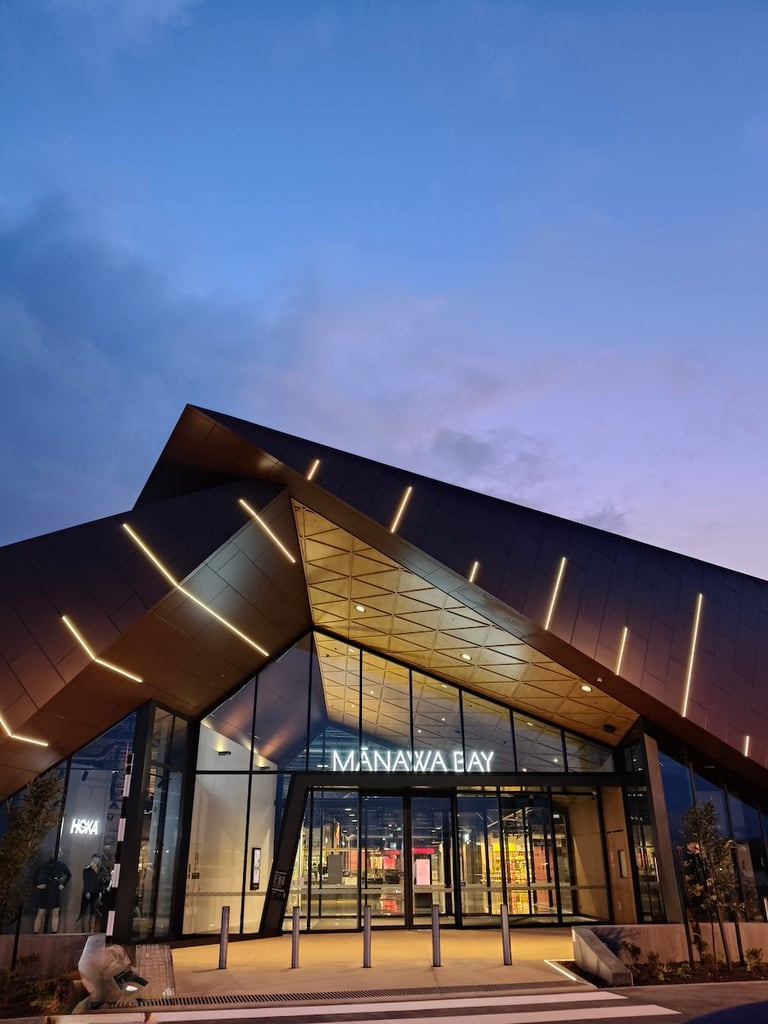
Lovers of fashion have also had reason to celebrate, with the opening of Auckland International Airport’s Mānawa Bay precinct seeing global fashion brands open their first New Zealand stores.
A shopping mall next to an airport may seem like an odd concept to Kiwis, but judging by the crowds (and the traffic jams), Mānawa Bay is attracting plenty of shopper interest. Juanita Neville-Te Rito, founder and managing director of retail marketing agency RX Group, says positioning Mānawa Bay near Auckland Airport is clever.
“Proximity to the airport offers high visibility and easy accessibility, tapping into a mix of tourists and locals looking for an elevated shopping experience,” she says.
“This model echoes successful global examples like Woodbury Common near New York and La Vallée Village near Paris, where airport-adjacent outlet centres draw in international travellers who want to include shopping in their travel itinerary.”
Of the international brands, Neville-Te Rito says Nike, with its largest store in the country, truly stands out – not just in terms of scale but also when it comes to execution.
“The store masterfully balances storytelling, new product lines and sale items, creating an environment that feels both premium and approachable. The layout caters to both athletes and lifestyle shoppers, engaging a wide audience.”
So much is already at our fingertips
Neville-Te Rito says Lindt’s first New Zealand store, with ranges and products unseen before in this country, highlights how new products can drive demand even in outlet environments.
“This is a testament to the brand’s strong allure, making it an attraction within the centre,” she says.
“My personal favourite was Ariat introducing a unique ‘urban cowboy meets country chic’ vibe to Mānawa Bay, capturing a lifestyle that’s very much in the cultural zeitgeist right now.”
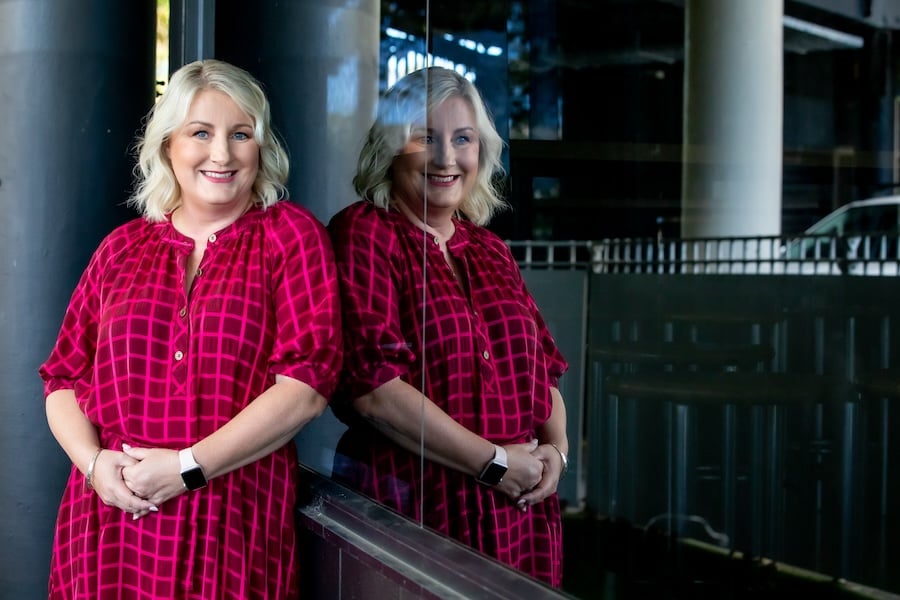
A self-confessed hard-core shopper, Neville-Te Rito says although she would like to see more fashion brands come here, she still loves to travel so she can buy items that no one else can get in New Zealand.
“I love to shop at Gentle Monster in Seoul, Beyond the Vines in Singapore, Nico and Muji and Loft in Japan. If we had On Running and Rapha would be great and a Uniqlo would be perfect. Ghanda, Subdued, Brandy Melville and Universal store being in NZ would also help some of the shopping headaches my daughter has.
“I’d love &otherstories, Dissh, Williams Sonoma and Anthropologie as it would reduce the delivery charges I pay and allow me to get access to more of the stuff I love.
“But the reality is I can still shop these online – so many things are just at our fingertips anyway.”
Kiwis love chicken
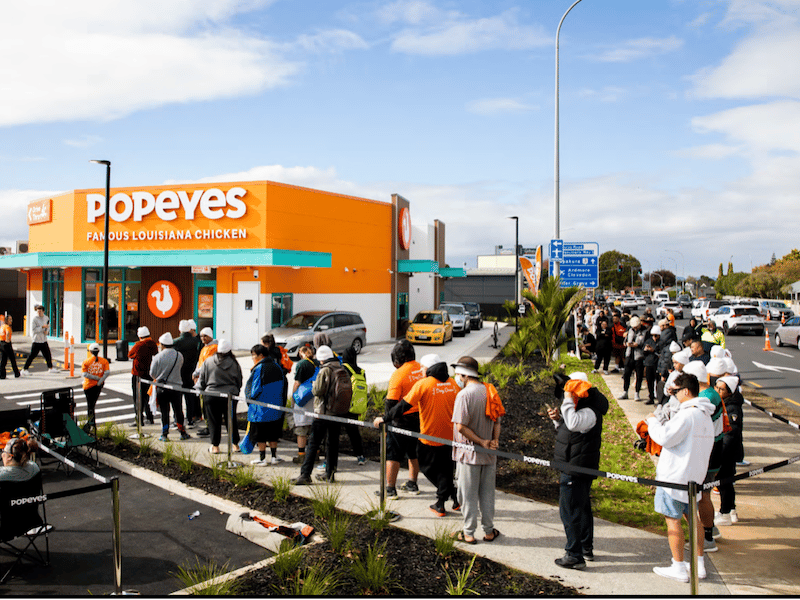
It’s not just retailers and fashion brands taking the plunge in the New Zealand market. Popeyes Fried Chicken recently smashed the global record for first store, first day sales when it opened its first Australasian restaurant in Auckland.
Sharn Phillips, Popeyes head of marketing, says in a competitive QSR market with some well-entrenched players, the chicken chain knew it needed to focus on food quality and authenticity.
“We ran thorough market testing to get a feel for Kiwi preferences – everything from spice levels to portion sizes. We also crafted a localised brand voice, partnered with New Zealand influencers and incorporated local elements into our storytelling. This approach helped Popeyes feel familiar yet unique, and it resonated with Kiwis right from the start.”
The launch was supported by a creative campaign that encouraged Kiwis to be the first ‘Kate’ or the first ‘Sione’ or the first person in their office to try Popeyes. “The ‘be the first’ campaign was born from a very straightforward challenge: how do we make a big impact with a relatively modest budget in such a competitive space?” Phillips says.
“Our agencies [Hearts & Science and Pitchblack Partners] did a fantastic job crafting the idea, focusing on the thrill of exclusivity. The concept of ‘be the first’ appealed to that inner trendsetter in all of us – inviting Kiwis to try Popeyes and claim bragging rights before anyone else.
“It was about creating a moment, a sense of excitement that this wasn’t just another launch but an opportunity to be part of something special. By tapping into that desire for exclusivity with a clear call to action, we were able to cut through the noise and capture attention in a memorable way.”
Celebrate our unique flavour, quality and heritage
Phillips says the launch was a fantastic start, but now it’s about building on that foundation and making Popeyes a brand Kiwis feel connected to.
“We’re focusing on deepening customer engagement and building brand love through campaigns that celebrate our unique flavour, quality and heritage. We’ll continue to localise our efforts, tapping into key Kiwi moments and cultural events to stay relevant and relatable.”
Phillips says expanding Popeyes’ digital presence is also a priority – making it easy and seamless for customers to enjoy Popeyes wherever they are.
“And with new restaurant openings around New Zealand, we’re ensuring that more Kiwis have the chance to experience Popeyes first-hand. Our goal is to make Popeyes a brand that’s loved not just for the food, but for the experience and the sense of joy it brings to the table.”
From the end of 2025, that table might just come from Ikea. But for now, Kiwi fans of other global retailers may have to settle for a plane ticket or visit the website to get their fix.
This was first published in the December-January 2024/2025 issue of NZ Marketing Magazine.