
As modern tech delivers polished efficiency, the glorious, messy chaos of genuine human input has never been more crucial to producing good work. Keeping it real is what we do best, says Arie Hoeflak.
When confronted with big technology leaps, humans are very good at two things: panicking and adapting.
While creatives of all stripes fret about being replaced by AI, it’s worth remembering we’ve been here before. From preachers denouncing the printing press as an instrument of heresy and moral decay, to hurling our clogs into weaving machines during the Industrial Revolution and then Frank Lloyd Wright denouncing television as “chewing gum for the eyes”, the story is the same: newfangled kit didn’t bring down humanity.
Well, mostly it didn’t. Given time, we accepted the newness, smoothed the rough edges as best we could, reaped the benefits of the good bits and made our peace with the trade-offs. History is about to repeat.
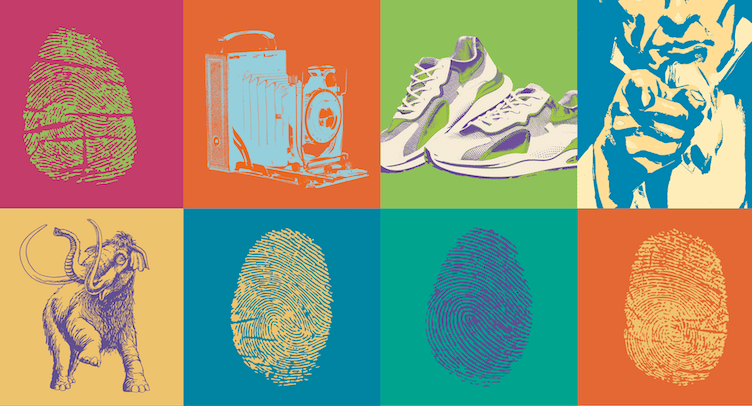
Hype and heavy-handed marketing aside, AI’s swift rise is hardly surprising. We’re greedy convenience junkies by nature. Our very survival once depended on that neural hardwiring: conserving every calorie we could – and spend them instead on not getting trampled by the mastodon we were hungrily trying to spear. Homo erectus would definitely have opted for a pie and an oat milk latte from the service station, given the choice. Fast-forward to 2025 and it’s clear this innate laziness is not always the evolutionary gift it once was.
New tech? Sign me up
For the record: I’m a technophile. I was obsessed with record players as a toddler, spent far too many hours on computers as a teenager and the lure of shiny gadgetry has proved irresistible (and costly) throughout my adult life. Heck, in recent weeks I’ve discovered the joys of sweatily panting voice memos into my smart watch while out for a run. I’ve been a tech-dependent marketing creative for so long my CV is haunted.
And yet, despite its huge potential and meteoric rise to everywhereness, AI has failed to spark the wonder and excitement I felt with past big tech developments. Allow me to explain.
Firstly, there’s the mercenary, sometimes downright ugly, business side of the beast. Right now, the tech industry is in a frenzied AI goldrush: a high-stakes land grab for market dominance, with behemoth companies spending eye-watering sums on AI infrastructure and investments. As of late October, chief data farm chipmaker Nvidia was the world’s first $5 trillion company. That’s roughly equivalent to Germany’s 2024 GDP and comfortably exceeds that of Japan, India and the UK. Will the bubble burst? We’ll just have to keep sipping our oat milk lattes and see.
Then there’s the Gordian knot of ethical concerns. From data scraping and LLM training without compensating creators, to the massive amounts of energy required to power data centres (and the equally vast volume of water needed to keep all those chips cool), to ewaste, biased outputs, security and privacy issues, cognitive offloading, the potential for weaponisation… The question marks are many, complex and deeply troubling.
Uncanny valley
And, yes, I have absolutely felt the looming threat of obsolescence as a creative. Though my anxiety is eased by the observation that, for now at least – and despite overhyped promises of the democratisation of creativity (I’m looking at you Canva) – AI seems mostly limited to helping non-creatives churn out polished turds, artificially buffed to an uncanny valley-high sheen.
And boy is it a handy, often hugely time saving, tool for professional creators! But ultimately, the output is still only as good as the human wielding the tool. The term ‘AI slop’ didn’t come out of nowhere.
While AI entrepreneur Mikey Shulman may claim that AI-generated music is a good thing because “people don’t really enjoy making music – it’s difficult and it takes a long time to get good at it” (childhood piano lesson trauma, anyone?), Coca-Cola seems happy to save a lot of money by using AI to produce its annual Christmas television commercial and AI ‘singer’ Xania Monet has a multimillion-dollar record deal, I predict the novelty will wear off.
Creatives won’t be out of a job any time soon. Why? Photography, painting, design, music, cinema, branding, marketing, advertising – they’re about connection. And connection devoid of humanity just doesn’t sit well with the ultimate audience: people.
Connection v ChatGPT
So where does this curious mix of huge potential, complexity and angst leave the average ChatGPT user? Are we doomed to a post-Orwellian existence soundtracked by AI-generated choons sung by AI-generated artists, while watching cutesy AI-generated animal videos on our AI-powered phones, interrupted with AI-generated summaries of the news on our AI-enabled smart speakers? No, actually.
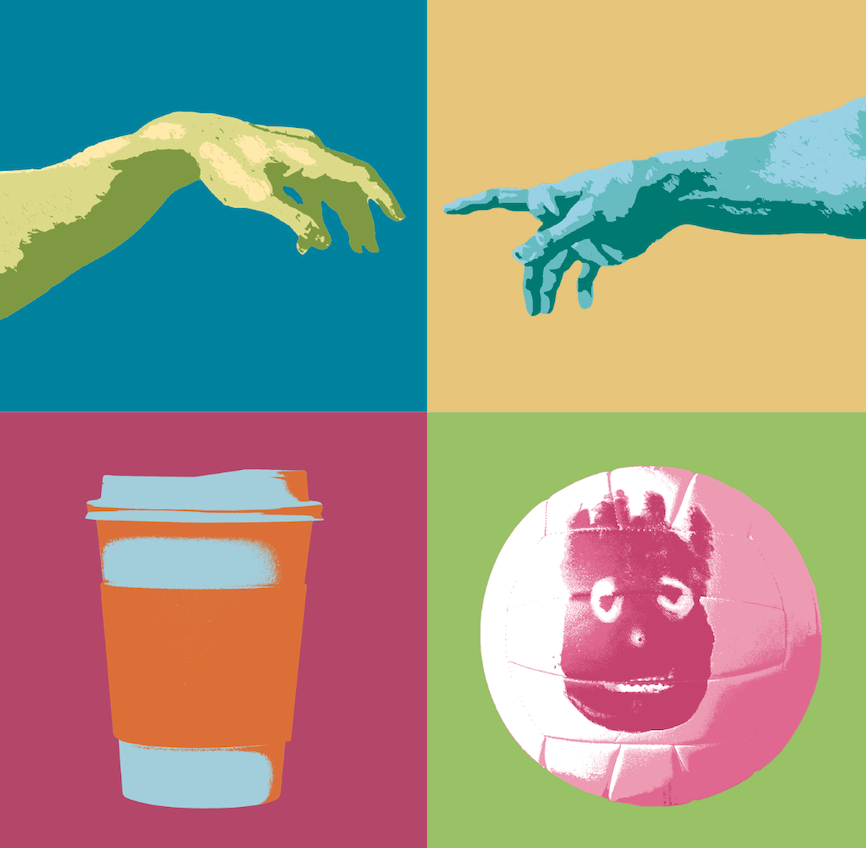
As well as being rapacious sloths, we are also deeply social creatures. We crave connection. We need connection. Watch Cast Away again if you don’t believe me – its depiction of the effects of contact deprivation were well researched.
AI can mimic tone, style and even empathy, but it lacks the messy, imperfect soul that gives human expression its resonance. The craving isn’t just for originality, it’s for meaning that feels earned rather than assembled. Authenticity can even become an act of rebellion: a signal that behind the words, sounds or images there’s a real person who really meant it.
Life offline
Creativity loves a vacuum! We’re increasingly seeking real-world experiences and authentic connections to counterbalance the pervasiveness of digital everything.
A recent survey by US tech comparison site SellCell found that less than half of Apple and Samsung smartphone users have even tried their phones’ AI capabilities, with over 75% of those who have had a fiddle saying the features add little or no value.
We recognise the need for ‘digital detoxing’ – a choice of words that speaks volumes. We’re forming ‘offline clubs’: communities that meet and interact in person, no devices allowed. The Australian federal government recently ruled out introducing a copyright exemption for artificial intelligence firms to train their models on Australian creative works. It stated that this protection is “fundamental to their [creatives’] right as people who are generating works to ensure that they are fairly remunerated for that and that there are fair terms of use”.
Keep the human spark
There’s a renewed focus on connecting with nature, critical thinking, problem-solving and honing people skills that AI cannot replicate. According to the World Economic Forum, the importance of soft skills has grown by 20% in jobs where they weren’t valued in 2018.
As AI gains fluency and sophistication, our quest for the fingerprints of real thought, real feeling and real risk only grows more passionate and determined.
AI can polish, automate and synthesise all it wants, but it can’t replace our glorious, messy, wonderfully human chaos. Ultimately, the challenge isn’t resisting or dodging AI, it’s ensuring that, amid all the novelty, uncertainty and efficiency, the human spark keeps flickering – and maybe even sets the place on fire.
This story comes from NZ Marketing magazine issue 85, Dec 2025-Feb 2026. Why not subscribe? Get four issues a year for just $50 (including delivery) if you autorenew.
Essential marketing intelligence. Don’t miss it.