
Why compete for placements at the end of the media buying process when you can access the best supply side inventory before your competitors? Anthony Rice of 36Presents tells us how it’s done.
For many marketers, digital media has become a game of fine margins. Budgets are under pressure, expectations are always rising and it seems success is increasingly judged by one outcome right now: enquiries.
Yet while attention is often placed on optimisation, audiences, formats and creative, a more fundamental question tends to go unasked: where does your media buying actually begin?
Most brands buy digital media the same way their competitors do. They enter the market, set budgets and compete for placements. This also means brands are competing hardest where differentiation is weakest, bidding against each other for the same attention, often at the same time.
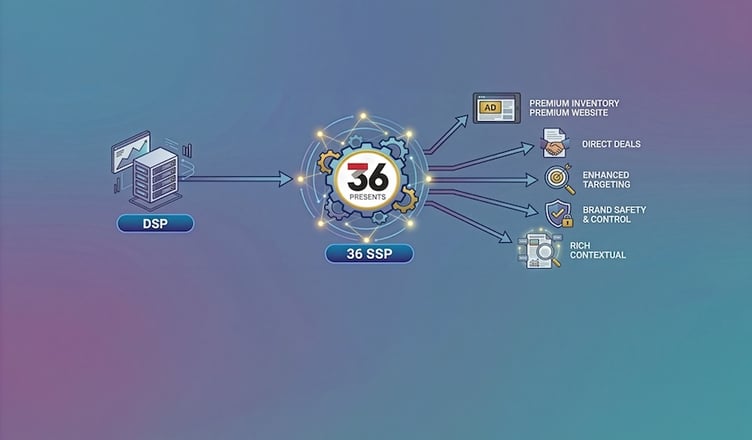
What’s less visible is that there is another way to approach the market. Rather than competing for what’s left, 36Presents operates closer to where inventory is released in the first place via our very own supply side platform (SSP).
By working from the sell side, campaigns can access premium placements earlier – before they are exposed to broader competition. For marketers, the benefit is straightforward: stronger environments, clearer visibility and less wasted spend.
One of the lesser-known advantages of 36Presents’ sell-side model is that contextual intelligence is embedded at the inventory level. Through built-in Peer39 contextual targeting, campaigns are aligned with the content environments audiences are actively engaging with – not inferred behaviour or broad assumptions. This allows brands to appear in relevant, brand-safe, high-quality contexts without relying on personal data or post-click guesswork.
For enquiry-driven campaigns, context matters. It shapes attention, trust and intent long before a call to action is even considered.

Compete or rethink?
When campaigns enter late and rely heavily on competition-driven targeting, performance becomes reactive. Costs rise, placements vary and attention doesn’t always convert into action. Earlier access, combined with contextual alignment, changes that dynamic. Media appears in environments that make sense for the message, reaching audiences in moments that are more likely to prompt response – not just awareness.
For marketers measured on outcomes, this combination is powerful.
As digital channels grow more crowded, marketers face a choice: keep competing in the same environments as everyone else, or rethink how you can do things differently.
If your campaigns are judged on enquiry performance, earlier access combined with smarter context can provide a meaningful advantage for your business.
If you’re reviewing how your next campaign could work harder, have a conversation with us.
What 36Presents can deliver
- Premium placements secured earlier, with less competition
- Contextual relevance built into every impression
- Media spend focused on quality, not just volume
- Performance measured by outcomes that matter to the business
Email Anthony Rice at [email protected]

This story comes from NZ Marketing magazine issue 86, March-May 2026. Why not subscribe? Get four issues a year for just $50 (including delivery) if you autorenew.
Essential marketing intelligence. Don’t miss it.