

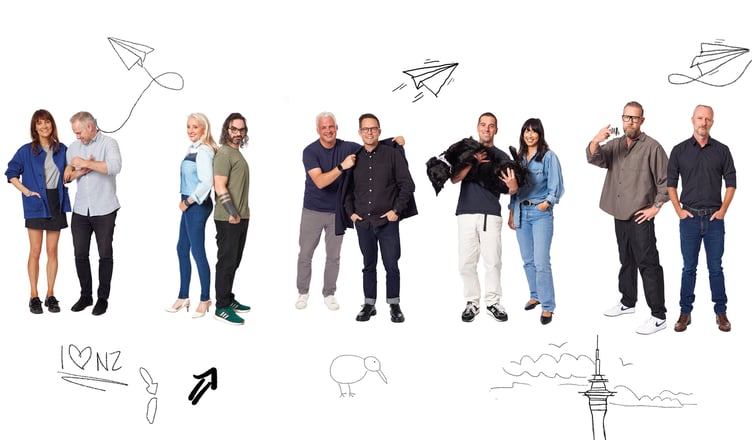
Clients’ recognition that bigger isn’t necessarily better is allowing a number of Aotearoa’s independent agencies to come into their own.
There’s an indisputable trend towards New Zealand-owned creative agencies thriving, despite the dominance of global networks. Local agencies tend to be more agile and adaptable, allowing them to quickly respond to client needs and changing market trends. This is particularly valuable in today’s fast-paced digital landscape.
“There’s been a definite trend over the past five to 10 years of larger clients moving their business to smaller, more integrated agencies,” Bastion Creative’s Managing Director at Bastion Shine, Toby Sellers, tells NZ Marketing.
“There are several reasons for this, but the big one is diversity of thought and a more nimble approach to idea generation and delivery.
“Indies aren’t bound by the same rigid processes and financial structures imposed by the global holding companies, and have been successful in attracting top talent away from the global networks. Once this talent is given the freedom to ideate and collaborate in more entrepreneurial ways, the value proposition for clients becomes very attractive.”
Air New Zealand is Bastion Shine’s largest client. It’s one that’s sought after by much of the advertising industry, yet the airline has chosen an independent Kiwi agency above the heavyweight competition.
“Bastion Shine is a true business partner to Air NZ, and to me personally,” says the airline’s CEO, Greg Foran. “I meet and speak regularly with members of their team on a wide range of topics, reflecting the intimate understanding they have of our business and the value we place on their thinking. I’ve enjoyed working together on initiatives as diverse as the future design of our planes, refining the purpose and vision of our business, unlocking the full potential of our staff, and driving loyalty and love for our brand. They’re a deeply valued part of our business.”
CMO at Spark, Matt Bain, talks about “the breadth and depth of capability that enables [Bastion Shine] to partner upstream with us to jointly create a roadmap for growth, new offerings and customer outcomes”.
Meanwhile, another Bastion Shine client, Soraya Cottin, CMO at Whittaker’s, confirms the benefits of partnering with a local agency, saying: “As a family-owned business, we believe in long-term partnerships and have been impressed by the people and quality of creative and strategic thinking from the Bastion Shine team. Having the opportunity to partner with a local business that’s also committed to quality in everything they do, and with agency owners closely connected to the work was a huge motivator for us. We believe they’re a great fit with the Whittaker’s culture and the right partner to deliver on our vision of the world loving world-class chocolate from Porirua.”
“There’s always been a desire for the indies to have a voice outside of the Big Five agencies,” says D3’s
Alex Radford, inaugural Chair of Independent Media Agencies New Zealand (IMANZ), launched in the
latter part of 2023, while acknowledging the Communications Council does a wonderful job of having an industry voice across both creative and media.
“The big focus is about letting people know, both private businesses and government, that there are New Zealand-owned and operated businesses that do have a point of difference.”
Although the Communications Council has always had a focus on the big international agencies, the indies
now have their own representative body, ensuring they have a voice outside of the Big Five agencies.
“We’re incredibly lucky to operate in such a supportive independent agency environment,” says Chair of
the Communications Council Media Committee, Rufus Chuter.
“Unless you’ve started your own business, you don’t know how hard it is and the challenges you face, so there’s a special connection indie agencies have. We’re competitors, but also comrades, which is pretty special.”
Chuter, who’s also Managing Partner of Together, believes local knowledge plays a crucial role in crafting successful advertising for New Zealand clients, and its benefits are multifaceted.
“It’s critical for consumer understanding, and for understanding and connecting with the local publisher, data and technology community. Our best work comes from close collaboration with these partners and a deep understanding of how they work, what is and isn’t possible with them, and a shared desire to create business success for our clients. Teams that are planning or buying New Zealand media from another country miss these opportunities to create more customised local data and platform partnerships, and these are increasingly what drive results.”
Unburdened by bureaucracy and legacy processes, independent agencies often foster a culture of fresh thinking and innovation. This can lead to more creative and original campaigns that resonate with audiences.
Managing Director of The Business, Ben Cochrane, believes this trend is driven by tighter budgets and a realisation that efficiencies come from smaller teams with lower overheads.
“You tend to be dealing with the people who understand your business and are on the tools every day, which leads to more honest conversations and getting things done faster – and clients tend to love that. Also, creativity doesn’t scale that well and a tighter team in a more relaxed environment is always going to be more creative.”
Overall, the trend towards smaller, locally owned creative agencies gaining success is likely to continue, driven
by client preferences for agility, personalisation and local expertise. Managing Director of industry locals Special Group, Scott Coldham, acknowledges the problems multinational agencies face.
“The bigger agencies/network offices are finding the global governance they have to navigate increasingly crippling for their creative product and their ability to be commercially entrepreneurial. I think clients can feel it, I think talent can sense it, and there’s a growing interest in independent offerings as a result.”
The truth of this can be seen in the awards Special Group has recently won. Partners Life ‘Last Performance’ won a Grand Prix at Cannes, beating out some of the best work in the world. On the local scene, Special Group’s Kiwibank body of work won the Grand Effie in 2023.
Coldham pays tribute to the work The Tuesday Club (home to all sorts of makers and creators) did on NRMA Insurance ‘A Fire Inside’.
“Designed to champion the power of NRMA’s brand platform Help, they created a feature doco and a book following the Black Summer bushfires, and heroed the people and first responders who helped Australia get back on its feet. It’s beautifully crafted and dives into the real reason insurance companies exist.”
Coldham also cites his respect for the work Motion Sickness is doing for Fire and Emergency New Zealand, as does founder and CEO of Wrestler, Ben Forman. “Every part of that campaign felt so beautifully polished – 10 out
of 10,” he enthuses, demonstrating the collegial feel that exists among the independent agencies.
For his part, Motion Sickness’ Executive Creative Director, Sam Stuchbury, chooses their ‘Rep Your Suburb’ campaign as one of their best, and their rebrand for Big Save Furniture as a unique work that “can succeed at scale”.
Strategy Partner at The Enthusiasts, Martin Yeoman, is responsible for bringing successful campaigns to fruition for clients as diverse as the Auckland City Mission, AUT, Bell Tea, Graze Skinny Dipped Almonds, Mānuka Health, The Ned wine and Vogel’s bread. But one piece of work he really admires is by String Theory (Jeremy Taine) – the Hyundai ‘Pinnacle’ TV campaign, “big, ambitious storytelling that changes the game on how you build a car brand; great New Zealand stories that have very little to do with cars but tell you a lot about the car brand”.
The Enthusiasts and Momentum have a collaboration they’re calling TE&M. Momentum’s founder and Managing Director, Natalia Taylor, says: “The independent agency scene in New Zealand is thriving, characterised by innovation, collaboration and a relentless pursuit of excellence.”
On the subject of cars, the ‘Tina from Turners’ campaign – which picked up the Marketing Supreme Award, won two gold Effies and delivered record profits to the business – is described by Spruik Account Director Kate Poole as “genius on so many different levels”.
A joint effort by brand planner and advertising strategist David Thomason and freelancer Darryl Parsons, with assistance from Kim Thorpe, Olivia Woodroffe, and agencies Eight, Stitch and Lassoo, the campaign once again demonstrates the true collegial nature of agencies and advertising practitioners working in harmony.
Owner and Creative Director of The Goat Farm, Vaughn Davis, values lasting success above anything and highlights their long-running work with Graham Norton and Invivo.
“We especially love that it’s helped grow our client’s business so they can employ more people, contract more grape growers and earn more export dollars for New Zealand.”
Knowing Kiwi humour, slang and cultural references allows agencies to create campaigns that resonate deeply with the target audience. They can tap into shared experiences, evoke nostalgia and build a sense of connection that transcends generic advertising. Understanding the preferred communication styles and language nuances of New Zealanders lets agencies tailor their messaging accordingly. They can avoid cultural faux pas, choose the right tone and communicate effectively with the target audience.
When advertising reflects a genuine insight into local values and concerns, it builds trust and credibility with consumers. New Zealanders can relate to brands that ‘get’ them, leading to increased brand loyalty and advocacy.
“It’s a bit like comedy,” says Director of Walsh & Beck, Paula Hellyer.
“The rest of the world sometimes struggles with Kiwi humour, so having an agency that’s in on the joke helps convey the message in a way that resonates with Kiwis.”
“We’re seeing campaigns from banking to insurance that properly reflect this country’s social and race demographics, and local humour too, which just could not be incorporated or understood in a campaign produced internationally,” says Kindred’s owner and Creative Director, Chris Boyd.
“Imagine a brand campaign for a bank in this country that attempted to convince us they understood our financial issues and concerns, while using work adapted from overseas. Impossible!”
Executive Creative Director at Rainger & Rolfe, Kelly Putter has spent a lot of time overseas in big global conglomerates.
“The truth is, you can have all the disciplines and departments in the world, but if you don’t have a great creative idea born from an authentic local insight, you don’t have much. We indies are agile and relentlessly curious, which helps us adapt fast to the latest tech. Combine this with our local knowledge, and often we can be as good, if not better, than big business.”
Although those in the multinationals might believe small local ad agencies do face challenges in competing with global networks in terms of specialised talent and resources, that’s wholly denied by independents working in New Zealand.
“Absolutely not,” says Director of Independent Media New Zealand, Mark Reekie.
“In my conversations with advertisers transitioning from multinational agencies to independent agencies, common patterns emerge. Specifically, advertisers frequently highlight that multinational agencies have lengthy response times, individuals [within them] are difficult to reach and the decision-making process involves an excessive number of individuals. Advertisers also note that multinational agencies often engage in ‘preferred partnership agreements’, aiming to steer clients towards specific media platforms to fulfil annual agency spend commitments, rather than prioritising the media platform that’d genuinely serve the clients’ best interests.”
Since forming Yarn almost four years ago with business partners Heath Davy and Rich Robson, Matt Sellars, its Executive Creative Director, has found that there are more and more specialists leaving the global agency networks for the freedom and lifestyle of an independent offering.
“This has really reinforced our thinking and our model, knowing that as an independent, we have access to specialised talent looking for this change, talent we’re collaborating with regularly across strategy, creative, design, PR, production and more.”
Having said that, sourcing niche expertise within a smaller local market can be difficult, and indies can struggle to compete with the salaries and career opportunities offered by global networks. Access to cutting-edge technology, extensive research data and international reach can be limited compared to larger networks, potentially restricting campaign scope and effectiveness.
It’s true that research forms the foundation for all agencies, but smaller, independent media agencies such
as D3 can have access to similar data.
Its aforementioned co-founder and Partner Alex Radford says: “What sets D3 apart is the depth of analysis and understanding that local agencies can achieve. We go beyond the surface to delve into the intricacies of New Zealand consumers, unlocking insights that might be missed by others. Moreover, our ability to merge this knowledge with data from various other sources, such as Canda, Tracksuit and client data, is a game-changer. It allows us to create comprehensive, multidimensional consumer profiles that inform every aspect of our campaigns.
“By harnessing the power of this combined data, we gain a universal understanding of our audience’s behaviours, preferences and aspirations. This ensures our advertising efforts are backed by solid research, and enables us to craft strategies that are truly tailored to the heart of the New Zealand market.”
It’s certainly true that some clients might prioritise the perceived prestige and resources of global networks,
while overlooking the agility and local expertise of smaller agencies; however, agencies like Rainger & Rolfe have been attracting a lot of interest from large corporates who value speed and flexibility.
“They appreciate the fact they can have access to the most senior people in our business at any time,” says Putter.
“Effective creative solutions don’t have to cost more, and often, they don’t. Bigger isn’t better, smarter is better.”
New Zealand indies have always punched above their weight, and there are a couple of standouts for Putter.
“The first is ‘Quit the Tit’ for Boring Oat Milk. Motion Sickness really created something special here. The second is Benne’s Bagels track for ASB and Youthline, created by The Monkeys. This is an ingenious creative idea that uses science, music and one of New Zealand’s biggest artists to help young Kiwis when they need it most.”
Quantum Jump founder and CEO, Ben Goodale, believes there’s an argument to be made that there are
too many independents at the moment, “but the market will dictate who survives and who doesn’t”.
Smaller agencies often have flatter hierarchies and fewer layers of bureaucracy, allowing them to be more responsive to client needs while having a deeper understanding of the local market, culture and consumer preferences, which can be valuable for brands targeting the New Zealand audience. Ultimately, success for independent agencies boils down to playing to their strengths, and thriving by emphasising agility, personalised attention, local expertise and innovative solutions focusing on specific industries, sectors or client types, where cultural knowledge offers a distinct advantage.
Remember, David and Goliath stories happen in the advertising world too!
This was first published in our March/April 2024 issue.