

Every month the Together team highlights five media stories from New Zealand and globally that defined the month, and one great media idea we love. February’s word of the month was momentum: retail media keeps scaling locally, Sky reshapes for a softer market, AI edges closer to the checkout and even billboards start to move.
Mastercard’s Agent Pay lands in NZ
Mastercard has begun testing “Agent Pay” in New Zealand, enabling AI agents to shop and transact on behalf of consumers. Coverage suggests the way we shop could shift dramatically, with both exciting and unsettling implications.
This builds on the agentic commerce infrastructure we have been tracking globally. If AI agents can compare products, check out and manage subscriptions autonomously, the battleground shifts from influencing humans to influencing algorithms.
For brands, this raises pressing questions:
- Is your product data structured and machine-readable?
- Are pricing, availability and reviews accessible via APIs?
- How will brand preference be signalled to an agent acting on rational criteria?
In a world of agent-led shopping, search optimisation becomes agent optimisation. Loyalty may be less about habit and more about programmable rules.
New Zealand being a test market is significant. We often see innovation early due to scale and regulatory agility. Marketers here should treat this as a live pilot for what global commerce could look like within five years.
Retail media expands again
NZ retail media got an upgrade this month, with Dressmart joining VMO’s retail media network, adding outlet environments to an already growing portfolio.
Globally, retail media remains the fastest-growing major ad channel. In the US, it’s forecast to exceed US$60bn this year, overtaking linear TV. Amazon may have built the blueprint, but Walmart Connect, Tesco Media and Carrefour Links have shown how first-party data, closed-loop attribution and premium onsite placements can transform retailer margins.
What’s interesting locally is this broadening canvas. It’s no longer just sponsored search on ecommerce sites, it’s screens in outlet malls, digitised endcaps, carpark panels and programmatic access to retail audiences off-site. In other words, retail media is becoming an ecosystem rather than a placement.
What this means for NZ marketers
- Treat retail media as both performance and brand. In-store digital and large-format environments can now do upper-funnel work. If retail media is planned and bought by a team that isn’t marketing, focus on integration.
- Push for data leverage. The real power lies in matching retailer transaction data with your CRM and media signals.
- Plan for governance. As more retailers launch networks, fragmentation risk increases. Clear measurement frameworks are essential, as well as encouraging suppliers to work together to standardise formats and standards.
Sky sets up its 2026 reset
Sky NZ put on a display of unity and confidence in their Showcase event this month. In an impressive visual display, their event was the first time they could present a unified model and opportunity to advertisers.
It occurred against a backdrop of role rationalisation and the disappointing news on their HBO content deal not being renewed for Neon. Despite these, it felt like a necessary display of confidence and direction ahead of a major 2026 push. The logic for their year is straightforward: unify linear, BVOD and streaming assets under one commercial narrative, simplify the buy, present a credible reach alternative to TVNZ across total video and deepen the commercialisation of their powerhouse contexts – especially sport.
Whether they can do this will depend partly on the buoyancy of the ad market, and secondly on how fast and well they can deliver proof that their integration delivers incremental reach and better cross-platform frequency management, not just operational efficiency.
For marketers, the event was a reminder to view Sky’s portfolio as a system. Sport, entertainment and news now sit across multiple entry points. Planning should follow audiences, not legacy channel silos, and explore how to use unique contexts.
If Sky can align measurement, data and packaging under a single proposition, 2026 could be its clearest – and most successful – story in years.
Super Bowl 2026: fame still wins
This year’s Super Bowl ads reinforced a timeless lesson: in a cluttered, high-cost environment, distinctiveness and brand building trump tactical cleverness.
Analysis from US marketing professor Tim Calkins points to the usual pattern. The ads that drove the strongest post-game recall and brand lift were those anchored in humour, emotion or cultural fluency. Celebrities featured heavily, but the better work used fame to amplify a clear brand idea, not replace it.
Kantar’s analysis mirrors these themes. The ads that performed best drove Brand Equity by reinforcing meaningful difference, building emotional connection while clearly signalling what makes the brand distinctive. Humour, nostalgia and celebrities all featured, but only worked when tightly linked to brand assets and long-term platforms.
The two perspectives echo the same point: fame amplifies a strong, consistent brand idea, it does not substitute for one. In a $7m-a-spot attention arena, distinctiveness and consistency still win.
For NZ marketers, the scale may differ but the principle holds. Whether it’s Rugby World Cup, Black Friday or a major cultural event, the question is not “should we show up?” but “can we show up memorably and in a way that’s consistent with what makes us distinctive?”
NZ Outdoor gets Subtle movement
This month Lumo has secured approval to introduce subtle motion on its roadside digital billboards. Not full video, but gentle movement designed to enhance attention without compromising road safety.
Globally, DOOH has been moving in this direction for years. The sweet spot lies between static and disruptive. Subtle animation can increase dwell time and brand recall without triggering regulatory backlash.
For NZ marketers, this opens new creative possibilities. Motion allows for narrative sequencing, product reveals or dynamic messaging while retaining the impact of large-format scale.
But the key will be restraint. The power of outdoor remains its simplicity. Movement should enhance a strong core idea, not compensate for a weak one.
Media idea we love: Fantasy Herd
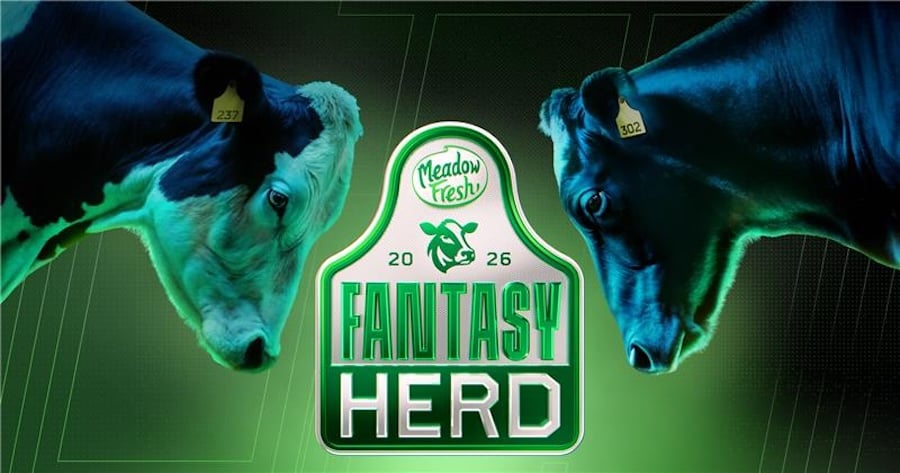
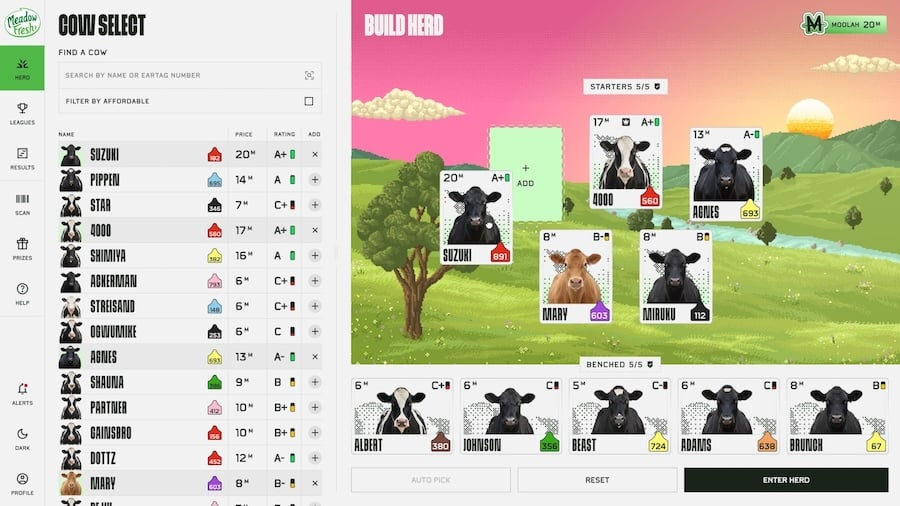
A “world-first cow league” might not sound like a media masterstroke, but Fantasy Herd proves otherwise – even if we do say so ourselves! (Full disclosure: this campaign is one of Together’s.) By turning livestock into fantasy sports-style competition, the idea gamifies rural culture and creates an always-on content engine.
The magic lies in it taking itself really seriously. To that end we did what any major event would do: launched it in a world first live ad during Super Bowl half time, baked league updates into the News and Crowd Goes Wild and even have a mobile fanzone driving the streets of Auckland.
Why we love it
- Simple audience insight. It taps into Kiwi farming identity and competitive spirit.
- Participation over interruption. Rather than buying attention, it builds a community mechanic.
- Earned scale. The novelty drives PR and social amplification well beyond paid media.
In a fragmented landscape, ideas that create their own gravity are gold. Fantasy Herd shows that with the right cultural hook, even cows can become content.