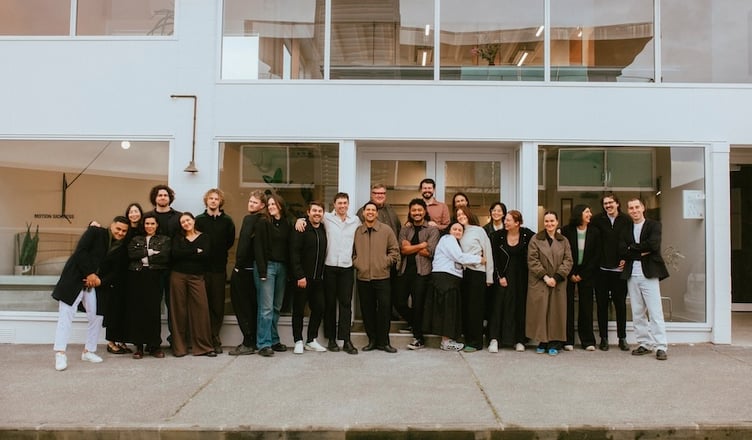
Motion Sickness isn’t an advertising agency. Instead, it’s a creative company. Because the world’s not crying out for more ads – it just needs better ideas.
Their awards cabinet is bursting and they continue to pick up major clients, but the team at Motion Sickness wants to make one thing clear: they are a creative company, not an ad agency.
This distinction is key to how they are repositioning themselves in the market, as they build for the future.
“Motion Sickness is transitioning from just an ‘ad agency’ and into something much broader and more meaningful,” says executive creative director Sam Stuchbury.
“In short, we’re Motion Sickness, creative company. It’s bigger than ads. We apply creativity to business and problems. Marketing and advertising is sometimes a function of that, but not always. Often the shape it takes is much more interesting.”
Since it was founded in 2014, Motion Sickness has never behaved like the rest of adland, or followed the traditional model, and Stuchbury says a lot of their past work already reflects this.
“With Fire and Emergency NZ, we turned what looked like a traditional brief into a full creator ecosystem, including a cookbook and campaign that changed real behaviour.”

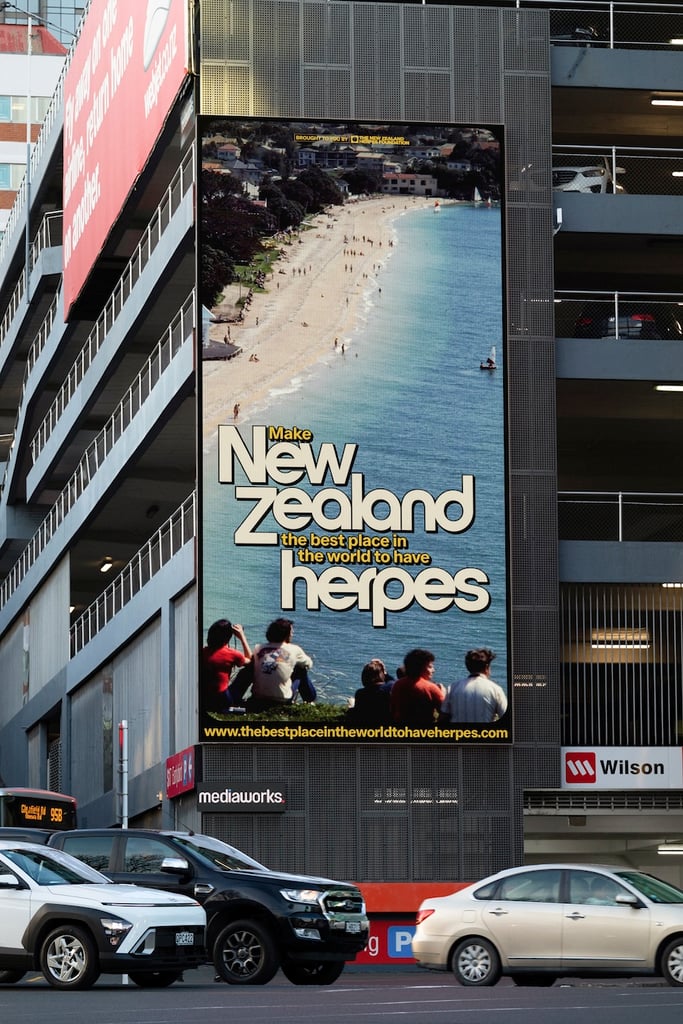
“For the New Zealand Herpes Foundation, we created a global cultural competition that went well beyond traditional media.”
“With K Road, we didn’t make a billboard, we made a perfume that became a hit new product and completely sold out in minutes.”
Changing world
Stuchbury says they’re not just being briefed on ‘making ads’ any longer. Instead clients are asking how creativity can unlock the next phase of growth for their businesses and brands in a changing world. How that comes to life really could be anything.
“The world is changing, our industry is changing, and we’re changing with it. We don’t know exactly what the future holds, but we’re pretty sure it’s not screaming out for more ads. It just needs better ideas,” he says.
“We’re confident in our direction and the work we’re doing, the business is growing very fast. But as we scale, we need to stay sharp and intentional on what we want to be. We are not growing blindly, we want to do it with intention.”
Advertising felt “too binary and limiting” – being a creative company feels bigger, more future-facing and more relevant to how Motion Sickness helps clients grow. A company in the sense of being a collaborator, “not just whacking out your marketing”, Stuchbury says.
“This repositioning is a signal that we’re here to apply creativity to business problems in whatever form makes sense. For our existing clients, it’s a confidence marker. If we’re already working with you, we’re producing work that holds up now and will continue to in the future,” he adds.
“The conversations we have with clients aren’t really all about ads anyway, they’re about how we solve juicy problems with creativity, in many forms. So we think they’re already on board.
“For new clients, it’s a signal we’re a partner who’s bigger than a campaign. We want to be the team you call to figure out what to do, not just how to say it.”
Evolving services
Motion Sickness’ services have evolved into what they describe as ‘the soul and the system’.
The ‘soul’ – always the core – is strategy and creativity, while the ‘system’ is everything else that helps bring ideas to life in modern culture, including brand design, culture, digital, media, creator and more, Stuchbury explains.
“Creative and strategy have never just been advertising, sometimes it’s doing everything you can to avoid that. Sometimes it’s a perfume that smells like a street. Sometimes it’s a national competition about herpes. Sometimes it’s a truck that solves the census,” he says.
“We’re already doing this kind of work, this just makes it clearer. Our goal is to be the most sought-after creative company in the world, and this is a step in the right direction.”
An agency of the future
The Motion Sickness team is growing across the board as its list of clients and projects expands. This includes doing more work across the ditch, which is both “scary and exciting”, Stuchbury says.
“We’ve scaled up client service with strategic, consultative people. We’ve expanded creative and added deeper production capabilities, we’re making all sorts of things.
“We’ve also invested more in the strategic talent and Motion Sickness Design Office, using design and identity to help brands show up with beauty and impact. And we’re bringing in people from all kinds of backgrounds – not just ad people but creative thinkers with business brains. We’re building the agency of the future.”
Motion Sickness may be changing how it positions itself, but Stuchbury says it all comes back to the work they do.
“We can talk positioning all we want, but at the end of the day, we’re only ever as good as the work we put out into the world.
“We make work that influences culture and helps brands grow. We want our work to speak for itself, and we think it’s already starting to.”
This story comes from NZ Marketing magazine issue 84, Sept-Nov 2025. Why not subscribe? Get four issues a year for just $50 (including delivery) if you autorenew.
Essential marketing intelligence. Don’t miss it.