
Every month the Together team brings you the Month in Media, highlighting five media stories from New Zealand and globally that defined the month, plus one great media idea they love. September 2025 brought major moves in agentic payments, positive signs for local print and big steps forward in media measurement.
Google introduces Agentic Pay – AI goes shopping
Google launched its Agent Payments Protocol (AP2), enabling AI agents to transact on behalf of users across platforms. Backed by Mastercard, PayPal and Salesforce, AP2 aims to make payments between digital agents as seamless and secure as human-led checkout.
This could be a milestone for agentic commerce, which has long needed alignment on how AI can act for humans in trusted transactions. Google’s open-source standard, supported by 60+ financial and tech partners, positions AP2 as the protocol for agent-led ecommerce.
For brands, this accelerates the current shift from optimising solely for humans to also optimising for agents. Products must be structured and surfaced so automated systems can interpret and recommend them.
It also signals more fragmented commerce journeys. Instead of a few big retail ecosystems, we may see thousands of invisible micro-transactions brokered by agents. For performance marketers, this could be both an opportunity (more intent signals) and a challenge (harder attribution and loyalty).
Nielsen readership – women’s weeklies up, regionals under pressure
Nielsen’s latest readership toplines (Q3 2024-Q2 2025) show a mixed picture for print.
- Up: Women’s weeklies continue to grow against global decline. NZ Woman’s Weekly rose to 431,000 readers per issue, while Woman’s Day held steady at 342,000. Rugby News surged to 172,000 on tournament coverage. Lifestyle titles like NZ House & Garden and Cuisine also gained.
- Flat to down: Metropolitan dailies such as The New Zealand Herald and The Press remained steady or slightly down, while regional dailies like Waikato Times showed longer-term decreases. More functional titles like TV Guide and Fishing & Outdoors also declined.
The lesson: print still delivers strong reach where it taps into identity, passion or habit – especially women’s lifestyle and weekend news, even if it’s struggling where it’s purely functional or anchored into regional circulation. But we should arguably be moving beyond a reach mindset with print. As recent research from Newsworks UK and Lumen reaffirmed, context still drives effectiveness and newsbrands in particular drive disproportionate attention and brand outcomes.
knOOH – out-of-home finally gets its upgrade
September also saw the launch of knOOH, a new unified out-of-home measurement system endorsed by OOHMAA and its members (96% of the market). Built by analytics firm Mortal, knOOH blends anonymised mobile data, traffic patterns and census figures to deliver deduplicated reach and frequency across suppliers and formats.
This is a major step up from the old Calibre system. Advertisers now have a single source of truth for OOH performance, updated weekly and expanding further in 2026.
The significance is more than technical. OOH has often lagged digital in accountability; knOOH closes that gap, giving marketers confidence and ensuring competition is based on audience delivery rather than opaque claims. In a fragmented media world, measurement is power – and OOH in New Zealand just boosted its credibility.
MediaWorks splits radio and outdoor
As expected, MediaWorks will split its Radio and Outdoor arms, aligning OOH with QMS Australia and returning the MediaWorks OOH business to the QMS brand.
The move follows QMS taking full control of MediaWorks earlier this year and winning the Auckland Transport media contract. QMS holds similar deals in Australia, making the transition logical. The radio business, now separate, is already the subject of sale speculation.
On the surface, this is an operational reshuffle. But it also signals that the integrated Radio + Outdoor vision MediaWorks pursued since 2019 hasn’t quite played out. The idea of cross-platform synergies was appealing, but without a strong narrative or effectiveness case it never quite gained traction. Cohesive commercial partnerships have proved easier to build across Radio and Digital, as NZME demonstrates, where news cycles and consumer mindsets align a little easier. Marketers who can architect their own strong cross-platform partnerships while keeping investment flexible will be best placed.
Platforms test new models for attention and monetisation
Two global platforms revealed how they see the next growth phase.
At its Brandcast event, YouTube unveiled a suite of CTV-first ad formats – pause-screen ads, dynamic overlays, unskippable 60s and full screen mastheads. The intent has been clear: YouTube wants to be a ‘TV’ platform as much as a digital one. With over half of NZ homes now watching YouTube on smart TVs, the opportunity is big. The question is whether these innovations enhance or damage either user or brand experience, both of which are even more critical on the largest screen in our living rooms.
Meanwhile, Meta moved on two fronts. It announced an ad-free subscription tier for Facebook and Instagram, initially in Europe, responding to regulatory pressure and seeking non-ad revenue. Simultaneously, it launched Vibes, an AI-driven short-form video feed integrated into Instagram and its Meta AI app, designed for users to create and remix synthetic content.
The subscription tier may have little impact, given most users are unlikely to pay. But it hints at a more diversified monetisation model under privacy scrutiny. Vibes, however, is the bigger unknown. Our view is the world does not need more AI-generated content slop, but if it gains traction and shifts creative norms, it could be as disruptive as TikTok was five years ago.
Media idea of the month: Specsaver’s 170m “printing error”
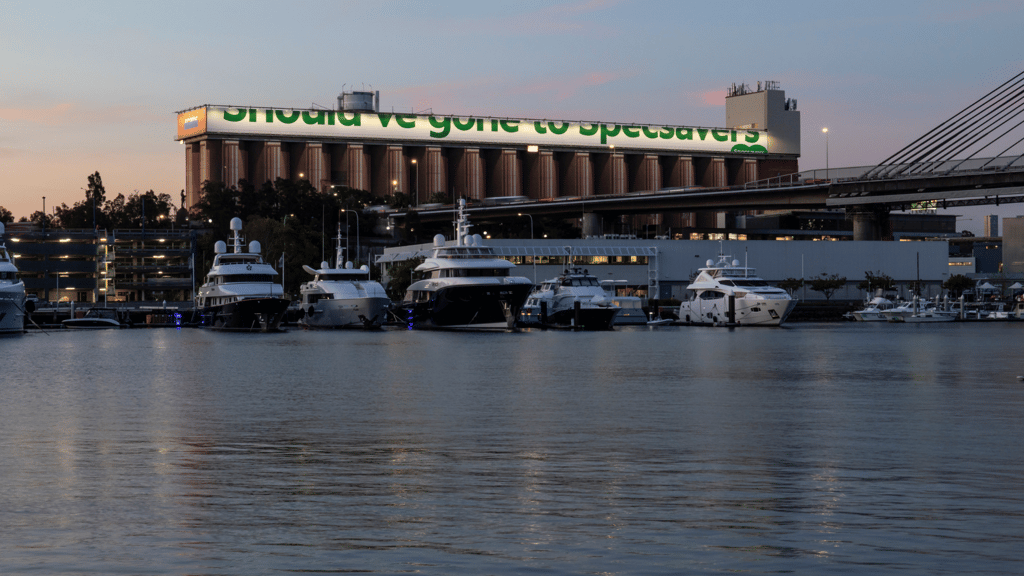
Should’ve gone to Specsavers is one of the strongest, longest-running brand platforms on the planet. But even great platforms need craft to stay fresh. This month, Specsavers showed how it’s done – taking over the Southern hemisphere’s biggest billboard, Sydney’s 170m Glebe Island Silos, with a “deliberate mistake.”
Why we love it:
- Context is everything. This is idea-led media planning at its best. Not a clever algorithm, or technical targeting, just smart judgement on where the message will land with greatest impact.
- Built for attention (and sharing). The work doesn’t just reach people, it makes them stop, smile and share. That’s building modern scale.
- Total commitment. Smaller executions ran across airports and city sites, but this giant canvas is the real statement. It’s expensive, audacious and that’s the point – it signals confidence and brand strength as well as increasing its attention currency.
A masterclass in turning media space into attention-worthy brand theatre. Bravo, Specsavers.