


Future-focused marketers are already operating in ways that will be crucial to success in five years’ time. In part four of our B2B series, experts Gisela Montello-Bruce and Michael Friedberg from FluxB2B look at how you can do it too.
The marketers who will thrive in 2030 aren’t waiting for the future, they work there already.
While others are automating campaigns and buffing dashboards, they’re busy building ecosystems, gaining multidisciplinary skills and AI fluency and rewriting what ‘brand’ even means in an AI-saturated world.
The very definition of leadership will change. CMOs, CROs, even CEOs… these titles might not disappear entirely, but they’ll blur into new roles, with yet unknown and new responsibilities. The leaders of 2030 will be more akin to growth architects – connectors, curators and ecosystem shapers. For CMOs, the job won’t be command and control, it’ll be orchestration – acting as signals and intelligence interpreters.
This new era isn’t solely about automation and reach, it’s a human-centric renaissance. Marketers will blend human insight and emotional intelligence with technology to create brands that resonate deeply.
What’s coming?
By 2030, we’ll see:
- A return to humanism:
Brands prioritising empathy, authentic storytelling and genuine community.
- Integration of art and science: Marketers balancing data-driven precision with compelling creative narratives.
- Rejection of over-automation: Brands will stand out by fostering genuine relationships in a world of synthetic content.
This isn’t crystal ball stuff, marketing is in a rewiring stage. We’re seeing it in Singapore and some areas of Japan, China, the UAE. In Aotearoa, we’ll cross-pollinate ideas from elsewhere and create something new. Already, homegrown ideas have been sparked – predominantly in how we work and productivity.
The new generation coming into management now is bold and willing to trial and fail, so ideation is much faster. Smaller, more nimble organisations are likely to lead the way.
And for B2B – where marketing teams are tiny – this is massively important. You can try something today and if it works, do it again tomorrow, then build on it.
Read the rest of the B2B series

B2B and B2C blur into something new

How to hack B2B buying committees

Adaptive strategy
The new career currency
The renaissance is bringing together human, technology and automation – this is the ‘market team’ we’ve talked about previously. But types of marketer will change too. Having a shallow generalist knowledge of everything isn’t going to cut it any more – much of that work will be taken care of by agentic AI taking action on humans’ behalf.
Instead, multidisciplinary thinkers will be sought after. These are people who can work across different business functions, switching and translating between them.
Collaboration, critical thinking, relationship building, reading signals, plus the ability to synthesise across domains and create original value will be the currency skill sets.
So how do you become a multidisciplinary thinker – someone who sees around corners and asks better questions? A bridge between teams, tools and truth?
- Develop deep fluency in at least one discipline, then enhance your strategic range with adjacent capabilities.
- Build your ability to switch contexts quickly and connect disparate dots – AI can’t do that.
- Don’t aim to be the “best at one thing”, be the one who sees the whole thing.
The best marketers will shift their focus from campaigning to sensing. They’ll look more like anthropologists and less like advertisers as they listen in the right places (forums, investor calls, community groups) and interpret signals into strategy.
Back to brand
The importance of your personal brand will rise as marketing teams shrink. We’ll see a more lateral way of working that isn’t just one job, one seat, full time. It’ll be a few seats and work serving different purposes. Embrace the portfolio career mindset and build CVs of complementary roles, not just impressive job titles.
Start now by building your reputation, not just your resume. Learn how to work in fluid, project-based teams.
Understand your personal economics – day rates, licensing, IP – and be the expert others subscribe to.
Company brand work will also become crucial. By 2030, we’ll be in the age of bold positioning as AI sameness makes bland brands disappear.
Ditch the generic. Find the sharp edge of your brand – the belief system, the distinct POV, the language only you can use. Marketers who stay stuck in campaign mode will be irrelevant by 2027.

Got insight? Let’s talk about it on LinkedIn.
AEO is already here
The buyers of 2030 will trust who you’re connected to more than what you say. This makes strategic partnerships a whole new channel. Think in ecosystems, rather than just distribution lines. Who do you build with? Sell with? Learn with?
We’re already seeing glimpses of why we’ll need answer engine optimisation – the art of being visible when generative AI does the searching, not the humans.
And as SEO is replaced with AEO, we’ll be marketing to AI as well as humans – because search will deliver opinions and conversation about your brand from Reddit and other places AI scrapes.
Community content managers will be key to filtering and seeding these forums. And you might want to add a barrage of FAQs to your websites – written in very human language – about the things you want customers to know.
2030 won’t arrive with a bang. It’s happening already. The marketers who win won’t be the ones with the best tech. They’ll be the ones who remember the humans, read the signals, understand what is possible and matters next – and aren’t afraid to build something bolder.
What will B2B marketing look like?
1. Broad reach
Hyper-targeting collapses beneath complexity and unreliable third-party data. Winning brands create mental availability and trust among wider audiences with powerful brand-building.
2. Embracing the hidden buyer gap
Marketers will target buyers not yet in-market and influential non-buyers. Employees, regulators and ecosystem partners increasingly shape perceptions and decisions. Brands that influence this wider audience create robust growth pipelines competitors cannot match.
3. Brand building as the ultimate differentiator
Short-term activation gives way to sustained brand building. Creative storytelling and emotional connections, once undervalued in B2B, are critical competitive advantages. Brands investing in creativity consistently outperform those chasing transactional wins.
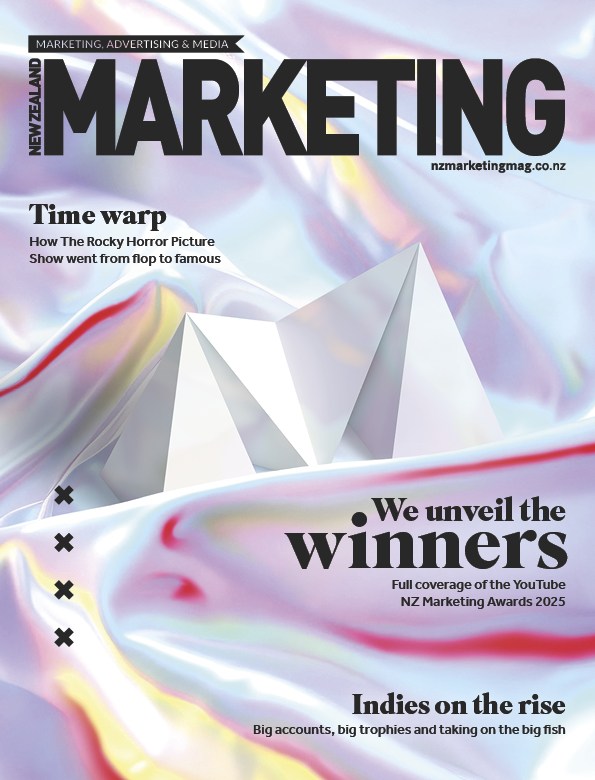
This story comes from NZ Marketing magazine issue 84, Sept-Nov 2025. Why not subscribe? Get four issues a year for just $50 (including delivery) if you autorenew.
Essential marketing intelligence. Don’t miss it.