
Media strategies aren’t just science – they’re a creative force. A gingerbread baking session with her four-year-old who asked “why?” got Kyra Lyden of Spark Foundry NZ thinking about breaking away from cookie cutter approaches. When creativity and data go hand in hand, she says, they become a lasting competitive advantage.
Over the summer break, deep in the ‘scraping the barrel for activities’ phase of the holidays, I baked some gingerbread people with my four-year-old.
As we were cutting out the shapes, he dutifully started ripping their heads off.
I told him not to do that.
He stopped, looked up at me, and asked why that was a rule.
And I had nothing.
Gingerbread people have no biological need for a head. And honestly, who’s to say you need a head to look good?
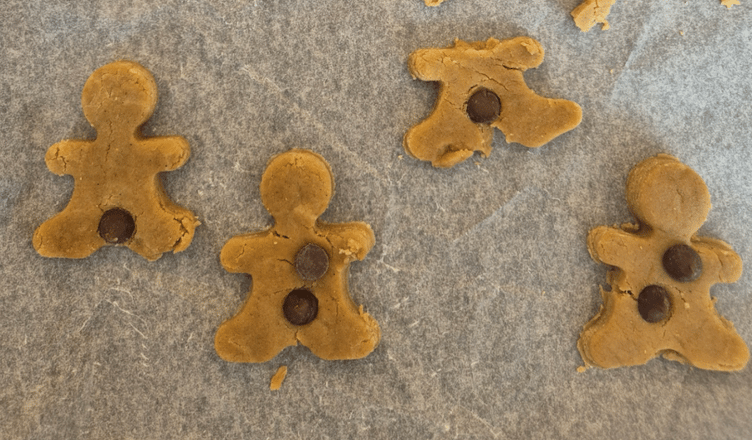
So, we kept going, following his direction. Some were headless. Some decapitated in multiple places. Some had very questionable chocolate button placements.
They certainly weren’t from the cookie cutter, but they were interesting. When he offered some to his cousins, the most interesting ones were the first to go.
By the end of the holidays, I was back at work, still thinking about the fate of those sweet, headless gingerbread people, and how many rules we follow simply because no one ever stopped to question them.
Advertising is full of rules no one can quite remember agreeing to, yet everyone politely obeys.
Creatives come up with ideas. The strategists are the thinkers. Media decides where it runs.
Many of those rules still shape how we work, even as the conditions that created them have changed.
The issue with these made-up rules isn’t that they’re wrong. It’s that they quietly fence us in
When we decide certain disciplines ‘own’ certain types of thinking, we shrink the playground where the best, most effective work can happen.
The reality is the neat little boundaries between advertising disciplines have been quietly dissolving for a while now.
Some of the most valuable people in our industry are becoming those who can hold many signals at once – data, tools, research and instinct – and turn them into unexpected, meaningful connections. These connections are where the magic happens.

Media’s contribution should be quietly creative, but loudly effective
People don’t experience advertising in a blank white room. They experience it within environments loaded with their own moods, behaviours and cultural baggage. A message landing in a shared, live TV moment feels completely different to that same message popping up mid-scroll in a hyper personalised feed. Same idea. Totally different energy.
In practice, channel decisions aren’t just scientific decisions – they’re also creative ones. Which is exactly why the best media planners don’t just optimise plans, they shape ideas. This is where media planning becomes a creative discipline as much as it is a scientific one.
The most effective media strategies now ask questions that look a lot like creative ones:
- What role should channel play in the story?
- How do different environments change emotional receptivity?
- Where does scale create shared meaning, and where does intimacy create impact?
- Can the media idea be the idea?
This isn’t a challenge to marketing science, it’s a case for keeping science foundational, while designing it to enhance creativity.
Media helps ideas read the room
Media has always been the discipline closest to the audience. Traditionally, we’re the ones sitting on the data, the tools and the signals that show how people actually behave – not how we hope they behave – and building ecosystems around that reality.
And when you truly understand your audience, connecting with them stops being guesswork. That’s where media thinking earns its keep in the creative process.
When creativity is built with channel in mind from the start, media can stop being the thing that ‘makes it fit’ and start being the thing that makes it stronger.
This is the logic that we at Publicis Groupe like to call ‘connected creativity’, where strategy, creative, owned, earned and paid media are developed together, not passed along like a relay baton. Instead of squeezing an idea into channels at the end, the idea is shaped from day one by how it will live and breathe in the real world.
The result is work that feels more intentional, more distinctive and far more effective, because it respects how people truly experience advertising today.
When you have all the gear, you need an idea
As many of the scientific aspects of the media discipline are increasingly democratised through AI-powered tools, its value doesn’t diminish – it simply becomes the baseline on which more differentiated thinking can be built.
The tools start to become table stakes, and the advantage moves upstream.
The valuable human skill becomes the ability to think strategically and creatively about the system: what you’re trying to change in people, which contexts will do the work, what signals matter and what lateral connections can we make, so the whole is more powerful than the sum of its parts.
So, what does this mean?
Media is increasingly as much a creative discipline as it is a scientific one, which is why developing capabilities that deliver creativity in channel is a durable competitive advantage.
Creativity doesn’t end at the idea, it begins when the idea meets the world.
And, like those sweet headless gingerbread people, our work doesn’t necessarily fall apart when we break the expected shape. It gets more interesting.