
Every month the Together team highlights five media stories from New Zealand and globally that matter for marketers, and one media idea we love. April felt like a moment of recalibration: streaming doubled down on ads, search continued its rapid evolution under AI and trust emerged as a defining currency across platforms, publishers and content.
Streaming wars intensify in NZ – ad tiers arrive, new players land, platforms evolve
Disney+ has officially launched its ad-supported tier across Australia and New Zealand, signaling a clear shift in its growth strategy towards hybrid monetisation. At the same time, HBO Max has confirmed a New Zealand launch date, while TVNZ has rolled out its next-generation TVNZ+ platform, with improved UX, personalisation and ad capabilities.
For marketers, this is a genuine escalation in the local streaming battle.
First, ad-funded streaming is fast becoming the norm, not the exception. Disney+ follows Prime into the space, increasing premium video inventory and creating more flexible entry points for brands that previously couldn’t access these environments. Expect downward pressure on CPMs over time, but also more scrutiny on creative quality in these high-attention settings.
Second, fragmentation is accelerating. HBO Max’s arrival adds another option competing for both audience time and content rights, further splintering attention. This makes cross-platform planning and frequency management more critical, particularly as linear TV continues to evolve.
Third, local platforms are fighting back with product. TVNZ+’s upgrade (albeit with some teething problems) shows a clear focus on data, targeting and user experience. For NZ marketers, this reinforces the value of local BVOD: scaled reach, strong first-party data and trusted content environments.
AV planning in New Zealand is a multi-platform job now, the question is how well you’re orchestrating it.
IDNZ 2026 Report: 5 key takeaways
If you felt a sudden chill in your organic search results this month, the data finally explains why. April saw the release of the IDNZ 2026 Digital Marketing Report, confirming a massive structural shift in how Kiwis find, and ignore, brands online.
- The zero-click cliff: AI Overviews (AIO) are now “swallowing” the journey. Because Google provides the answer directly on the search page, organic click-through rates have plummeted by 34.5%.
- The local pack explosion: In 12 months, Local Pack ads (Maps/Business listings) have jumped from 1% to 22% of all mobile searches in NZ. The Google Business Profile is now a primary conversion engine.
- TikTok as search: Search is officially social. 42% of Kiwis under 30 use TikTok as their first stop for reviews, spending an average of 1h 42m per day on the platform.
- The $2.97b video powerhouse: NZ digital ad spend has hit $2.97 billion, with video (+27%) and connected TV (+20%) acting as the primary growth engines while standard banners remain flat.
- Authenticity > gloss: The “Kiwi filter” is real. The report highlights that raw, user-generated content (UGC) and micro-influencers consistently outperform high-budget, polished campaigns.
What does this mean for marketers? The era of “buying clicks” is slowly fading. You no longer win by getting someone to your site – you win by having the AI recognise your brand as the expert. Success in 2026 requires pivoting to Answer Engine Optimisation (AEO) and swapping stock-heavy creative for human-led storytelling that actually connects.
Trust in news rebounds in NZ
New Zealanders’ trust in news is rising again after several years of decline, with new research pointing to a growing rejection of low-quality, AI-generated content and a renewed appreciation for credible journalism. Audiences are increasingly turning towards established news brands as concerns around misinformation and “AI slop” grow.
So what should NZ marketers take from this?
For a start, it reinforces the value of trusted environments. As the volume of synthetic and low-quality content increases, professionally produced journalism is becoming a genuine point of differentiation and it strengthens the case for news brands as high-attention spaces that can positively influence how people feel about your brand.
Context is also doing more work than it used to. Ads appearing alongside credible, fact-checked content benefit from a halo effect that’s likely to grow as audiences become more deliberate about where they spend their time. Global evidence consistently shows that trusted environments drive stronger recall and better brand outcomes.
It also challenges the race to the bottom on cost. Cheaper, AI-driven inventory might offer short-term efficiency, but it risks placing your brand somewhere audiences have already decided not to trust.
At Together, we think the brands that win from here will be the ones that treat trust – in their own content, and in the environments they choose – as a strategic asset, not an afterthought.
MediaWorks audio sale reportedly back in play
MediaWorks’ radio and audio arm is reportedly back on the market, following a return to profitability and the earlier carve-out of its outdoor division under QMS. The business, now more streamlined and focused purely on audio, is understood to be drawing interest from potential buyers.
The timing is telling. By separating OOH and stabilising its core operations, MediaWorks has effectively repositioned radio as a standalone, investable asset. In a market where scale still matters, its network of stations and the Rova digital platform offer both mass reach and a credible pathway into streaming audio.
For advertisers, this moment reinforces the quiet resilience of radio – and could represent a real inflection point in the NZ media landscape. While much of the attention has shifted to podcasts and streaming, broadcast continues to deliver consistent, high-frequency reach across commercially valuable audiences. That reliability is precisely what makes the business attractive, particularly in a fragmented media environment.
But what happens next will shape how audio is packaged and sold. A new owner could double down on digital integration, rethink station portfolios, or push for simpler, more unified trading models. There are some logical suitors with existing media assets, though previous attempts at cross-channel integration in this market suggest execution tends to be harder than the strategy deck makes it look. As their primary radio rival NZME watches closely, any ownership change may also bring into question shared initiatives like TRB, which both businesses have funded. The industry is watching.
Spotify grows up as an ad platform – and it’s not just about audio any more
Spotify has long occupied an awkward position in the media mix: massive reach, deeply loyal audiences, but ad products that never quite matched the sophistication of its peers. That changed in April.
On March 31, Spotify announced a significant overhaul of its advertising offer, introducing Carousel Ads – a swipeable visual format of up to six cards appearing in the Now Playing view – alongside a revamped Sponsored Playlists product giving brands 100% share of voice across flagship editorial destinations including RapCaviar, Today’s Top Hits and New Music Friday. The platform also added Split Testing and Automated Bidding inside Ads Manager, features standard on display and social platforms but historically absent from Spotify’s self-serve tooling.
Automated ad sales now account for over 30% of Spotify’s ad-supported revenue, a sign the platform is scaling its ad business in earnest, not just adding formats for show.
For NZ marketers, this deserves a proper look. Spotify now offers visual, audio and cultural placement within a single session. That’s a meaningful new capability, not a marginal one. Owning 100% share of voice on RapCaviar or New Music Friday is the kind of high-attention, brand-right placement that doesn’t feel like an interruption. And the self-serve improvements such as split testing and automated bidding lower the barrier for NZ brands that previously found it too manual to justify.
Campaign we love: Yahoo’s ‘Scroll Stoppr’
April Fools’ Day is often filled with forgettable brand gags. But Yahoo’s ‘Scroll Stoppr’ stands out by tapping directly into a very real, very current behaviour: doomscrolling. Positioned as a physical device that literally stops your thumb mid-scroll, the idea lands because it plays on a cultural truth most people recognise instantly.
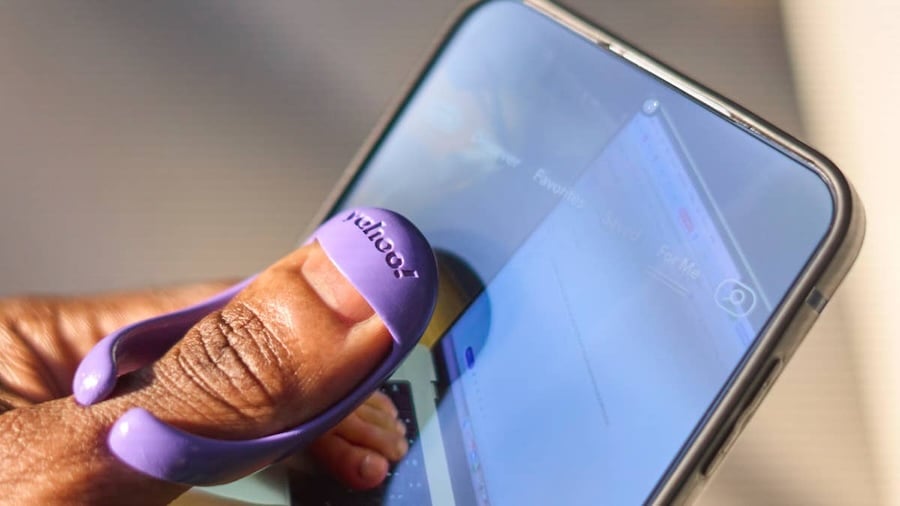
Why we love it
Cultural tension, not just a joke. This isn’t random humour. It leans into growing anxiety around screen time and algorithm-driven consumption – which makes it feel relevant rather than throwaway.
Built for the platforms it pokes. The ultimate twist is where it showed up. Promoted via TikTok Shop, the campaign lives inside the very ecosystem it claims to disrupt. That layer of irony makes the idea sharper and far more shareable.
Simple, visual and instantly gettable. No heavy explanation required. You see it, you get it, you share it. In a feed environment, that immediacy is everything.
This is a reminder that sometimes the best media ideas don’t just use platforms, they comment on them. Ground the creativity in a real behaviour, place it in the right context and even a one-day stunt can earn the kind of attention a month-long campaign might envy.