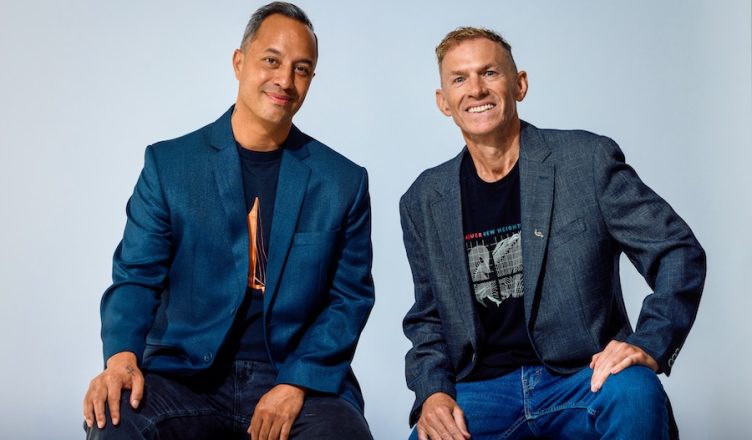
Research by Dr Tim Antric and Te Awanui Reeder, from Hemisphere and Big River Creative, explain why campaigns that ‘look Māori’ – but operate on the standard behaviour change models – aren’t effective.
Marketers have poured so much money into social marketing campaigns aimed at Māori communities.
This industry has set out to impact diet, smoking, driving, immunisation, drug use, cancer screening… the list goes on. Yet the improvements in outcomes often don’t match the investment. There’s a reason. The frameworks don’t fit.
In October 2025, we published research in the Journal of Social Marketing that spells out the problem and offers a genuine alternative.
We call it ‘Tiriti-dynamic social marketing’ – and no, it’s not another cultural competency training exercise or a mandate to sprinkle te reo through your campaign.
It’s a fundamentally different approach.
Beware cultural adaptation
Most social marketing in Aotearoa starts with Western behaviour change models. These models pretty much ignore nine out of 10 of the world’s population (Henrich, et al. 2010). As marketers, we build the strategy. We design the message. Then we bring Māori in – usually at the end – to check the cultural bits and add some design elements.
What we get are campaigns that look Māori but don’t operate any differently underneath. We’re pretty sure every marketer can name at least one campaign that did that.
The real issue is power. In conventional approaches, non-Māori organisations make the big decisions. Communities get consulted (at best). This isn’t partnership, it’s tokenism with better intentions.
When Māori communities lead their own social marketing, they get better results. That’s not ideology. That’s what works.
They understand their communities in ways external marketing experts never will. They know what resonates. They know the relationships and contexts that matter.
Being Tiriti-dynamic
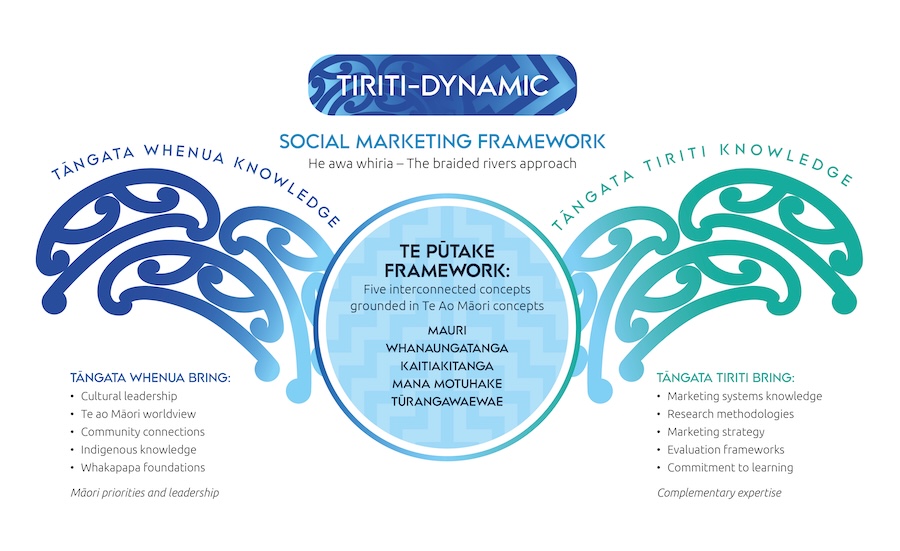
Rather than layering Māori concepts onto Western models, our approach proposes starting from te ao Māori (the Māori worldview) entirely. The framework sits on five interconnected ideas:
- mauri (life force and energy in relationships)
- whanaungatanga (relationships and kinship as the foundation, not individuals)
- kaitiakitanga (responsibility to protect wellbeing for past, present and future generations)
- mana motuhake (communities leading their own priorities)
- tūrangawaewae (place-based approaches that respect specific contexts).
Think of it as he awa whiria – the braided rivers metaphor (Macfarlane, et al. 2024). Māori knowledge and Western expertise flow alongside each other. Sometimes they converge. Sometimes they keep their own course. Neither dominates. Neither drowns out the other.
What it means for marketers
The framework reframes the fundamental question. Instead of: “How do we influence this audience?” The work asks: “How do we fulfil our responsibilities as guardians?” Instead of targeting individuals, you strengthen relationships and collective identities.
We’re at an inflection point. Public interest in Te Tiriti has shifted dramatically – 72% of adults now feel informed about it, up from 58% two years ago (Horizon Research, 2024). But only 12% feel very well informed. There’s appetite for genuine partnership, but also real hunger for approaches that actually work.
The Journal of Social Marketing editor, professor Ann-Marie Kennedy, recognised this. She called Tiriti-dynamic social marketing significant “not just for New Zealand, but in fact for the world”.
This framework isn’t a prescription. It’s a living system – it evolves through practice. For organisations serious about better work with Māori communities, it offers what cultural adaptation can’t: a fundamentally different way of thinking about power, decision-making and what success really looks like.
The question isn’t whether you can afford to do this. It’s whether you can afford not to.
Tiriti-dynamic social marketing framework
He awa whiria – the braided rivers approach
Tangata whenua knowledge
Tangata whenua bring:
- Cultural leadership
- Te ao Maori worldview
- Community connections
- Indigenous knowledge
- Whakapapa foundations
Te Pūtake Framework
Five interconnected concepts grounded in te ao Māori concepts
- Mauri
- Whanaungatanga
- Kaitiakitanga
- Mana motuhake
- Tūrangawaewae
Tangata tiriti knowledge
Tangata tiriti bring:
- Marketing systems knowledge
- Research methodologies
- Marketing strategy
- Evaluation frameworks
- Commitment to learning
This story comes from NZ Marketing magazine issue 85, Dec 2025-Feb 2026. Why not subscribe? Get four issues a year for just $50 (including delivery) if you autorenew.
Essential marketing intelligence. Don’t miss it.