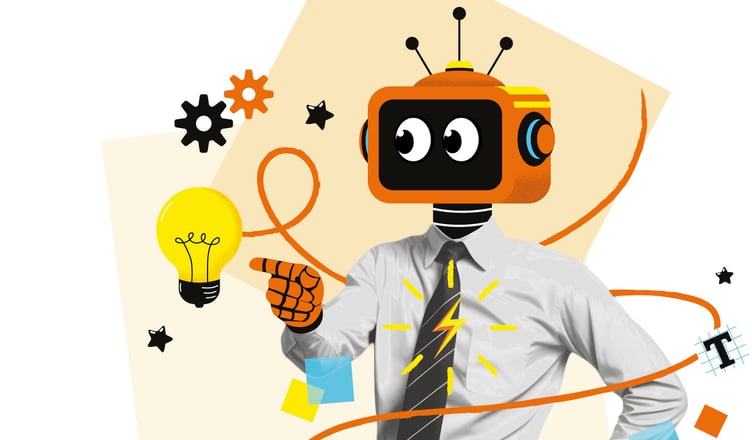
We’ve fooled around with AI – is 2026 the year we find out? NZ Marketing magazine editor Penny Murray gives a sitrep on the troublesome tech that’s also a useful tool.
For a few years now, we’ve been told AI is the answer to pretty much everything. That its adoption and dominance in all areas of life is just a matter of time.
The tl;dr: Get on board or get left behind like the loser you’ll become.
In Aotearoa, we haven’t all drunk the Kool-Aid. As a nation, we’ve been slower to incorporate AI into our work processes than the tech bros might like. Many here have hesitated, waiting to see how the first wave overseas fares.
At first, it was just a funny wheeze to amuse your friends. ChatGPT wrote a song about me in a country style! Here’s me as a superhero! What a cool trick!
Teething troubles
We knew (and perhaps didn’t care) about the six-fingered photos and the ‘hallucinations’ – the euphemism for plausible-sounding yet made up elements found in AI-generated content. Teething troubles, we were told. Don’t give them a second thought – the tech is getting better and better.
The amount of energy and water required to power AI is harder to dismiss. News emerged in late 2024 of a mothballed nuclear reactor in Three Mile Island, Pennsylvania, being pressed back in to service to feed Microsoft’s data centres. Electricity prices rise and (sigh) culture wars rage over climate change, yet here we are, generating pictures of ‘native’ flamingos as the sun rises over Mt Taranaki.
It’s useful though, right? Work up an extra six metres of background in an image, voice this script into seven languages, find a needle in this data haystack, transcribe and summarise our meeting. In moments. Without doubt, these are useful tasks AI can take on – yet they’re nothing a human can’t do, given the time.
It’s not magic, but we’re thrilled by speed and love a shortcut.
I hear a ‘but’…
Of course, in May 2025, when The Chicago Sun-Times’ summer reading round-up included books that didn’t exist, the doubters crowed. Writers despaired and redundant sub-editors sobbed into their cardigans.
In October, Deloitte Australia issued a partial refund to the federal government after finally admitting an error-strewn AU$440,000 report (including typos, fake academic references and a made-up legal quote) had been written using AI. Oops.
As video slop proliferates and SEO company Graphite found more than half of internet content is AI generated, even the kids are suspicious. “That’s AI,” is – according to my socials – the Gen Alpha retort du jour. It means: “I don’t believe you.”
There is concern about how our industry is using AI. Are agencies “ChatGPT-ing it” yet still charging for human hours? Is it OK to like work that uses AI-generated people instead of real actors? Will AI testing mean ads all look the same?
Bubble trouble
Let’s set aside those questions for now (and the disappearing job prospects for juniors).
Instead, consider the rumblings heard in Q3 2025: that AI is a bubble, destined to burst. In September 2025, international finance giant Deutsche Bank warned AI spending was propping up America – and that it can’t keep increasing exponentially.
“AI machines – in quite a literal sense – appear to be saving the US economy right now,” Deutsche Bank head of FX Research George Saravelos wrote to clients. “In the absence of tech-related spending, the US would be close to, or in, recession this year.”
The Wall Street Journal has since run several stories asking whether spending on AI will ever pay off or if we’re in for a rerun of the dot.com crash of 2000. A fair question, since the “magnificent seven” tech companies – Meta, Amazon, Google, Microsoft, Nvidia, Tesla and Apple – have seen share prices soar in the last couple of years, while collecting relatively little revenue in real life.
Journalist and author Cory Doctorow has a book about it – The Reverse Centaur’s Guide to AI – coming out in 2026. He says we’re headed for “econopocalypse”. Oh goodie.
Meanwhile, the Harvard Business Review reports that ‘AI-generated “workslop” is destroying productivity’ – as workers produce polished-looking but substandard outputs their colleagues have to fix. It’s enough to make you want to unplug from everything forever.
The future
TRA’s ‘The Future We Want’ research, released in October, observed this unease. Given the option, respondents said they’d shut down AI completely. [Ed’s note: Please no – I never want to transcribe interview tapes ever again!]
While the hype is omnipresent, tech entrepreneur and writer Anil Dash says most people in his industry are over it, though few will say so in public.
“Stop being so goddamn creepy and weird about the technology!” he rages in a blog post titled ‘The majority AI view’. “It’s just tech, everything doesn’t have to become some weird religion that you beat people over the head with, or gamble the entire stock market on.”
Computer scientists Arvind Narayanan and Sayash Kapoor are more reserved in their essay ‘AI as normal technology’, published by Columbia University. But their song is the same. They urge us to think of LLMs and the like in the same bracket as electricity: amazing, and hard to conceive the future without – but not humanlike.
What will the coming year bring? More kickback. Hopefully more realistic expectations too.
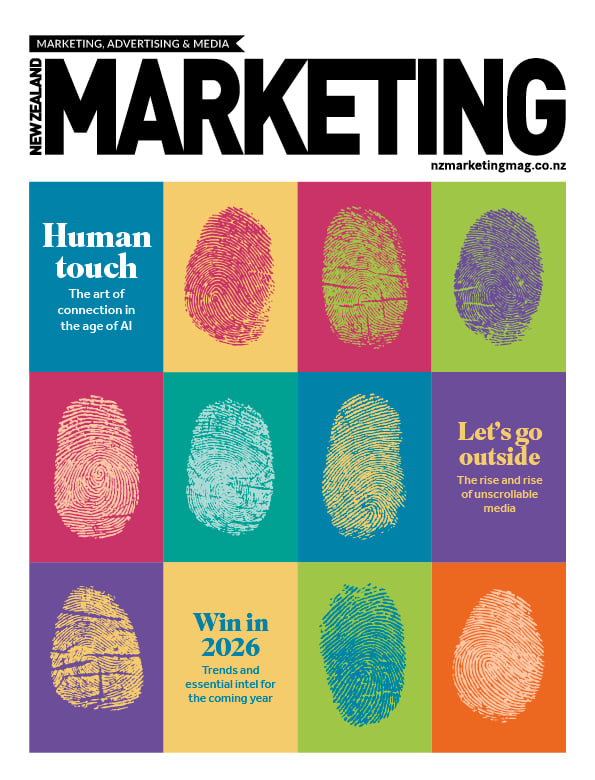
This story comes from NZ Marketing magazine issue 85, Dec 2025-Feb 2026. Why not subscribe? Get four issues a year for just $50 (including delivery) if you autorenew.
Essential marketing intelligence. Don’t miss it.