How Phantom Billstickers grew from an underground poster outfit to a national platform for culture, creativity and connection.
Before there were feeds, there were walls. Before algorithms, there was the street. And before “content” became a marketing term, it was a poster – printed by hand, pasted by night, seen by everyone.
That’s where Phantom Billstickers began. Not in a boardroom. Not in a spreadsheet. On the street. Among the bands, poets, artists and events that gave New Zealand its heartbeat.
Forty-odd years later, Phantom’s still at it, connecting people through paper, place and presence. Only now, the scale has changed. The spirit hasn’t.
Born in the underground
Phantom’s story starts long before “out of home” meant media plans and metrics. It started with an urge to get ideas into the world.
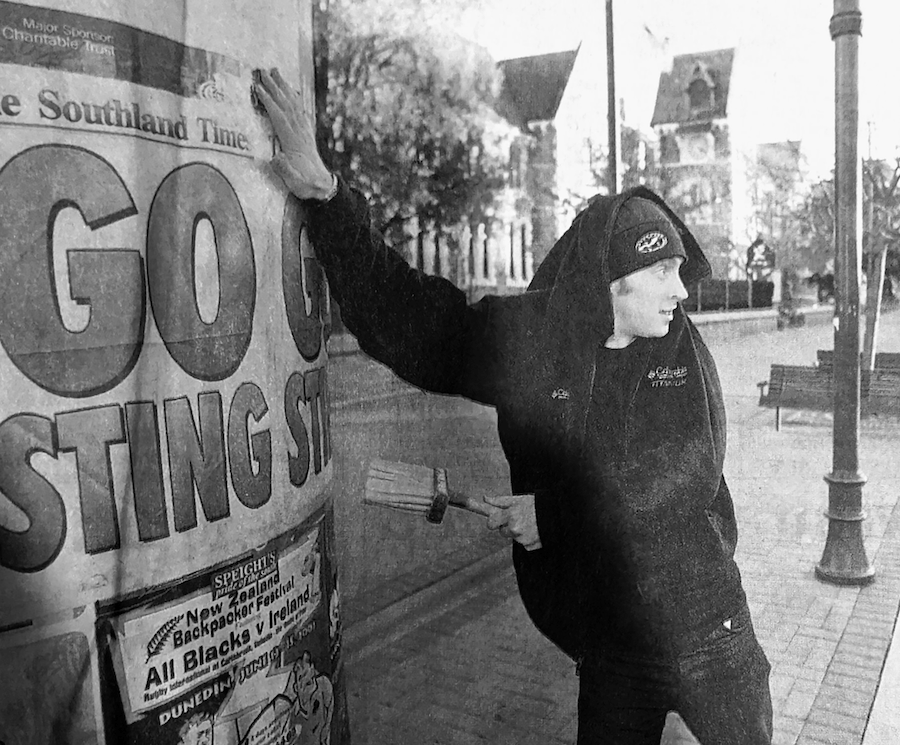
In the early days, that meant stapling gig posters to power poles, brushing paste on walls and doing it all again next week. It was DIY culture at its purest – the same drive that powered indie record labels, zines and art collectives.
Posters were how communities spoke to each other. They spread news, built scenes and made the invisible visible. They were democratic – the street belonged to everyone.
Phantom grew up inside that world. The people who built it weren’t media operators, they were believers. They saw posters as more than promotion. They were participating.
That belief still runs through the company today.
From paste to platform
What began as local passion has become a national platform. Phantom’s network now stretches the length of Aotearoa, with posters in every major centre and most small towns in between.
The approach hasn’t changed much. Walls are still chosen for their character. Posters are still pasted by hand. Every frame is still cared for by humans.
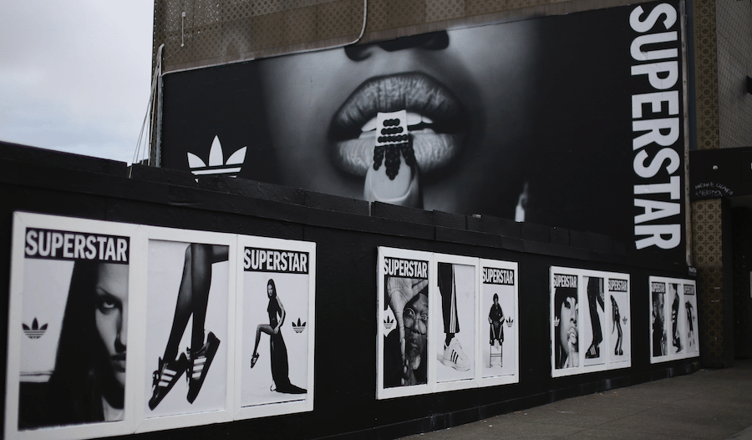
What’s changed is how the work fits into the modern marketing mix. The same walls that once promoted punk gigs now carry national campaigns for some of the country’s biggest brands.
It’s a rare kind of evolution – staying true to the craft while scaling it for today’s creative and commercial worlds.
“We were doing content distribution before it had a name,” says Tom Horton, marketing manager at Phantom. “Now we just call it what it always was – getting ideas into public space and seeing what happens next.”
The street as a stage
Phantom’s walls have always carried a mix of content, music, theatre, art, events, activism and brand campaigns all layered together. It’s what gives the streets their texture.
To walk through any major city is to see a living feed, constantly changing, overlapping and evolving. There’s no algorithm, no sponsorship model, no swipe to skip. Just what’s there, right in front of you.
That authenticity is exactly what draws brands back to the street. In an era of digital overload, there’s something grounding about being seen in the real world.
“People aren’t just looking for reach,” says Horton. “They’re looking for relevance. You earn that by showing up in culture, not just online.”
For some, that means a beautifully designed poster for a local theatre season. For others, it’s a national roll-out that takes over multiple sites at once.
Every campaign, whether grassroots or global, shares the same canvas. That’s what makes it feel human.
Where art meets commerce
Phantom’s work sits at the intersection of creativity and commerce, where the energy of art collides with the ambition of brands.
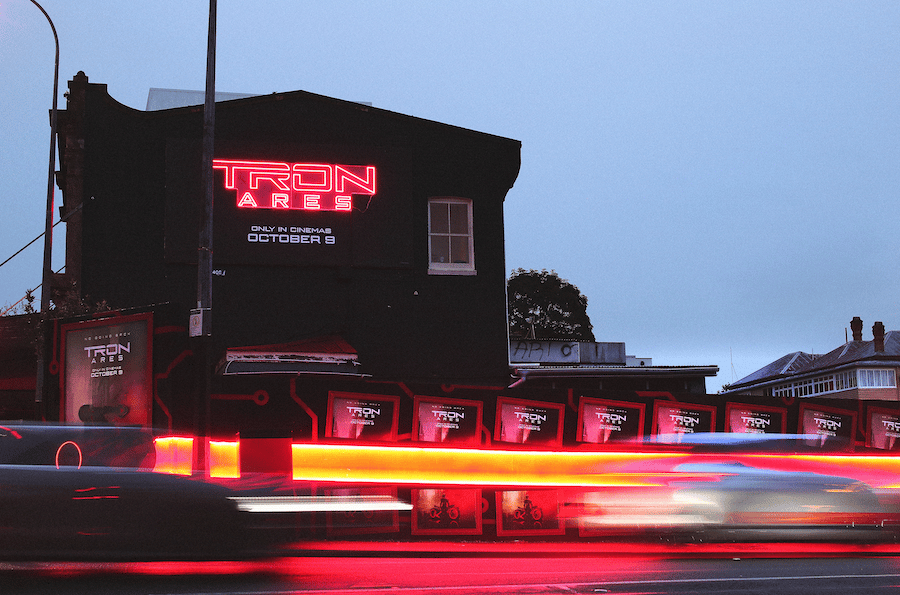
Phantom’s Custom Shop department brings that to life through large-scale special builds and creative installations that blur the line between media and street art. These projects turn city walls into experiences, whether it’s 3D neon beams, giant hand painted murals, or something no one’s ever seen before.
At the same time, Phantom remains a constant presence for the country’s creative community. From poetry posters to music launches and arts festivals, the company continues to make space for culture.
It’s that blend, commercial, cultural and communal that makes Phantom unique. The streets they care for aren’t sterile ad environments – they’re living galleries that reflect the country’s creative pulse.
Still made by hand
For all the national scale and brand partnerships, Phantom is still a human company. Every poster, every frame, every wall involves real people and real craft.
There’s something satisfying about that. The buckets. The brushes. The quiet discipline of getting a job done right, rain or shine. In a media world obsessed with automation, that kind of hands-on approach feels radical.
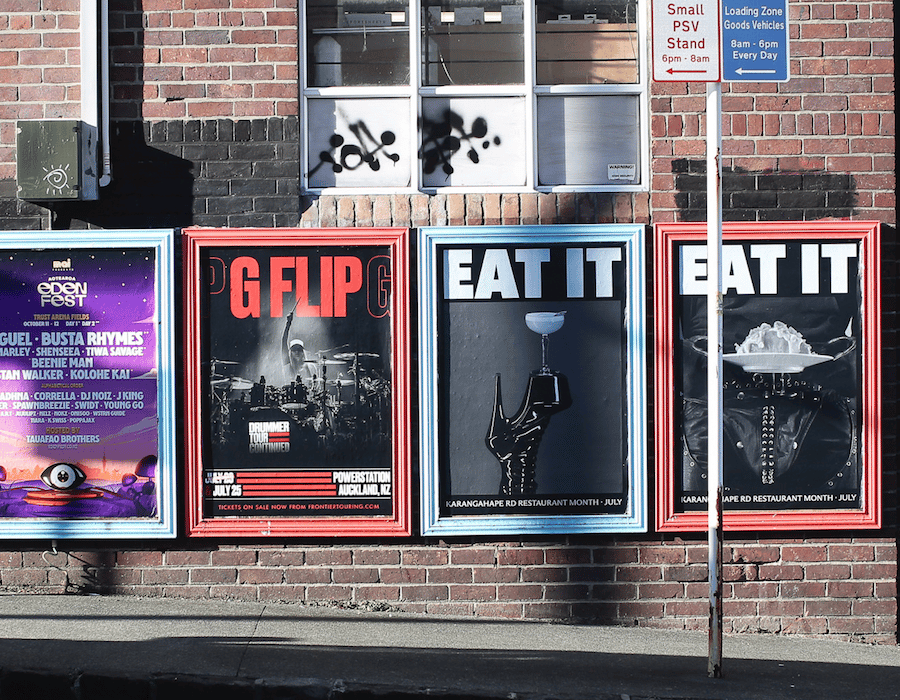
“Our algorithm is a ladder and a brush,” say the team. “And our data is the number of heads that turn.”
It’s old-school, but it works. Because in the end, marketing still comes down to one simple idea: attention. And nothing grabs it like something real, right in front of you.
A platform built on presence
Phantom isn’t nostalgic about the past. The company’s focus is on what’s next: how to keep public space alive and full of ideas.
That means new creative formats, deeper partnerships and finding ways to make real-world media even more powerful in a digital-first landscape.
The goal isn’t to compete with online channels, it’s to complement them. A poster might spark a scroll, a photo, a share – but it begins in the physical world.
“The streets still matter,” says Phantom’s leadership. “They always have. The mediums will change, but people will always respond to what feels real.”
Long live the wall
Phantom Billstickers has been part of New Zealand’s creative life for more than four decades. The company’s history is written on walls across the country – from indie gigs and poetry launches to global brand campaigns.
Through it all, the idea remains the same: give ideas a public life.
Because even in a world of infinite screens, the street is still where culture lives. Raw, public and alive.
This story comes from NZ Marketing magazine issue 85, Dec 2025-Feb 2026. Why not subscribe? Get four issues a year for just $50 (including delivery) if you autorenew.
Essential marketing intelligence. Don’t miss it.