
YouTube is the hub of modern entertainent for Kiwis – a ‘lean in’ audience who come to learn, discover and engage with creators across any screen. It’s a unified ecosystem where brands can thrive by taking a ‘YouTube-first’ approach.
Today consumers have more platforms and a sea of content choices: long and short-form, across every screen, from phones to connected TVs.
It’s no longer about what’s “on TV”. It’s about finding the exact content that reflects who they are, what they value and how they live. And if it doesn’t resonate? They skip, they scroll or they tune out. This is where YouTube sets itself apart.
YouTube is the hub of modern entertainment. In a world full of video, viewers know YouTube is the home of culture – a place where loyal audiences engage deeply with creators they trust.
Viewers come to YouTube with clear intent: to explore, learn or discover. They are actively engaged. For marketers, this lean-in mindset transforms how video performs over the entire consumer journey.
Rather than buying fragmented impressions on isolated channels, YouTube advertisers gain unified scale and undivided attention across every screen Kiwis rely on.
This versatility bridges the gap between brand and performance, delivering each at the right moment on the most effective screen. Brands can effortlessly balance top-of-funnel reach, like brand campaigns on the living room screen, with bottom-of-funnel precision driving immediate action on mobile, as shown in these examples from McDonald’s and Neon.
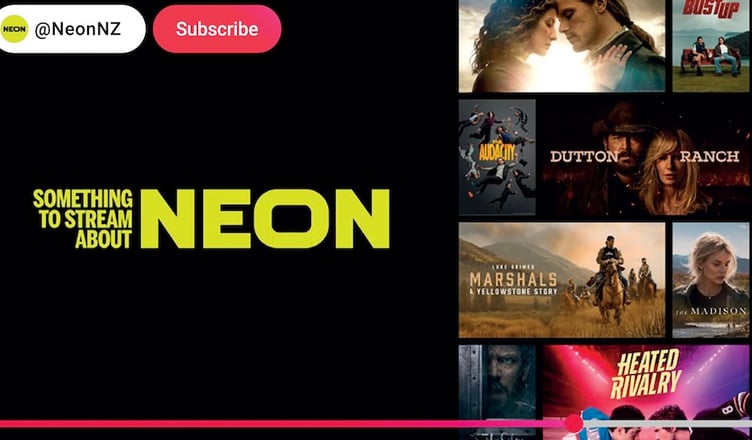
Neon saw 6.4x more sales per $1 spent with YouTube’s Demand Gen vs paid social
As Aotearoa’s premier local streaming service, Neon operates in a crowded market. If viewers aren’t captivated, they move on.
Neon’s Search and Performance Max campaigns were already highly effective at capturing proactive search, but the real growth opportunity sat with new audiences further up the funnel.
Neon knew content trailers could entice viewers to sign up, before they started searching. So the service turned to Demand Gen, which put its most engaging, high-impact show trailers directly in front of the right audiences. It paid off.
The creative included trailers and amplified local creator content, using Partnership Ads.
This was complemented by Google’s AI-powered conversion-based bidding and smart audience lookalike targeting capabilities.
The results
Demand Gen is outperforming paid social as a higher-intent growth driver across the funnel. It generated 58% more sales overall, showing a much stronger ability to convert engaged audiences into customers than paid social.
“Demand Gen’s value is not only in direct sales performance, but in its role as a connector across the funnel: turning attention into consideration, consideration into intent and intent into purchase,” says Shawn Moodie, digital marketing lead at Sky NZ.

McDonald’s YouTube-first approach smashes VTR & CPM metrics
McDonald’s wanted to deepen brand love across a broad demographic, but knew that simply scaling a creative vision made for linear TV wouldn’t work on a modern screens ecosystem approach.
Adopting a ‘YouTube-first’ creative strategy was the key to success. Assets were built natively for YouTube’s specific user behaviours and storytelling trends.
By weaving platform-specific trends and insights directly into the production process, the brand created an ecosystem of assets. Vertical, short-form, lo-fi, hi-fi and long-form content – even a 30-minute ad – were optimised for maximum engagement on every digital screen.
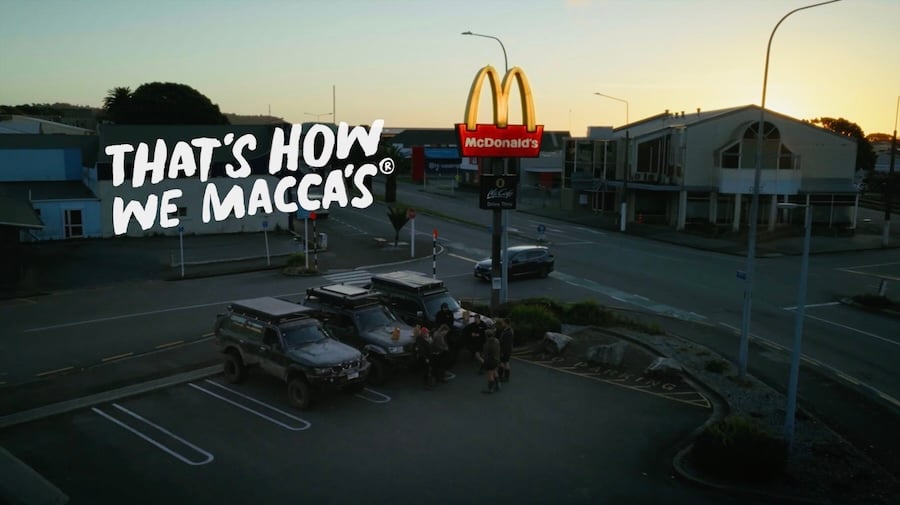

“At McDonald’s, we want to connect with our customers wherever they are,” says Luke Rive, McDonald’s NZ director of marketing.
“By slightly tweaking our asset creation approach, we expanded into new formats while still nailing the basics. View-through rates alone were a strong endorsement for this evolution in our approach.

The results
The strategy delivered exceptional engagement and efficiency, including a $6 CPM on YouTube bumper placements and a $20 CPM for 60sec non-skip placement on connected TV.
Results didn’t stop there. The campaign also saw a significant 1.78% lift in brand favourability and a substantial 5.02% absolute lift for the critical 18 to 24 age group.

This story is from NZ Marketing magazine issue 88, Sept-Nov 2026. Why not subscribe? Get four issues a year for just $50 (including delivery) if you autorenew.
Essential marketing intelligence. Don’t miss it.