

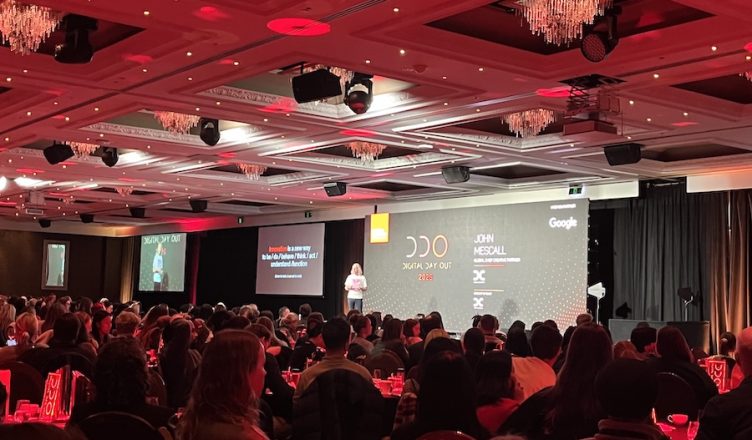
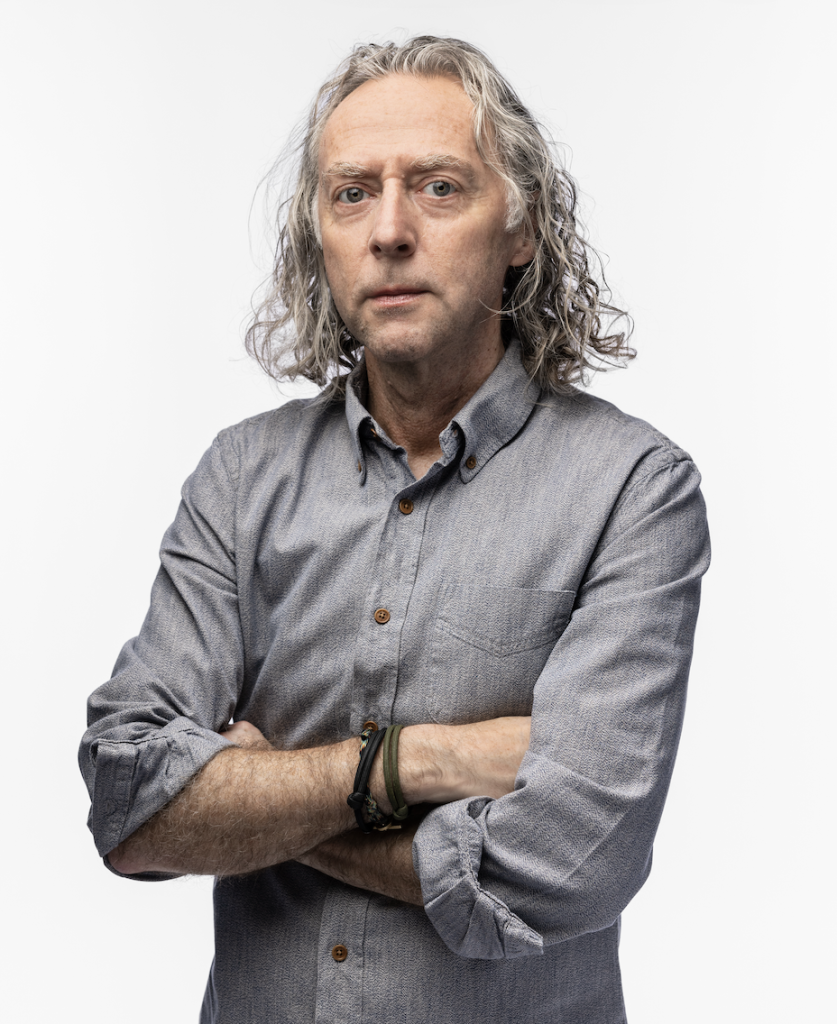
Above: Dentsu global creative partner John Mescall came over from New York to speak at Digital Day Out.
On July 29, Dentsu global chief creative partner John Mescall gave a keynote speech on emotions and innovation at the Marketing Association event Digital Day Out. He chatted with Zahra Shahtahmasebi afterwards about why understanding how humans operate is more important than being the cleverest person in the room.
Zahra Shahtahmasebi: Thanks for making the time to speak with me! Emotion was the foundation of the talk that you just gave. How can marketers in Aotearoa really lean into that, especially if it feels scary to them?
John Mescall: You just need to do it. There’s no secret. We do forget to centre the question: ‘What do we want people to feel?’
We forget the very simple logic that people act on feelings. We want to believe we’re more rational than we are. When you start talking about feelings, people are like ‘oh they’re just feelings’. But they’re everything; people go to war based on feelings.
ZS: How do you think we got into this situation where logic presides over feelings?
JM: Because we are taught from a very early age to not feel, but to think. The whole education system is based on knowledge and from a very early age, we come to accept that the path to success is knowing more. Feelings don’t seem like a serious pursuit.
ZS: One of the things that struck me about the Dumb Ways to Die campaign is that Melbourne Metro came and said, ‘No other safety campaign has ever worked before’. Do you think sometimes success is only born out of that kind of desperation?
JM: Absolutely. Creativity is always a last resort for anyone because people are scared of it. It’s not anyone’s first instinct. Logic is always first. And that’s why I say extreme pragmatism is an amazing starting point for great creativity. Because when it has to work, like if your life depends on something working, you will do anything. There is nothing too crazy if you believe it will work.
When you look at brands with a long history of really great marketing, creativity is their first port of call. But look, you can’t always be creative, we don’t have the time to do that. The reality is that we have to do a lot of work where it just keeps the engine running. That’s fine. We need to have multiple speeds. When you’re sustaining and building a brand, there’s a time to break patterns and a time to follow them.

ZS: For the marketers out there who have a client who’s not at that stage of being on board with an idea, what is their way forward?
JM: Your job is to not push an idea on someone. Your job is to say, look, the reason we’re bringing you this is because if we do this, this is what we believe will happen. It’s not just, ‘Hey, say yes to this because it’s different’.
No one can expect anyone to take a leap of faith or to be ‘brave’. If we’re asking someone to be brave, we’ve failed at actually showing what this idea is designed to do for people.
ZS: We’ve heard a lot about AI [at Digital Day Out] and what it can do, including the way it’s being used in campaigns. But it’s also making people turn away. Do you have any thoughts about what the next stage is in the cycle? Are people going to be looking for less polished content?
JM: I always thought the backlash would happen but I’m amazed at how quickly it has. AI is the first technology where it’s exciting but where there’s also been instant rejection. Normally we just rush headlong into it and we’re excited, then later we realise, ‘Shit, maybe we should have thought about that’. Social media is an obvious one.
There are clear owners of AI and it’s not us, it’s a handful of people. And no one wants something that is being forced upon them, especially when some of the smaller players in AI are running ads saying, ‘Hey, get rid of your stupid, inefficient, lazy human workforce and replace it with us’.
I do not use AI to do anything that I believe I am good at. It weakens me if I do that. I’ll use it where I have blind spots or I just don’t like doing the thing. Don’t use technology to do what you’re already doing more quickly and cheaper. Use it to do things you weren’t able to do before. That’s what people want.
ZS: You talked about how there has to be a new baseline of excellence. Do you have any ideas around what that will look like?
JM: It’ll happen organically. This room today is full of very professional marketers who have budgets and as they start to see people, like tiny little competitors and companies with no budget making work that traditionally they thought only they could make, that penny will drop. They will feel the floor rising. And then they will think, ‘Shit, okay, we’re all doing the same thing now. We’ve got to raise our own ceiling’.
Then, what’s left now? Maybe being more creative, finding a new way to do things.
ZS: One of the last things you said was around how there are no rules anymore. And that was really about the industry, right?
JM: It’s dissolving because rules are based on what’s gone before. And I think what’s gone before is to a degree largely irrelevant. The question I always want people to ask is: what have I always wanted to do but couldn’t? If you centre your professional life as a marketer around that, you will do the most innovative, interesting, useful marketing of anyone because it forces you then to seek technologies and solutions that didn’t exist last week or last year. You’re creating a new path for yourself.