

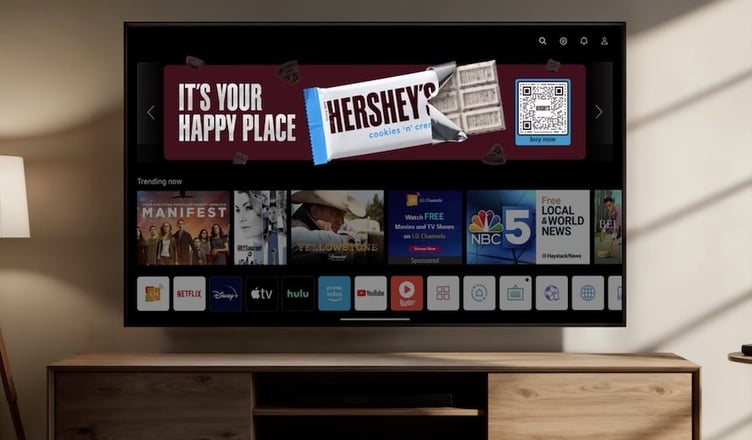
The ever-expanding list of streaming services available in Aotearoa is great news for screen junkies, but how can marketers use it to supercharge their brands?
Video on demand is a hot ticket in adland. In a world flooded with short videos and even shorter attention spans, it offers advertisers premium context and an engaged audience, who often watch it on the biggest screen in the house (the TV).
Latest figures from the Where Are The Audiences? 2026 survey, released in August, show streaming is now an established part of Kiwi viewing habits. Total TV (which includes linear plus NZ broadcast video on demand, aka BVOD) reaches 63% of people every day in Aotearoa, with global video sharing platforms a very close second at 62%.
Kiwi viewers have plenty of options. Local BVOD services such as TVNZ+ or ThreeNow reach 34%, according to Where Are The Audiences? 2026. Meanwhile, subscription video on demand (SVOD) services – think Netflix, Sky TV’s Neon, Disney+ and recently, HBO Max – have a daily reach of 50%.
SVOD… now with adverts
What’s changing the game for marketers is the introduction of advertising in the previously ad-free SVOD space.
Neon launched the first SVOD ad offering in New Zealand in 2023, and now several global giants are joining the fray, including Amazon Prime, Disney+ and – from 2027 – Netflix.
For most, this involves giving subscribers the choice between a cheaper ad-supported tier and a premium ad-free option. There is typically a much lower ad load than linear TV, and some platforms also run ‘ads on pause’.
NZ Marketing spoke to Kate Grigg, chair of the IAB New Zealand Digital Effectiveness Council, and Sarah O’Carroll, IAB Video Working Group lead, to hear how marketers can best use these platforms.
Shiny and new
Video is the fastest growing format in digital advertising globally – growing 27% year on year in Aotearoa, according to the IAB New Zealand Digital Advertising Revenue Report – and VOD plays an important role.
Grigg says VOD is the “new shiny thing” in advertising, but it is becoming increasingly fragmented in New Zealand, presenting marketers with both an opportunity and a challenge.
“The fragmentation is definitely going to come up more for marketers. They’re hearing Amazon’s coming, Disney’s coming, Netflix… They want to understand what mix of sites and reach is the best to hit audiences.”
Measurement is an important theme in VOD, with advertisers starting to look at the value of an impression or a view, Grigg says.
“That is a really interesting space because all views in all formats are different in some ways. You’ve got formats that are skippable and so therefore it may be viewed in a different format or type of content and engagement.
“The attention conversation is switching now to more outcomes based in terms of running your campaign: how do you measure that it delivered an outcome from a business point of view?”
Make every second count
O’Carroll says there’s also a trend towards taking a cross-screen approach in the field of video.
Rather than just thinking about their video as one asset, she recommends brands think about the user experience across different formats, from connected TV to desktop, mobile and tablet.
“People have to do a lot with very small budgets in New Zealand, so sometimes the digital video planning strategy is: ‘Here’s my one video, send it out to the masses and see what happens,’” she says.
“Often the TV has this big story arc and the brand isn’t visible until the end frame.
“But then you think about putting it in an online video environment – which potentially is sound off and has two seconds’ worth of valuable attention.
“Are we making the best use of that viewable impression with two seconds of some beautiful imagery that has no brand correlation?”
Audience-first approach
Sam Boniface, client principal at independent media agency Together, says he and his colleagues take an audience-first approach when helping clients decide which VOD platforms to use.
“You plan for the eyeballs that you’re trying to find and who you’re trying to show your content to,” he says.
“We talk a lot about incrementality of platforms and channels, such as having TVNZ, Samsung TV and Disney+ on your schedule versus just TVNZ and ThreeNow.
“There are lots of different scenarios in terms of the audience that you’re trying to focus on and buy. Some of them have overlapping audiences, but some of them have distinct and separate audiences too, so that’s the complexity of planning.”

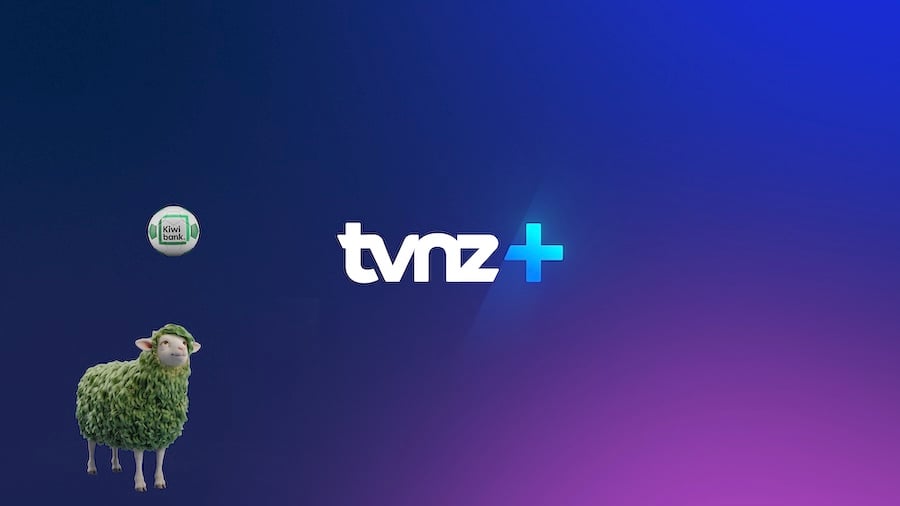
Boniface says new technology allows for more creative uses of the VOD format in advertising. A recent example is Together client Kiwibank’s new mascot Buck the sheep heading a ball across the screen on the TVNZ+ homepage during the Fifa World Cup.
“That’s the beauty of working with local partners. Both TVNZ and Sky are coming to the party, creating something that’s a bit more distinctive and interesting and bringing it to life within that format,” he says.
“For me the challenge is how you can continue to do that into things like live sport, which are still the highest viewing moments for Kiwis across the country.”
Rewarding streamers
Another innovative local video on demand campaign was Contact Energy’s recent Super Streamers partnership with TVNZ+, which rewarded viewers for streaming their favourite shows.
Developed with Together, it reached more than 2.5 million in Aotearoa and generated over 3 million impressions across TVNZ+ alone. More than 20,000 people entered the competition and over 10,000 opted in to hear more about Contact’s Good Plans.
Contact’s advertising manager Shea Whittington says the idea came out of a collaborative planning process between Contact, TVNZ and Together.
“We realised there was an opportunity to connect Contact’s Good Plans, which reward off-peak energy use, with one of New Zealand’s favourite downtime activities: streaming. Rather than sponsoring content, we wanted to create a genuine value exchange,” he says.
“TVNZ+ was the ideal partner because they could integrate the campaign into the viewing experience itself, using first-party data, personalised reminders, notifications and platform placements to create a gamified experience that had never really been done before in New Zealand.”

Loving local
Kiwi streaming platforms are leaning into the local aspect in their fight against their global competitors for both viewers and advertisers.
“TVNZ stands out by doing what global platforms can’t. We bring the content that brings the country together,” says Rebekah Gierlinska, GM growth and partnerships at TVNZ.
Where Are The Audiences? 2026 findings back up this approach, with 81% of respondents saying they like seeing New Zealand faces and places on the shows they watch.
“We combine trusted local news, major live sport, premium New Zealand storytelling and the big cultural moments everyone is talking about, all in one place. Our ambition is to build the best local streaming experience in the country, made here, for people here.”
TVNZ+ reaches more than 1.5 million people every week, making it the country’s largest local streaming platform.
“But scale is only part of the story,” Gierlinska says. “These are engaged audiences watching on the biggest screen in the home, where attention is stronger, viewing is often shared and advertising has more impact.”
Gierlinska says TVNZ’s priority in the streaming space over the next 12 months is making TVNZ+ smarter, easier and more enjoyable to use.
“That means better content discovery, more personalisation and more of the shows audiences love. For advertisers, the opportunity is to connect with real people based on what they genuinely care about and watch, not simply their age bracket.”
Different roles
Sky is unique in having four streaming platforms – Neon, Sky Sport Now, ThreeNow and Sky Go.
Nikki Goodman, Sky’s chief customer officer, says local content sits at the heart of Sky – across all their platforms.
“As a proudly New Zealand-owned and operated business, we’re passionate about supporting our local media, sporting and entertainment sectors, both in front of and behind the camera.”
“In 2026 alone, we’re commissioning over 30 new local primetime titles – a 15% increase on last year.”
The arrival of HBO Max presents a challenge for Neon, which not only faces a new competitor but has lost its previous HBO Max content.
“Any new entrant encourages you to sharpen your thinking and we have doubled down on what makes Neon unique,” Goodman says.
“Through our partnerships with a broad range of leading international studios, we offer a breadth of premium entertainment that appeals to a wide range of audiences, while curating a steady flow of new content throughout the year rather than relying on a handful of titles.”

Live action
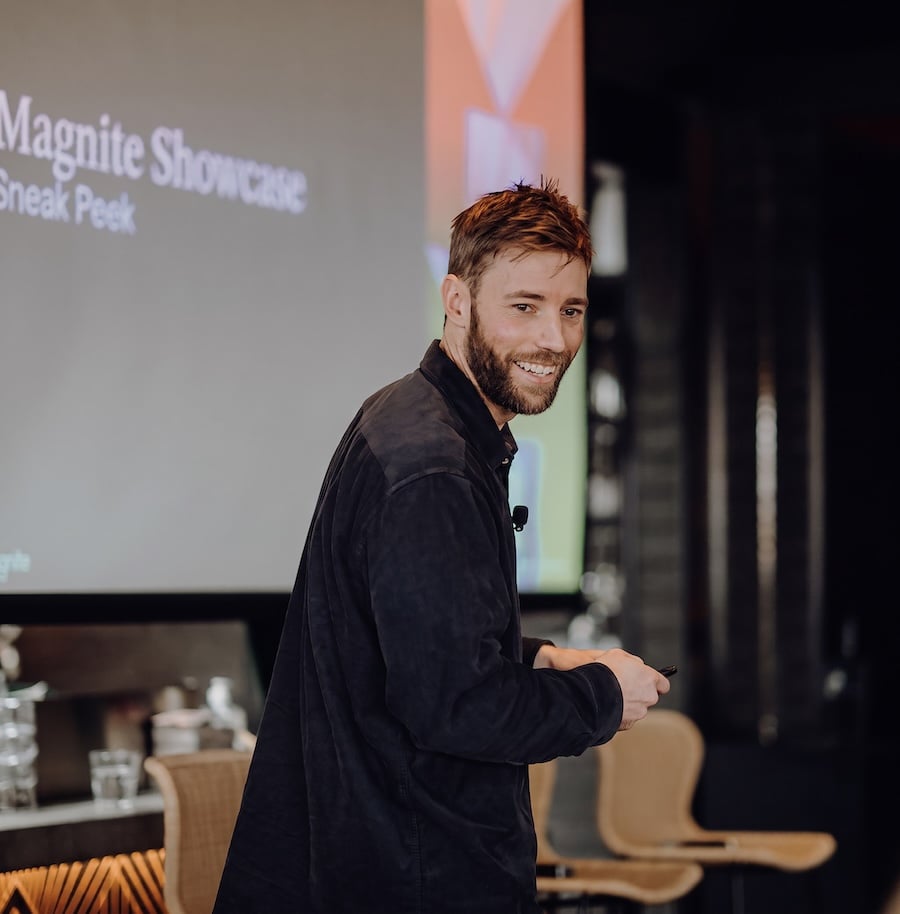
Live streaming is another emerging advertiser battleground. Research by global ad firm Magnite revealed it has evolved beyond sport into a mainstream, multi-genre viewing environment spanning news, entertainment, cultural moments and major events.
The study, which surveyed nearly 900 Kiwis, found that live streaming is a firmly established viewing behaviour. More than half of live viewers stream live sports and news, while nearly one-third are watching live events and TV shows.
Viewers here are receptive to live streaming ads, with 73% open to the same or more ads per hour in live content compared to on-demand.
“Live streaming should no longer be treated as a single-event buy or a sports-only opportunity,” says Nick Henderson, commercial lead, NZ at Magnite.
“The research shows New Zealand audiences are engaging with live content across sports, news, events and entertainment, often on CTV and in shared viewing environments.
“For advertisers, the opportunity is to plan beyond the main event, use live streaming as a premium brand-building environment and extend campaigns across pre-event, live and post-event content to reach highly engaged audiences when they are most receptive.”
Kicks… and Kick
Few live events attract more attention than the Fifa World Cup, which drew more than 20 billion video views across platforms globally.
Scroll Media holds the exclusive advertising sales rights for Australia and New Zealand on Fifa+, Fifa’s global football streaming platform. Scroll Media managing director Jane Ormsby says sports streaming is a “premium” advertising opportunity for brands.
“It’s expensive, but it’s brand safe and it’s first in, first served. Brands need to be booking it out a year in advance to get their inventory,” she says.
“Also, people are in a positive frame of mind when they’re watching it. It’s exciting. They’re sharing the experience probably with friends and family, versus sitting there scrolling some AI-generated slop.”
To get the most from their investment in live sport, Ormsby says advertisers should make sure their creative aligns with the sport.
“If it’s Fifa, the brands that do well are the brands that have creative that has something about Fifa in it, rather than just doing their everyday ads.”
At the other end of the streaming scale, Scroll Media works with Kick.com, a video livestreaming service with user-generated content and live chats that is especially popular with Gen Z.
Kick is “edgier” but has done a lot of work around brand safety, Ormsby says.
“They make sure that everything’s moderated and they have a whole lot of keyword category exclusions, so you can control what you’re advertising around.”
Creative CTV
CTV – TV connected to the internet – is the dominant screen for live streaming in New Zealand. Magnite’s research found 80% of viewers use CTV to stream live content and 56% watch live content on CTV at least once a week.
Arnaud Calonne, New Zealand sales director for adtech agency Kargo, says CTV is going through a fundamental shift.
“For years, it was treated as an extension of linear TV in that it served as a brand-awareness play reserved for advertisers with big upfront budgets. That’s changing fast as CTV becomes a measurable, performance-driven channel that’s accessible to advertisers of any size, including small and mid-sized businesses.”

A big driver of that shift is creative, Calonne says.
“Advertisers are increasingly bringing proven, high-performing social assets directly onto the big screen, rather than commissioning custom broadcast-style spots.”
Kargo’s CTV portfolio stretches across the entire viewer journey from TV power on to pause, reaching viewers as early as the very first screen on their smart TVs. Calonne says CTV combines the scale and impact of the biggest screen in the house with the precision and accountability of digital.
“Brands get premium, brand-safe reach across streaming environments, and data consistently shows that CTV commands significantly more viewer attention than social or mobile,” he says.
“It’s also proving to be a full-funnel channel, as brands are using it to drive not just awareness but also measurable outcomes like purchase intent, conversion and even foot traffic.”
TV evolving
Television has evolved significantly over the past decade, says Jacqueline Freeman, general manager communications for television industry group ThinkTV.
“Rather than being defined by a single viewing experience, it has become a connected ecosystem that combines the scale and cultural impact of linear television with the flexibility of BVOD.”
For advertisers, that means they no longer have to choose between broad reach and streaming capability, Freeman says.
“Today’s television delivers both, allowing brands to connect with audiences across multiple viewing behaviours while remaining within premium, professionally governed environments.
“Importantly, what has always made television effective has not changed. It continues to provide trusted environments, high-quality video, emotional storytelling and one of the strongest bodies of evidence supporting commercial effectiveness.
“What has changed is the number of ways advertisers can access those strengths across the television ecosystem.”

YouTube viewers migrate to the biggest screen in the house
People scrolling YouTube videos on their phones is a common sight, but a growing number of Kiwis are watching the world’s most popular streaming service on TV.
Seth Zwart, head of brand NZ – YouTube, says consumers are engaging with more long-form content on YouTube and naturally choosing the biggest screen in the house for it.
“We’re now seeing the TV screen has officially surpassed mobile as New Zealanders’ favourite way to watch YouTube, reaching over half the country every month.1 As a result, the majority of top-funnel campaign ads are now delivered directly into the living room,” he says.
“To help advertisers capture this growing long-form audience, we’ve expanded our high-impact connected TV formats. You can now tap into 30-second and 60-second non-skippable ads, Pause Ads, Shoppable CTV, and CTV or Google TV Mastheads. Best of all, the CPMs remain highly competitive.”

Asked how YouTube competes with premium content available on other streaming platforms, Zwart says “premium” is inherently subjective.
“Today, premium means choice. YouTube offers unmatched variety, from global livestreams such as the World Surf League Championship to studio-grade productions built by local creators such as Viva La Dirt League and Andy Cooks, who employ full-time teams,” he says.
“Kiwis turn to YouTube for content available nowhere else. By delivering unmatched variety for every viewer, YouTube continuously redefines what premium content actually means.”
1. Source: YouTube Internal Platform Data, New Zealand, June 2025

This story is about NZ Marketing magazine issue 88, Sept-Nov 2026. Why not subscribe? Get four issues a year for just $50 (including delivery) if you autorenew.
Essential marketing intelligence. Don’t miss it.