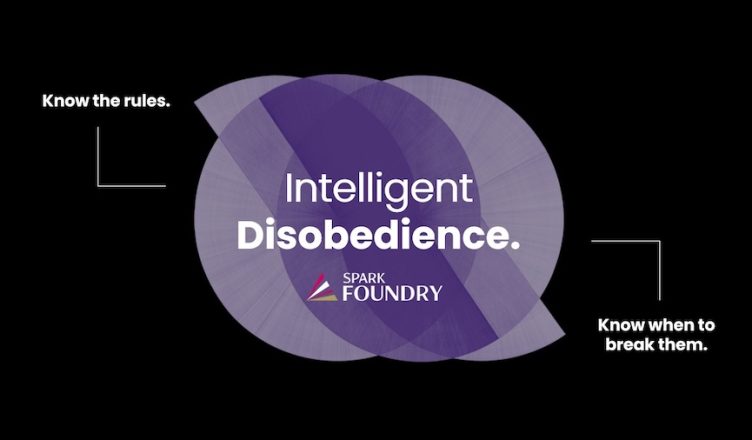
As conformity increasingly shapes the industry, Spark Foundry NZ is taking a different path: know the rules, then know when to break them for better results.
There is a guide dog training principle known as intelligent disobedience.
A guide dog is trained to follow instructions. But when a command puts its owner in danger, it refuses. Not because the dog hasn’t learned the rules, but because it understands them deeply enough to know when they no longer serve the outcome.
It’s a concept Spark Foundry New Zealand has recently adopted as its agency positioning: “Intelligent disobedience. Know the rules. Know when to break them”. The thinking emerged from a simple observation; in a world increasingly addicted to conformity, it has become remarkably easy for everyone to arrive at the same answer.
And yet, judging by the agency’s award performance this year – including five Beacons, two APAC Festival of Media gongs and a Cannes Lion media shortlist – there is evidence that the most effective work is often found somewhere beyond convention.
Intelligence comes first
Spark Foundry NZ general manager Kelly Rosnell-Shand says: “It’s become very difficult to create anything distinctive by simply following the accepted playbook.
“Best practice exists for a reason. We absolutely believe in rigor, data and effectiveness principles. But if every brand is using the same research, targeting the same audiences, buying the same channels and measuring success in the same way, the outcomes inevitably start to converge.”
The agency’s positioning is not built on rebellion for rebellion’s sake. In fact, Spark Foundry is careful to emphasise that the intelligence comes first.
Spark Foundry NZ head of strategy Kyra Lyden says the thinking is rooted in a belief that rules should be understood before they’re challenged, and that evidence should inform when to deviate from the norm.
“This is not a philosophy of rule breaking,” says Lyden. “It’s a philosophy of rule mastery. Marketing science, evidence and data sit at the core. The industry has optimised itself into sameness. ‘Intelligent disobedience’ is the discipline of knowing when best practice creates effectiveness – and when it merely creates conformity.”
A common thread
That philosophy is reflected in three principles: breaking category rules, pushing the boundaries of media environments and measuring what matters – outcomes for our clients.
According to Lyden, those principles have become a useful lens for examining the agency’s strongest work.
“When we looked back at the campaigns recognised this year, a common thread started to emerge,” she says.
“They succeeded because there was a moment where someone asked a different question. A moment where we challenged an assumption that had become accepted wisdom. For example, Toyota’s ‘One big ad’ campaign could have easily followed a conventional automotive campaign. Instead, it treated the country itself as the media channel.”

Research has increasingly highlighted a challenge facing marketers, with many brands struggling to establish meaningful points of difference in increasingly crowded categories. When brands become harder to distinguish, opportunities for growth can be more difficult to capture.
For Lyden, this reveals a broader tension within marketing.
“Every era of media made us more efficient. Scarcity gave way to fragmentation. Fragmentation gave way to digital. Digital gave way to platforms. Platforms gave way to AI. Each step reduced uncertainty. Each step increased optimisation. But optimisation has a consequence. Algorithms reward patterns. Platforms reward familiarity. Dashboards reward repeatability. No one intended it. But we’ve spent decades optimising for what works, and accidentally engineered sameness.”
Reflects industry challenge
The agency’s success in recent years suggests the qualities highlighted through ‘intelligent disobedience’ are becoming increasingly important. Since launching in 2022, Spark Foundry has been recognised across 37 local, regional and global awards programs for multiple clients and categories, reflecting the effectiveness and creativity of its work.
But Rosnell-Shand is quick to point out that awards are not the objective. “They’re the outcome,” she says.
“What we’re really interested in is creating work that matters. Work that delivers outcomes for clients, gives our people something meaningful to build, and contributes positively to culture and society.
“The awards are valuable because quite simply, you can’t win them if you haven’t delivered results for your clients. Awards are also validation of the choices we made along the way. They tell us that stepping outside convention, when done thoughtfully, can create better outcomes,” she adds.

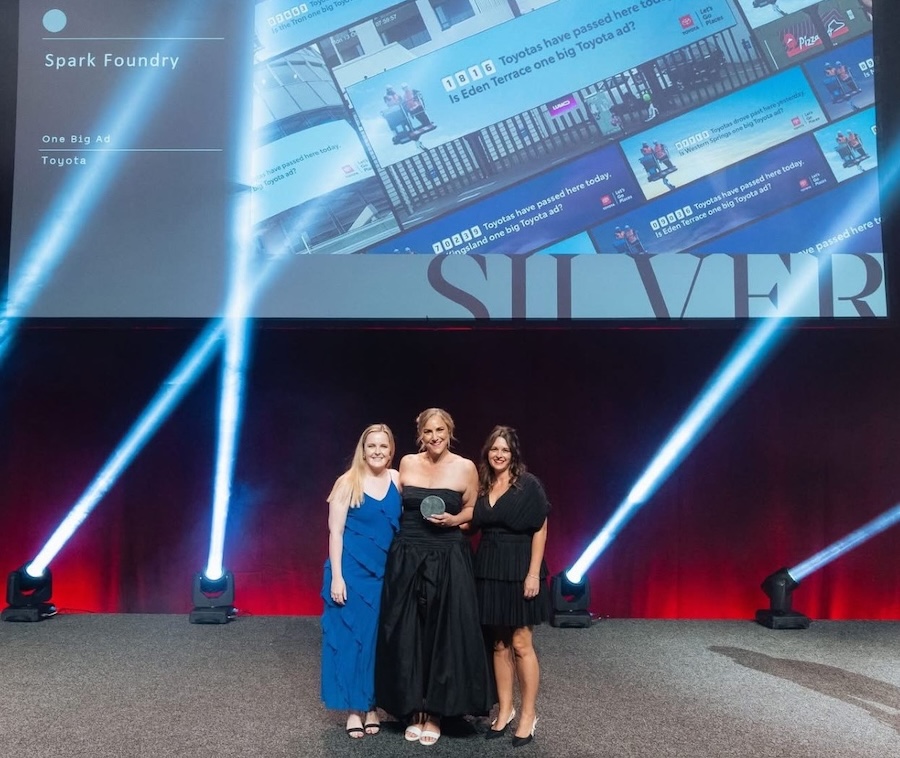
The Spark Foundry team at the 2026 Beacon Awards.
Perhaps that is why ‘intelligent disobedience’ feels less like a positioning statement and more like a reflection of a wider industry moment.
The idea of ‘intelligent disobedience’ speaks to a broader challenge facing marketers today. Growth is often found not at the centre of the crowd, but at its edges. The places where curiosity overrides convention, where evidence fuels conviction and where the safest choice is not always the most effective one.
Or, as Lyden puts it: “‘Intelligent disobedience’ isn’t about breaking the rules. It’s about understanding them deeply enough to know when following them creates the best outcome, and when challenging them creates a better one.”