

Every month the Together team highlights five media stories from New Zealand and globally that defined the month, and one great media idea we love. September saw creator platforms get closer to brands, commerce media spread into new territory, digital investment continue to climb and Auckland gain an entirely new OOH canvas.
Made on YouTube 2026: creators become easier to buy
YouTube used Made on YouTube to unveil more than 30 updates spanning creation, discovery and monetisation. These include a conversational AI editing partner for Shorts, expanded likeness protection, real-time auto-dubbing for live streams and new tools connecting creators with brands. Creator Partnerships is now available across 20 countries, while Ask Studio will help creators draft partnership proposals and respond to briefs.
For NZ marketers, the creator piece is the one to watch. Finding, assessing and contracting creators has traditionally involved plenty of manual work. YouTube increasingly wants to broker that relationship inside the platform, while making it easier to turn creator content into paid media.
At the same time, cheaper AI production will inevitably increase the volume of Shorts competing for attention. Brand and creator fit, distinctive assets and sustained partnerships become more valuable when simply making content gets easier.
TVNZ buys into Youdooh
TVNZ has taken a 15% stake in Aotearoa-founded digital out of home platform Youdooh. The investment is intended to connect TVNZ’s digital advertising products with Youdooh’s growing network of screens across New Zealand and Australia.
For NZ marketers, this starts to make the idea of planning television, streaming and digital outdoor as one connected screen ecosystem more tangible. It could also make DOOH more accessible to advertisers that previously found large network buys difficult to justify.
The interesting part will be measurement. A combined TVNZ+ and DOOH proposition becomes much more valuable if advertisers can understand duplicated audiences, incremental reach and frequency across both. As TVNZ unveil their “Total TV” initiative, designed to combine linear and digital viewing measurement, that will be the place to watch next.
McDonald’s starts building a media business
McDonald’s has begun testing third-party advertising on drive-thru order screens across 450 company-operated US restaurants, with an ambition to build its Media Network into a billion-dollar business over time. The opportunity could eventually span an ecosystem serving more than 70 million customers daily and nearly 220 million active loyalty members globally.
For NZ marketers, commerce media is clearly escaping the supermarket aisle. We’ve seen the likes of Bunnings join established players such as Cartology and The Warehouse’s Market Media in the NZ retail media ecosystem, but this shows there could be more. Any business with physical reach, digital surfaces and customer data can potentially become a media owner. Think fuel, QSR, telco, banking and travel.
As with so much in media currently, the challenge is measurement. For non-endemic advertisers, a screen beside a transaction does not automatically create closed-loop attribution. As more networks emerge locally, marketers should ask what audience data sits behind the inventory – that can be shared – and what outcomes can genuinely be measured.
Read the McDonald’s Media Network story
NZ digital advertising hits $1.588 billion in H1
According to the IAB, New Zealand digital advertising generated $1.588 billion in the first half of 2026, up 14 percent year-on-year. Search remains dominant at 48 percent of Q2 revenue, while video was the fastest-growing format, rising 21 percent to $193.7 million. Social display and video also grew 20 percent.
For NZ marketers, video’s momentum reinforces just how quickly investment is gathering around screen-based formats. But more spend does not necessarily equal more effectiveness. Plans should increasingly distinguish between cheap video delivery and environments that generate genuine attention and quality brand outcomes.
Meanwhile, search still accounts for almost half of digital revenue. With discovery behaviours changing rapidly through AI, that concentration makes diversification of demand-generation channels increasingly important.
QMS switches on the City Rail Link
QMS launched its advertising network across Auckland’s new City Rail Link with 2degrees, ANZ, BNZ, Spark, The Warehouse Group and Tower signed as foundation partners. The three new underground stations feature fully digital, full-motion and 3DOOH-enabled inventory, connected with QMS’s wider Auckland street furniture, transit and billboard estate to offer a truly world class OOH canvas.
For marketers, the big new opportunity is the journey rather than the individual screens. Brands can now potentially follow commuters from suburban streets, through transit and into Auckland’s commercial and retail heart.
The next proof point is audience behaviour. Passenger volumes, dwell times and movement patterns will become increasingly useful as the network beds in, helping planners understand where CRL inventory adds incremental reach rather than simply another premium OOH placement.
Media idea of the month: Zeekr puts its product in the spotlight
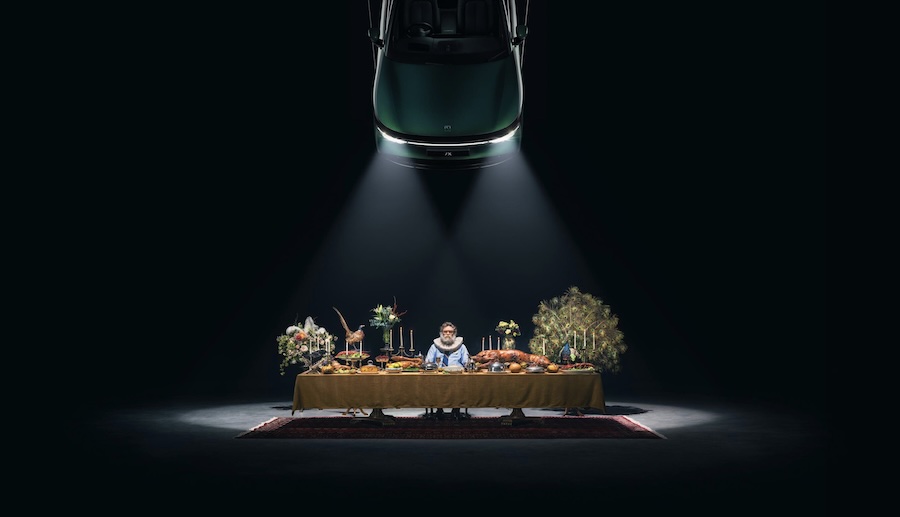
To launch the 7X, Zeekr and Taika Waititi created ‘Spotlight’, seven cinematic photographs illuminated entirely by the car’s headlights. The scenes were physically built at Waititi’s Studio West, before becoming a public exhibition, OOH, social and PR campaign – which Together were fortunate enough to be part of alongside our friends at Bastion Aotearoa.
Why we love it:
- The product creates the media idea. The headlights are not a feature demonstrated inside an ad. They are the mechanism that makes the entire campaign possible.
- It behaves like culture. Turning a vehicle launch into a photography exhibition gave Zeekr permission to appear in entertainment, arts and lifestyle contexts beyond traditional automotive media.
- Craft earns attention. At a moment when synthetic imagery is becoming effortless, physically constructing each surreal scene gives the work a reason to be looked at.
A smart example of taking one distinctive product truth and stretching it across experience, earned media and advertising.