| Winner | Stihl |
| Marketing initiative | Using battery as a strategic lever for brand growth |
| Marketing partners | True, OMD |
| Finalists | AMI Insurance, Samsung New Zealand, Spark New Zealand (two initiatives), Turners Auto Retail |
| Judges’ comments | “As a brand, they faced significant category, product and economic challenges, which they confronted without walking away from what made them successful in the past. “The results are outstanding, showing that the campaign had an immediate impact and also a long-lasting effect, driving growth beyond the category.” |

Battery leads the charge
The rise of battery-powered tools changed the game for premium petrol-fuelled brand Stihl. But it refused to become irrelevant, choosing instead to redefine itself.
Stihl has long had a reputation among Kiwi gardeners as a premium, professional petrol tool brand. But by 2025, the brand’s petrol tools was in decline – battery powered tools were redefining who was buying and what they valued.
Stihl knew it had to make a deliberate move to stay ahead of this shift. The key challenge? How to make the brand relevant to a new audience without alienating the one that built it.
As a global brand, Stihl typically deploys centrally developed creative. However, insights told the team this wouldn’t cut it in Aotearoa.
So instead, it built a case grounded in local customer insight and market data. Stihl decided to use battery as a more accessible entry point that elevates perceptions of the entire brand. Unlike its competitors, Stihl continues to invest in both petrol and battery, giving consumers the option to pick what’s right for them.
The priority became redefining what Stihl’s quality means in this new, battery-led world. Stihl’s proposition – that it’s built for professionals – felt like overkill for many everyday gardeners. The quality felt excessive rather than essential.
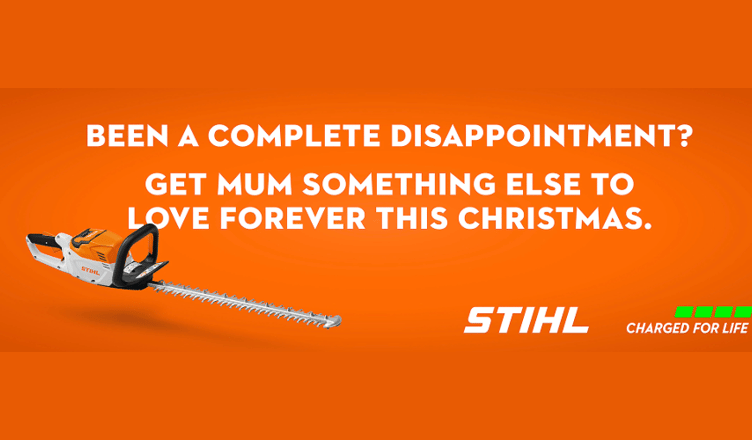
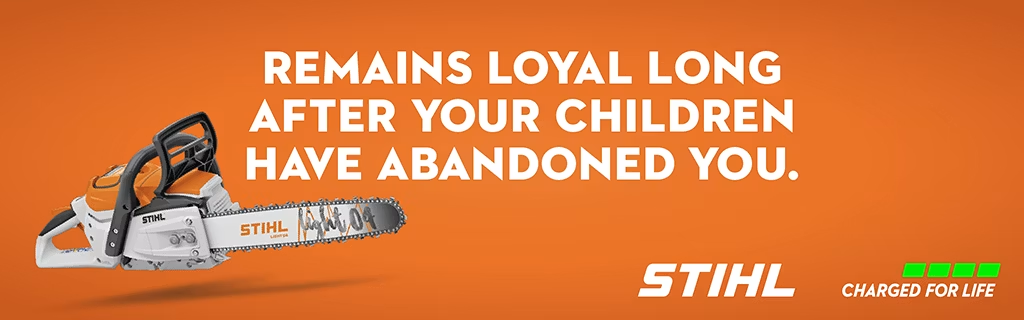
Stihl set out to redefine this with its ‘Charged for life’ marketing strategy focusing on the tools’ durability and reliability as a way to meet life’s ongoing demands.
“At its heart: battery tools that are not just charged in the moment, but built for the long run,” says Stihl.
This became more than just a creative platform, it also shaped how Stihl showed up across the entire customer journey.
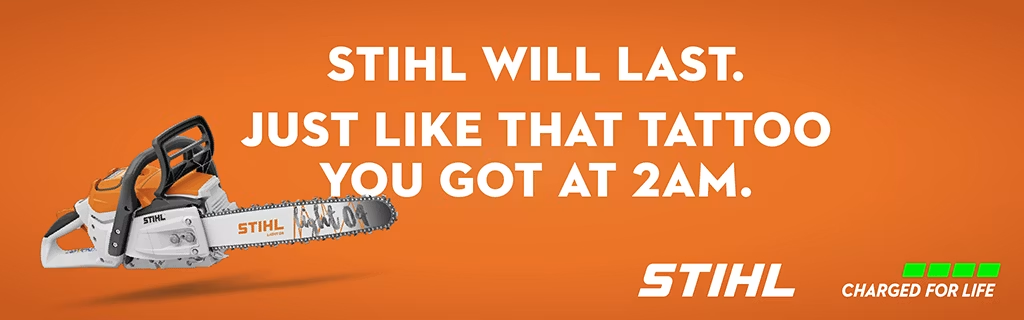
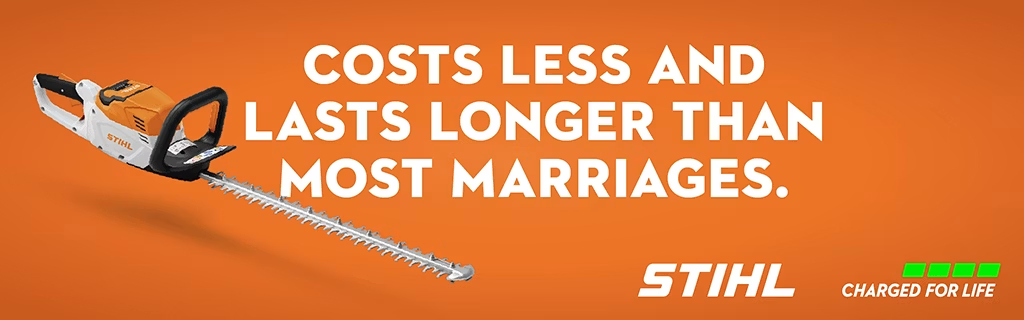
Dual power strategy
Film set the scene, and out of home placed the creative in everyday contexts, showing that while life gets messy, your garden doesn’t have to. Social provided frequency and relatability and retail showcased value at the point of decision.
Unlike competitors in big-box retail, Stihl operates through 86 independently owned Stihl Shops. So another key element was growing awareness of the stores and arresting the consumer default of just heading straight to Bunnings or Mitre 10.
The campaign unified the brand’s dual power strategy while also positioning Stihl as the best choice in battery. It ran in a high-intensity three-month burst, but the returns extended far beyond that window.
Stihl moved from share decline to growth, delivering a 27.7% year on year growth across the campaign period. This increased to 49.8% YoY in early 2026. This translated to a 12% uplift in summer sales, the brand’s strongest in years.

This story comes from NZ Marketing magazine issue 88, Sept-Nov 2026. Why not subscribe? Get four issues a year for just $50 (including delivery) if you autorenew.
Essential marketing intelligence. Don’t miss it.