
| Winner | Westpac NZ |
| Marketing initiative | Westpac House of Credit Card Fears |
| Marketing partners | Saatchi & Saatchi NZ, Spark Foundry, Digitas, Spur, Herd MSL |
| Finalists | Auckland Transport (2x category wins), Ecostore, Greyhounds as Pets (2x category wins), KFC New Zealand, NZ Post, OfficeMax, Tourism New Zealand |
| Judges’ comments | “A phenomenal campaign grounded in genuine insight, brought to life as an experience perfectly positioned to attract and engage a hard-to-reach audience. Embracing the barrier of fear younger audiences feel toward credit cards and turning this negative perception into a fun, memorable, exciting and – most importantly – highly relevant and shareable experience. This marketing team has demonstrated a depth of creativity and outside-the-box thinking that is refreshing for the sector, pushing boundaries and embracing risk. Who knew that a bank could turn a credit card into a fun park?! “The judges noted the content ecosystem created by this team delivered outstanding engagement, driving sustained brand value and shifting consumer behaviour. This is a fantastic example of how a clear marketing strategy can deliver exceptional commercial performance.” |
This category is sponsored by Sky.
Best B2C Marketing Campaign
| Finalists | Asahi Beverages, Burger King, DoorDash, Goodman Fielder, Greyhounds as Pets, Griffin’s Snacks, KFC NZ, Mercury, National Cyber Security Centre, One NZ (2 x initiatives) Oppo NZ, Spark NZ, St Pierres Sushi, Toyota NZ, Trade Me Property, Whittaker’s, Z Energy, Zuru Group |
| Judges’ comments | “Westpac found a brilliant truth here: the very same kids who are terrified of credit cards are obsessed with horror. Connecting those two dots was pure genius. Instead of trying to sanitise the fear, they turned it into an attraction and got unmatchable results.” |
Best Use of Content Marketing Campaign
| Finalists | 2degrees, Auckland Transport, Department of Conservation Goodman Fielder, Ikea, McDonald’s New Zealand, NZ Mountain Safety Council, Southern Cross Health Insurance, Zuru Group (two initiatives) |
| Judges’ comments | “A bold, intelligent and innovative approach to content creation and audience engagement. An insight-led and powerful experiential execution that embraces risk, taking the perception of fear and reframing it as a gateway rather than a barrier. This has brought fun and liveliness to a category that can otherwise feel very technical and conservative. “Further building on this insight with a strong understanding of what appeals to the generation – the scary movie – has enabled the bank to shift the conversation and create a new narrative around managing money, one that has created ongoing talkability paired with strong commercial outcomes. “The immersive nature of this work demonstrates deep thought and a willingness to think beyond the category.” |

Westpac leans into fear
Gen Z actively avoids credit cards, afraid of racking up debt. Most banks would try to relieve their terrors, but Westpac embraced them.
Westpac New Zealand faced a fundamental growth challenge. A generation was afraid of one of its most important products: the credit card.
Data showed Gen Z were actively avoiding credit cards, with 61% expressing fear of using them. The view was that credit cards are a source of future debt rather than a financial enabler.
Westpac also knew if it failed to engage customers at the start of their financial journey, it risked losing relevance and value in the long term.
The bank had already developed a fee-free credit card specifically for this audience, but the usual rational education tactics weren’t cutting through. They didn’t lack understanding, they lacked emotional confidence.
Gen Z actually enjoys horror
But after some digging, the bank realised that Gen Z actually enjoy engaging with fear. Globally, 91% consume horror content. It’s a way of processing uncertainty in a controlled, shareable environment.
The insight that fear is a gateway to engagement, not a barrier, informed what Westpac did next.
Instead of explaining credit cards (again), the bank created an experience that allowed audiences to experience and process their fears and ultimately, build confidence.
“Banks were trying to remove fear, while Gen Z was using fear as a way to navigate the world. Instead of fighting this behaviour, we embraced it,” says Westpac.
The bank set clear objectives:
- Shift brand perception (love, trust, differentiation).
- Drive credit card enquiries and conversion.
- Re-engage Gen Z at the start of their financial journey.
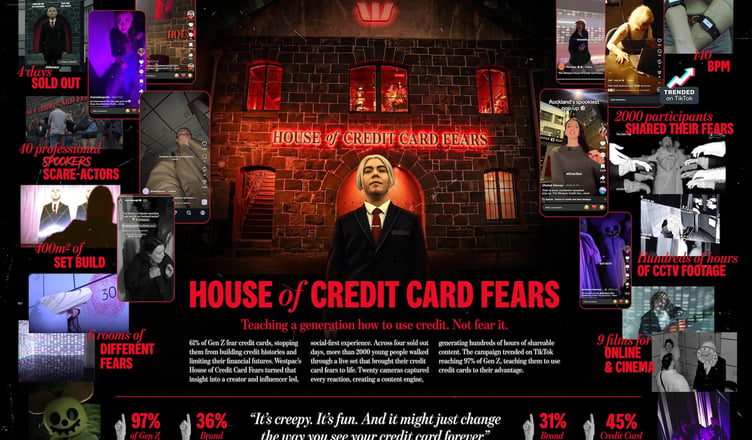
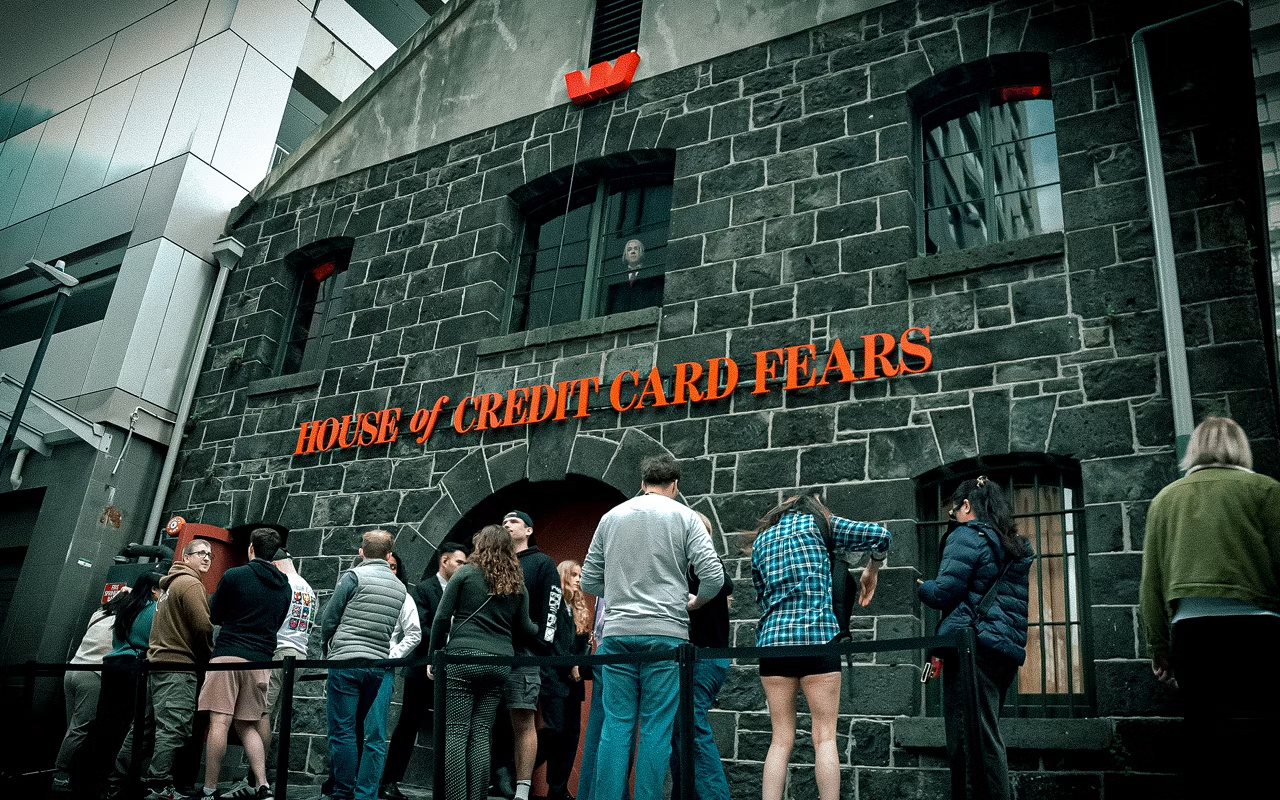
This led to the creation of the House of Credit Card Fears, an immersive haunted house experience in Auckland that also acted as a live content studio.
The house had six rooms, each visualising a different financial fear, including overspending, debt spirals and loss of control. It was staffed with 40 professional actors from horror theme park Spookers. More than 1,000 people came through over four days to explore the space. They then helped create and share content.
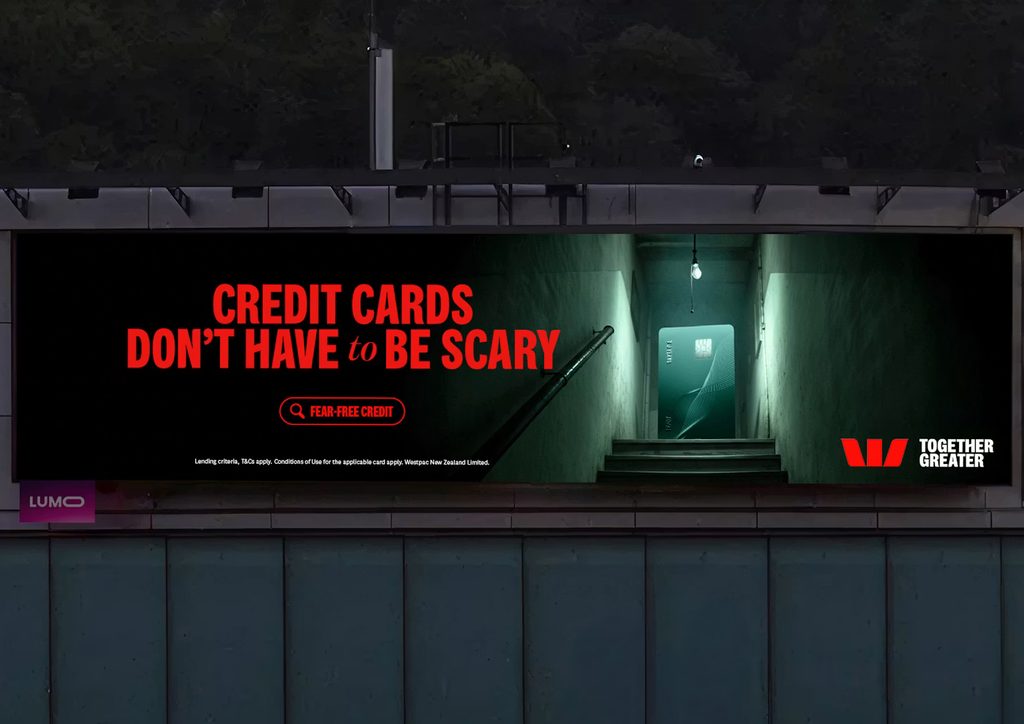
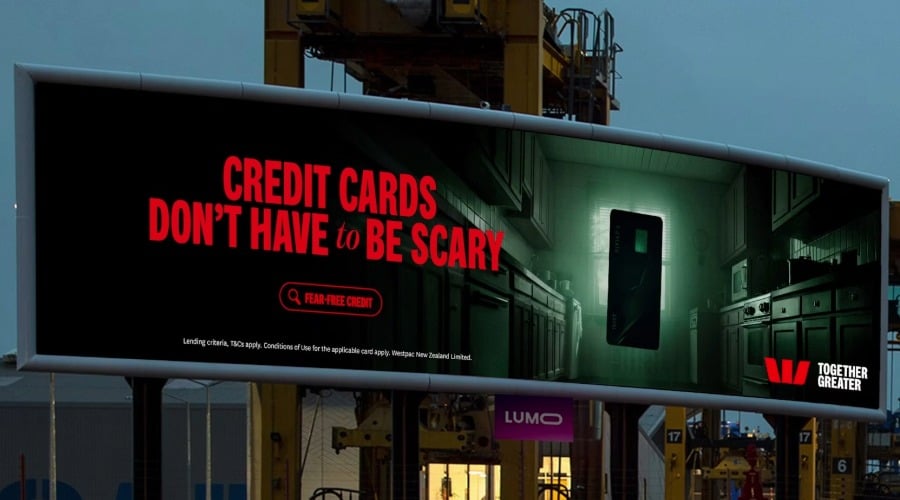
“The experience turned fear into participation, participation into understanding and understanding into confidence,” says Westpac.
The campaign was built as a content and media system from the beginning. Social and digital content was created via 20 cameras capturing real-time reactions in the house. A scare-cam format was designed for social-native storytelling and a central host character acted as a recurring narrative device.

Earned media extends reach
The unconventional campaign generated significant media attention which extended reach beyond paid channels. Westpac ensured that seamless pathways connected the experience to its fee-free credit card so that people could turn their emotional engagement into action.
The content was amplified across social, digital and broadcast channels, extending the physical experience to a national audience.
The campaign exceeded all targets, increasing brand love, trust and differentiation. Credit card enquiries increased by 45%, while card drawdowns among 18 to 29-year-olds rose 73%. Conversion rates increased 64%.
“This indicates not only increased interest but a meaningful change in behaviour,” says Westpac.
The campaign also had a halo effect, with credit card drawdowns among 30 to 39-year-olds reaching an all-time high.
By making content something they could take part in, Westpac redefined how financial brands can connect with younger audiences. Lesson from this campaign are now shaping Westpac’s marketing strategy.

This story comes from NZ Marketing magazine issue 88, Sept-Nov 2026. Why not subscribe? Get four issues a year for just $50 (including delivery) if you autorenew.
Essential marketing intelligence. Don’t miss it.